
Main menu

  • Home
  • Current Issue
  • Archive
  • Info for
    • Authors
    • Editorial Policies
    • Subscribers
    • Advertisers
    • Editorial Board
    • Special Issues
  • Journal Metrics
  • Other Publications
    • In Vivo
    • Cancer Genomics & Proteomics
    • Cancer Diagnosis & Prognosis
  • More
    • IIAR
    • Conferences
    • 2008 Nobel Laureates
  • About Us
    • General Policy
    • Contact
  • Other Publications
    • Anticancer Research
    • In Vivo
    • Cancer Genomics & Proteomics

User menu

  • Register
  • Subscribe
  • My alerts
  • Log in
  • My Cart

Search

  • Advanced search
Anticancer Research
  • Other Publications
    • Anticancer Research
    • In Vivo
    • Cancer Genomics & Proteomics
  • Register
  • Subscribe
  • My alerts
  • Log in
  • My Cart
Anticancer Research

Advanced Search

  • Home
  • Current Issue
  • Archive
  • Info for
    • Authors
    • Editorial Policies
    • Subscribers
    • Advertisers
    • Editorial Board
    • Special Issues
  • Journal Metrics
  • Other Publications
    • In Vivo
    • Cancer Genomics & Proteomics
    • Cancer Diagnosis & Prognosis
  • More
    • IIAR
    • Conferences
    • 2008 Nobel Laureates
  • About Us
    • General Policy
    • Contact
  • Visit us on Facebook
  • Follow us on Linkedin
Research ArticleClinical Studies

Antibiotic Usage Reduced Overall Survival by over 70% in Non-small Cell Lung Cancer Patients on Anti-PD-1 Immunotherapy

KAZUYUKI HAMADA, KIYOSHI YOSHIMURA, YUYA HIRASAWA, MASAHIRO HOSONUMA, MASAKAZU MURAYAMA, YOICHIRO NARIKAWA, HIROTSUGU ARIIZUMI, RYOTARO OHKUMA, MIDORI SHIDA, YUTARO KUBOTA, SATOSHI MATSUKUMA, TOMOYUKI ISHIGURO, TAKEHIKO SAMBE, ATSUSHI HORIIKE, ATSUO KURAMASU, SATOSHI WADA, JUNJI TSURUTANI, EISUKE INOUE, NAOKI UCHIDA, YUJI KIUCHI, SHINICHI KOBAYASHI, ROBERT M. HOFFMAN and TAKUYA TSUNODA
Anticancer Research October 2021, 41 (10) 4985-4993; DOI: https://doi.org/10.21873/anticanres.15312
KAZUYUKI HAMADA
1Division of Medical Oncology, Department of Medicine, Showa University School of Medicine, Tokyo, Japan;
2Department of Surgery, University of California, San Diego, CA, U.S.A.;
3AntiCancer Inc., San Diego, CA, U.S.A.;
  • Find this author on Google Scholar
  • Find this author on PubMed
  • Search for this author on this site
KIYOSHI YOSHIMURA
1Division of Medical Oncology, Department of Medicine, Showa University School of Medicine, Tokyo, Japan;
4Department of Clinical Immuno Oncology, Clinical Research Institute for Clinical Pharmacology and Therapeutics, Showa University, Tokyo, Japan;
  • Find this author on Google Scholar
  • Find this author on PubMed
  • Search for this author on this site
  • For correspondence: kyoshim1{at}med.showa-u.ac.jp
YUYA HIRASAWA
1Division of Medical Oncology, Department of Medicine, Showa University School of Medicine, Tokyo, Japan;
  • Find this author on Google Scholar
  • Find this author on PubMed
  • Search for this author on this site
MASAHIRO HOSONUMA
1Division of Medical Oncology, Department of Medicine, Showa University School of Medicine, Tokyo, Japan;
4Department of Clinical Immuno Oncology, Clinical Research Institute for Clinical Pharmacology and Therapeutics, Showa University, Tokyo, Japan;
  • Find this author on Google Scholar
  • Find this author on PubMed
  • Search for this author on this site
MASAKAZU MURAYAMA
4Department of Clinical Immuno Oncology, Clinical Research Institute for Clinical Pharmacology and Therapeutics, Showa University, Tokyo, Japan;
  • Find this author on Google Scholar
  • Find this author on PubMed
  • Search for this author on this site
YOICHIRO NARIKAWA
4Department of Clinical Immuno Oncology, Clinical Research Institute for Clinical Pharmacology and Therapeutics, Showa University, Tokyo, Japan;
  • Find this author on Google Scholar
  • Find this author on PubMed
  • Search for this author on this site
HIROTSUGU ARIIZUMI
1Division of Medical Oncology, Department of Medicine, Showa University School of Medicine, Tokyo, Japan;
  • Find this author on Google Scholar
  • Find this author on PubMed
  • Search for this author on this site
RYOTARO OHKUMA
1Division of Medical Oncology, Department of Medicine, Showa University School of Medicine, Tokyo, Japan;
  • Find this author on Google Scholar
  • Find this author on PubMed
  • Search for this author on this site
MIDORI SHIDA
4Department of Clinical Immuno Oncology, Clinical Research Institute for Clinical Pharmacology and Therapeutics, Showa University, Tokyo, Japan;
  • Find this author on Google Scholar
  • Find this author on PubMed
  • Search for this author on this site
YUTARO KUBOTA
1Division of Medical Oncology, Department of Medicine, Showa University School of Medicine, Tokyo, Japan;
  • Find this author on Google Scholar
  • Find this author on PubMed
  • Search for this author on this site
SATOSHI MATSUKUMA
1Division of Medical Oncology, Department of Medicine, Showa University School of Medicine, Tokyo, Japan;
  • Find this author on Google Scholar
  • Find this author on PubMed
  • Search for this author on this site
TOMOYUKI ISHIGURO
1Division of Medical Oncology, Department of Medicine, Showa University School of Medicine, Tokyo, Japan;
  • Find this author on Google Scholar
  • Find this author on PubMed
  • Search for this author on this site
TAKEHIKO SAMBE
5Division of Clinical Pharmacology, Department of Pharmacology, Showa University School of Medicine, Tokyo, Japan;
6Clinical Research Institute for Clinical Pharmacology and Therapeutics, Showa University, Tokyo, Japan;
  • Find this author on Google Scholar
  • Find this author on PubMed
  • Search for this author on this site
ATSUSHI HORIIKE
1Division of Medical Oncology, Department of Medicine, Showa University School of Medicine, Tokyo, Japan;
  • Find this author on Google Scholar
  • Find this author on PubMed
  • Search for this author on this site
ATSUO KURAMASU
4Department of Clinical Immuno Oncology, Clinical Research Institute for Clinical Pharmacology and Therapeutics, Showa University, Tokyo, Japan;
  • Find this author on Google Scholar
  • Find this author on PubMed
  • Search for this author on this site
SATOSHI WADA
1Division of Medical Oncology, Department of Medicine, Showa University School of Medicine, Tokyo, Japan;
7Department of Clinical Diagnostic Oncology, Clinical Research Institute for Clinical Pharmacology and Therapeutics, Showa University, Tokyo, Japan;
  • Find this author on Google Scholar
  • Find this author on PubMed
  • Search for this author on this site
JUNJI TSURUTANI
8Advanced Cancer Translational Research Institute, Showa University, Tokyo, Japan;
  • Find this author on Google Scholar
  • Find this author on PubMed
  • Search for this author on this site
EISUKE INOUE
9Research Administration Center, Showa University, Tokyo, Japan;
  • Find this author on Google Scholar
  • Find this author on PubMed
  • Search for this author on this site
NAOKI UCHIDA
5Division of Clinical Pharmacology, Department of Pharmacology, Showa University School of Medicine, Tokyo, Japan;
6Clinical Research Institute for Clinical Pharmacology and Therapeutics, Showa University, Tokyo, Japan;
  • Find this author on Google Scholar
  • Find this author on PubMed
  • Search for this author on this site
YUJI KIUCHI
10Department of Pharmacology, Showa University School of Medicine, Tokyo, Japan
  • Find this author on Google Scholar
  • Find this author on PubMed
  • Search for this author on this site
SHINICHI KOBAYASHI
6Clinical Research Institute for Clinical Pharmacology and Therapeutics, Showa University, Tokyo, Japan;
  • Find this author on Google Scholar
  • Find this author on PubMed
  • Search for this author on this site
ROBERT M. HOFFMAN
2Department of Surgery, University of California, San Diego, CA, U.S.A.;
3AntiCancer Inc., San Diego, CA, U.S.A.;
  • Find this author on Google Scholar
  • Find this author on PubMed
  • Search for this author on this site
TAKUYA TSUNODA
1Division of Medical Oncology, Department of Medicine, Showa University School of Medicine, Tokyo, Japan;
  • Find this author on Google Scholar
  • Find this author on PubMed
  • Search for this author on this site
  • Article
  • Figures & Data
  • Info & Metrics
  • PDF
Loading

Abstract

Background/Aim: There is an increasing use of immunotherapy for non-small cell lung cancer (NSCLC) patients. The present study analysed the effect of antibiotic use on the outcome of NSCLC patients undergoing treatment with anti-programmed cell death-1 (anti-PD-1) immunotherapy. Patients and Methods: This was a retrospective study of 69 NSCLC patients. Eighteen out of 69 patients received antibiotics within 21 days before or within 21 days after start of anti-PD-1 therapy. Results: Patients treated with anti-PD-1 antibodies receiving antibiotics had greatly decreased objective response rate (ORR), overall survival (OS) and progression-free survival (PFS) compared to those who did not use antibiotics. Multivariate analysis showed that antibiotic treatment of patients on anti-PD-1 antibody therapy was an independent negative predictive factor of PFS; however, it was not a significant independent predictive factor of OS. Conclusion: Use of antibiotics within 21 days before and after anti-PD-1 treatment initiation in patients with NSCLC strongly reduced OS and PFS, suggesting the two treatments should not be combined.

Key Words:
  • Antibiotics
  • gut microbiota
  • immune checkpoint inhibitors
  • non-small cell lung cancer
  • survival

Immunotherapy with anti-programmed cell death-1 (anti-PD-1) antibody has been only modestly successful in non-small cell lung cancer (NSCLC) (1). Thus, there is a critical need to identify more effective treatment strategies for anti PD-1 treatment of NSCLC.

Specific intestinal bacteria have been reported to affect the immune system and therapeutic outcome of anti-PD-1 immunotherapy in NSCLC, melanoma, renal cell carcinoma (RCC) and urothelial carcinoma (UC) (2-5). Additionally, the diversity of bacterial flora may also affect the therapeutic outcome of anti-PD-1 immunotherapy (6).

Certain intestinal bacteria were found to be more prevalent in the good-prognosis group than in the poor-prognosis group of anti-PD-1 immunotherapy. The intestinal bacterium Akkermansia muciniphila increased the efficacy of anti-PD-1 treatment of epithelial solid carcinoma (7). Bifidobacterium longum, Collinsella aerofaciens, Enterococcus faecium, and Ruminococcaceae are associated with improved therapeutic outcome of anti-PD-1 immunotherapy in melanoma (8).

Antibiotics alter the composition of the gut microbiota (9, 10). Therefore, it is important to determine if antibiotics affect the outcome of patients treated with immune checkpoint inhibitors (ICIs). In a study investigating the effects of antibiotics in patients with NSCLC, RCC, and UC, the overall survival (OS) and progression-free survival (PFS) was shortened when antibiotics were used within two months before starting treatment with anti-PD-1 antibody (11). In patients with NSCLC, OS was significantly shortened, but PFS showed no difference (12). Conversely, in patients with RCC, OS was not affected by antibiotics but PFS was significantly shortened by antibiotic use (11). In univariate and multivariate Cox regression analyses, antibiotics were an independent negative prognostic predictor of the response to anti-PD-1 treatment of NSCLC and RCC (11, 12). Proton pump inhibitors (PPIs) had no effect on OS or PFS. In previous studies, antibiotics were mainly used within one or two months before and/or after the initiation of anti-PD-1 therapy (12-15).

In the present study, we retrospectively investigated the effects of antibiotics on the therapeutic outcome of anti-PD-1 treatment of advanced NSCLC. We hypothesized that administration of antibiotics within 21days before or after administration of the first dose of anti-PD-1 antibody would affect the therapeutic outcome of anti-PD-1 treatment. We investigated the effect of administering antibiotics before and after the initial administration of anti-PD-1 antibodies on the response rate, OS, and PFS. In addition. The effects of PPIs and probiotics on anti-PD-1 treatment of patients with NSCLC were also examined.

Patients and Methods

Patients with NSCLC treated with anti-PD-1 antibody monotherapy at the Oncology Department of Showa University Hospital between January 1, 2016 and December 23, 2019 were retrospectively analyzed. Patients were treated with anti-PD-1 antibody, either nivolumab (OPDIVO®, Bristol Myers Squibb, New York, NY, USA) or pembrolizumab (Keytruda®, Merck & Co., Kenilworth, NJ, USA). Patients who had not been evaluated with computed tomography (CT) were excluded. Patients were divided into two groups: those with and those without usage of antibiotics. The patients treated with antibiotics were classified as those who used antibiotics within 21 days before or after anti-PD-1 treatment initiation. For further analysis, the patients were subsequently subdivided as follows: those with or without PPI usage, and those with or without probiotics usage within 21 days before or after the first administration of anti-PD-1 antibody treatment. The present study was performed per the Declaration of Helsinki guidelines and was approved by the Ethics Committee of Showa University School of Medicine (Approval # 2902).

The Response Evaluation Criteria in Solid Tumors version 1.1 was used to evaluate the objective response rate (ORR) and disease control rate (DCR). PFS was defined as the time from the date of the first anti-PD-1 antibody administration to disease progression or death from any cause. OS was defined as the time from the date of the first anti-PD-1 antibody administration to death from any cause. The Fisher’s exact test was used to analyse the ORR and DCR. The Kaplan-Meier method was used to estimate OS and PFS. The p-value was calculated using a log-rank test. Multivariate analysis for OS and PFS was performed using the Cox proportional hazards model. The analysis software used for the survival curves was GraphPad Prism 8 (GraphPad Software, Inc., San Diego, CA, USA). Multivariate analyses were performed using JMP Pro 14 (Statistical Analysis System Institute Inc., Cary, NC, USA). A p-value ≤0.05 was considered significant.

Results

Effect of antibiotics on the outcome of anti-PD-1 treatment of patients with NSCLC. A total of 70 consecutive patients with advanced NSCLC received anti-PD-1 treatment at Showa University Hospital. Among them, 69 patients were included in the study (Table I). One male patient was excluded because the efficacy of pembrolizumab was not evaluated using CT, and he subsequently died of bacterial pneumonia 28 days after the first administration of anti-PD-1 antibody. The median observation period of patients treated with anti-PD-1 antibody was 251.5 days. Eighteen patients (26%) received antibiotics within 21 days before or after the first dose administration of anti-PD-1 antibody (Abx BA21). Nine patients (10.1%) received antibiotics within 21 days before the first dose administration of anti-PD-1 antibody (Abx B21). Eleven patients (9%) received antibiotics within 21 days after the first dose administration of the anti-PD-1 antibody (Abx A21). The ORRs of the Abx BA21 and Abx A21 groups treated with antibiotics were significantly lower than those of the group that did not receive antibiotic pretreatment [partial response (PR)=2 (11.1%) versus 25 (49.0%), p=0.005; PR=1 (9%) versus 15 (45.0%), p=0.041, respectively]. The DCR was significantly lower in the Abx B21 group receiving antibiotics than in the group not receiving antibiotic treatment (p=0.045, Figures 1A, B, and C).

View this table:
  • View inline
  • View popup
  • Download powerpoint
Table I.

Characteristics of patients in the study (n=69).
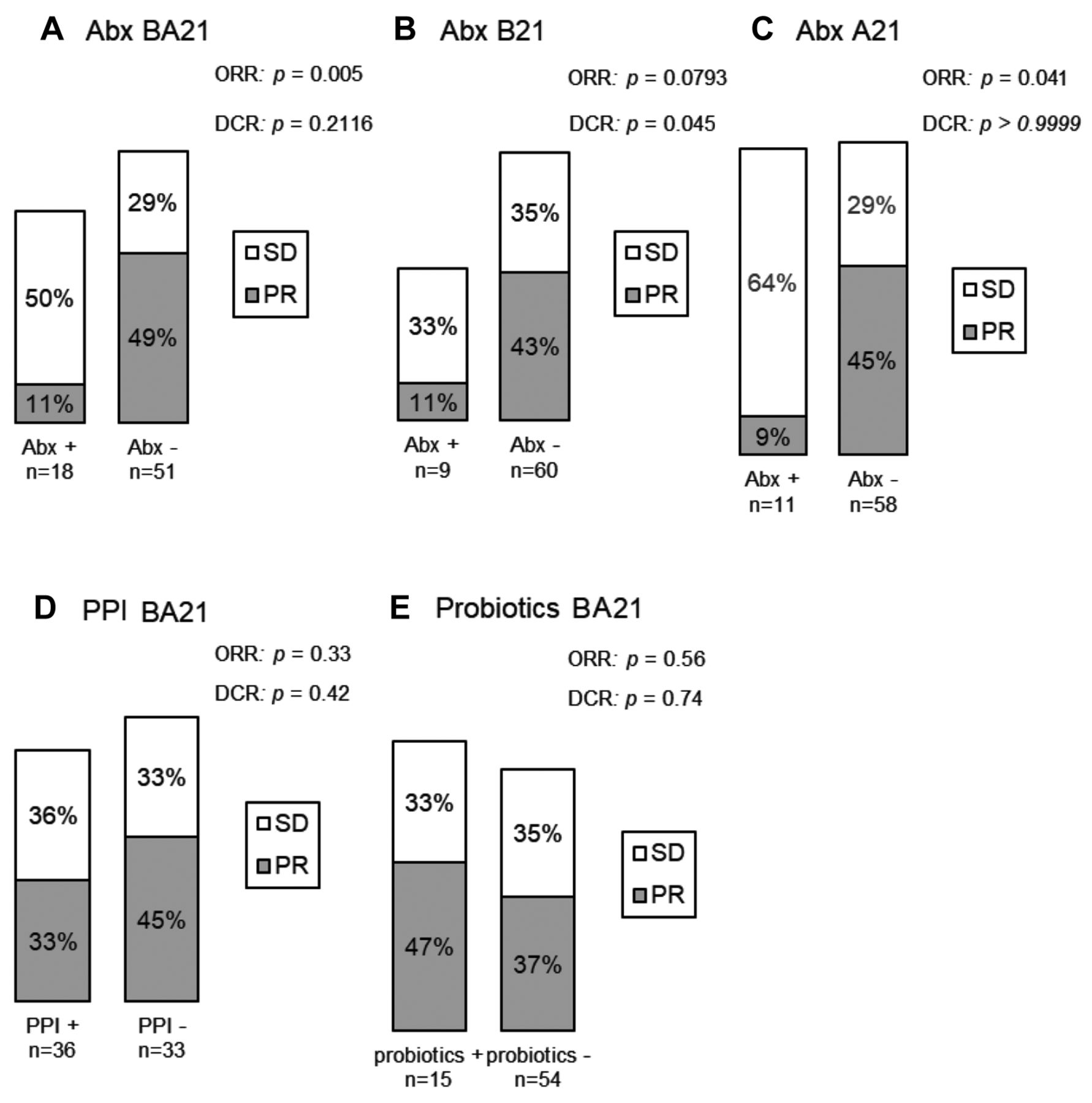
Figure 1.
  • Download figure
  • Open in new tab
  • Download powerpoint
Figure 1.

The overall response rate (ORR) and disease control rate (DCR) to anti-programmed cell death -1 (PD-1) antibody. (A) Abx BA21, patients who received antibiotics within 21 days before or after anti-PD-1 antibody treatment (B) Abx B21, patients who received antibiotics within 21 days before initiation of anti-PD-1 antibody treatment (C) Abx A21, patients who received antibiotics within 21 days after initiation of treatment with anti-PD-1 antibody. (D) Patients who received a proton pump inhibitor (PPI), within 21 days before and after initiation of anti-PD-1 antibody (BA21). (E) Patients treated with probiotics within 21 days before or after anti-PD-1 antibody therapy. ORR: Objective response rate; DCR: disease control rate; SD: stable disease; PR: partial response.

In the Abx BA21 group, the OS (247 versus 873 days, p=0.022, Figure 2A) and PFS (77 versus 239 days, p<0.001, Figure 2B) were significantly shorter in patients treated with antibiotics than in those who did not use antibiotics. Thus, antibiotics reduced OS by 72% and PFS by 68% in patients treated with antibiotics before or after anti-PD-1 antibody treatment (Abx BA21).

Figure 2.
  • Download figure
  • Open in new tab
  • Download powerpoint
Figure 2.

Survival curves and the impact of antibiotics on patients treated with anti-programmed cell death-1 (PD-1) antibody before or after initiation of treatment. Kaplan-Meier curves showing (A) overall survival (OS) and (B) and progression-free survival (PFS) following anti-PD-1 antibody therapy. Abx BA21: Patients who received antibiotics within 21 days before or until 21 days after anti-PD-1 antibody initiation.

In the Abx B21 group, the OS (183 versus 910 days, respectively, p<0.001, Figure 3A) and PFS (71 versus 212 days, respectively, p=0.007, Figure 3B) were significantly shorter in patients who used antibiotics than in those who did not use antibiotics. Thus, antibiotics reduced OS by 80% and PFS by 67% in patients treated with with antibiotics within 21 days before anti-PD-1 antibody therapy (Abx B21).

Figure 3.
  • Download figure
  • Open in new tab
  • Download powerpoint
Figure 3.

Survival curves and the impact of antibiotics on patients treated with anti-programmed cell death-1 (PD-1) antibody using antibiotics within 21 days before anti-PD-1 antibody initiation. Kaplan-Meier curves showing (A) overall survival (OS) and (B) progression-free survival (PFS) following anti-PD-1 antibody therapy. Abx B21: patients receiving antibiotics within 21 days before anti-PD-1 antibody therapy.

In the Abx A21 group, the difference in OS (undefined versus 873 days, respectively, p=0.94, Figure 4A) was not significant, but PFS (65 versus 212 days, respectively, p=0.04, Figure 4B) was significantly shorter in patients who were treated with antibiotics than in those who did not use antibiotics. Thus, antibiotics reduced PFS by 69% in patients treated with anti-PD-1 antibodies within 21 days after initiation of anti-PD-1 antibody therapy. Post-treatment more than 21 days after the initiation of anti-PD-1 antibody therapy with antibiotics did not affect OS and PFS.

Figure 4.
  • Download figure
  • Open in new tab
  • Download powerpoint
Figure 4.

Survival curves of patients treated with anti-programmed cell death-1 (PD-1) antibody using antibiotics (PFS) 21 days after anti-PD-1 antibody initiation. Kaplan-Meier curves showing (A) overall survival (OS) and (B) progression-free survival (PFS) following anti-PD-1 antibody therapy. Abx A21: Patients who received antibiotics 21 days after anti-PD-1 antibody initiation.

No association between the administration of antibiotics and occurrence of immune-related adverse events (irAEs) was observed, including rash, thyroid dysfunction, infusion reaction, radiation pneumonitis, interstitial pneumonia, type 1 diabetes, hypopituitarism, liver damage, or myositis.

Eighteen patients received antibiotics in the present study, and seven types of antibiotics were used in total. Eight patients received oral levofloxacin, four received oral macrolide, six received oral cephem, one received cephem infusion, three received oral trimethoprim-sulfamethoxazole combination, three received carbapenem infusion, and two received tazobactam/piperacillin infusion. The median duration of antibiotics administration was 6 days.

Effect of PPIs and probiotics on the outcome of anti-PD-1 treatment of patients with NSCLC. Eighteen patients (52.2%) received PPIs within 21 days before and after the first administration of the anti-PD-1 antibody. Compared with patients who did not use PPIs, the differences in ORR and DCR were not significant (p=0.33, p=0.42, respectively, Figure 1D). The use of PPIs did not significantly reduce OS or PFS. Moreover, PPIs did not significantly shorten OS (510 versus 910 days, p=0.28) or PFS (115.5 versus 288 days, p=0.11) in patients treated with anti-PD-1 antibody (Figure 5).
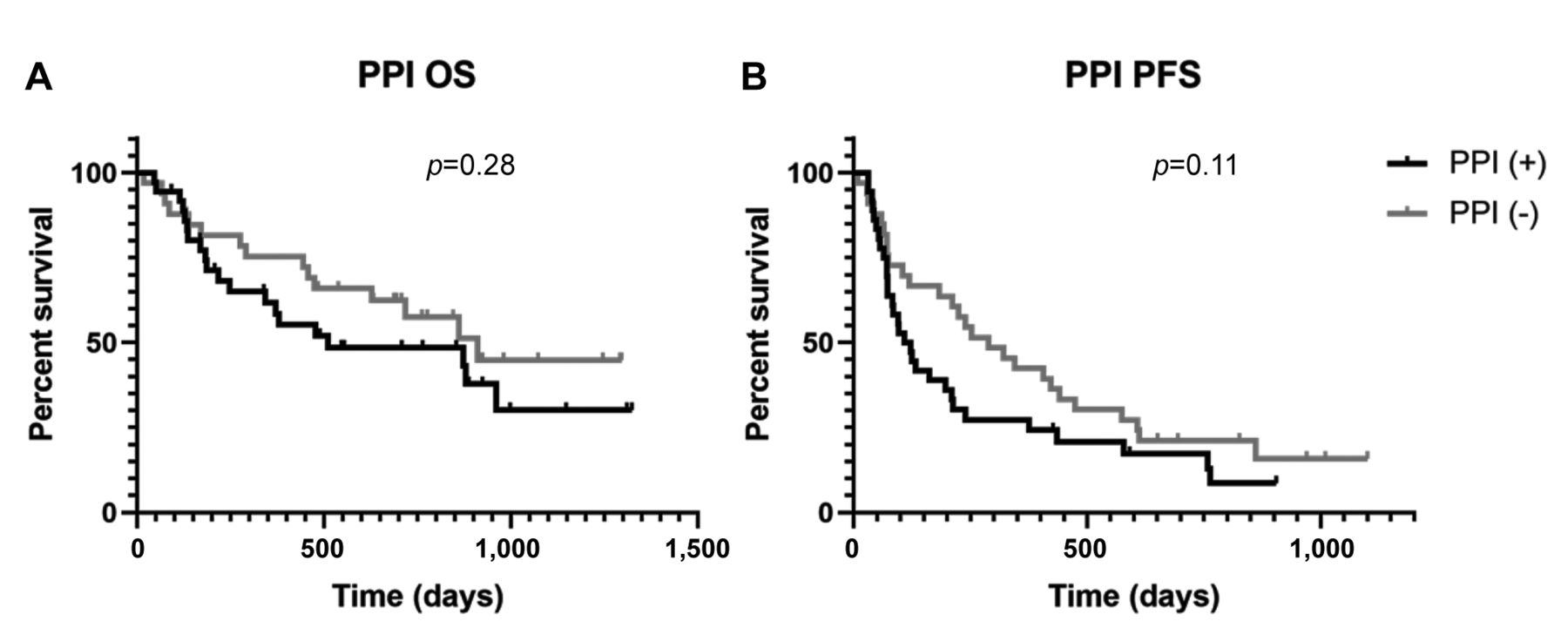
Figure 5.
  • Download figure
  • Open in new tab
  • Download powerpoint
Figure 5.

Survival curves and the impact of a proton pump inhibitor (PPI) on patients (PFS) treated with anti-programmed cell death (PD-1) antibody. Kaplan-Meier curves showing (A) overall survival (OS) and (B) progression-free survival (PFS) following anti-PD-1 antibody therapy.

Fifteen patients (21.7%) received probiotics within 21 days before and after the first administration of anti-PD-1 antibody. There were no differences in the ORR and DCR between the group using probiotics and patients not using probiotics (p=0.56, 0.74, respectively, Figure 1E). Probiotics did not significantly shorten OS (478 versus 879 days, p=0.38) or PFS (109 versus 211 days, p=0.63) in patients treated with anti-PD-1 antibody (Figure 6).

Figure 6.
  • Download figure
  • Open in new tab
  • Download powerpoint
Figure 6.

Survival curves and the impact of probiotics on patients treated with anti-programmed cell death (PD-1) antibody. Kaplan-Meier curves showing (A) overall survival (OS) and (B) progression-free survival (PFS) following anti-PD-1 antibody therapy. Probiotics: Patients who received probiotics during the period of 21 days before until 21 days after initiation of anti-PD-1 antibody treatment. Probio: probiotics.

Multivariate analysis of PFS and OS. Multivariate analysis of PFS further supported the fact that administration of antibiotics was associated with unfavorable prognosis in patients treated with anti-PD-1 antibody [hazard ratio (HR)=3.16, 95% confidence interval (CI)=1.55-6.25, p=0.002]. Administration of antibiotics was an independent risk factor of PFS (Table II). Multivariate analysis of OS showed that antibiotics, PPIs, and probiotics were not associated with an unfavorable prognosis. The HRs were 1.99 (95%CI=0.91-4.09, p=0.082) for the use of antibiotics, 1.44 (95%CI=0.69-3.02, p=0.33) for the use of PPIs, and 1.37 for the use of probiotics (95%CI=0.57-3.05, p=0.46). Male gender and Eastern Cooperative Oncology Group performance status were prognostic factors of patients with NSCLC treated with PD-1 antibody (Table II).

View this table:
  • View inline
  • View popup
  • Download powerpoint
Table II.

Univariate and multivariate analyses of clinical parameters for progression-free survival (PFS) and overall survival (OS).

Discussion

Several previous studies have assessed the efficacy of anti-PD-1 antibody therapy with or without antibiotic treatment in patients with NSCLC (11, 12, 16). The results of such studies suggested that antibiotics worsen OS and PFS in patients taking anti-PD-1 antibody. In a previous study, the PFS of patients with malignant melanoma who received antibiotics within 30 days of starting treatment with anti-PD-1 antibody was shortened, but the difference in OS was not significant (13). In the present study antibiotics significantly reduced OS and PFS.

In the present study, both OS and PFS were significantly reduced by antibiotic administration within 21 days before initiation of the administration of anti-PD-1 antibody. PFS but not OS was significantly reduced by antibiotic use within 21 days after the initiation of anti-PD-1 antibody treatment.

The composition and diversity of the gut microbiota before starting treatment with ICIs affects therapeutic efficacy (6, 8). Previous meta-analysis supports the idea that the effect of antibiotics on the outcome of ICI immunotherapies depends on the time of administration (16). In a previous study, antibiotics were significantly detrimental to the efficacy of ICI immunotherapy when administrated between ‒ 60 and + 60 days from the initiation of treatment. Administration of antibiotics later than 60 days from the initiation of treatment did not affect survival (16). In the present study, the median duration of antibiotics administration was 6 days. The results suggested that short-term administration of antibiotics had a significant effect on the efficacy of anti-PD-1 immunotherapy.

As with antibiotics, PPIs modify the gut microbiota. Oral microbiota can quickly enter the intestine because PPIs increase the pH in the stomach. Thus, the composition of the gut microbiota changes and the diversity decreases. The association between the microbiome and treatment with PPIs is independent of the dose of antibiotics administered (17). In a previous study, PPIs reduced the efficacy of the anti-PD-L1 antibody atezolizumab (18). However, there are other reports stating that PPIs did not affect the outcome of treatment with ICIs. In the present study, the use of PPIs did not significantly reduce OS and PFS. It has been previously shown that probiotics do not cause significant changes to the gut microbiota (19-21). In the present study, probiotics did not affect the therapeutic outcome of ICIs possibly due to the high levels of Bifidobacterium found in some Japanese patients compared to patients from the United States and Europe (22).

The present study has the limitation that it is retrospective; A further prospective study that investigates the effects of antibiotics on the therapeutic outcome of ICIs is required. The results of the present study, however, indicate that the use of antibiotics within the indicated time periods of anti-PD-1 therapy is contraindicated.

View this table:
  • View inline
  • View popup
  • Download powerpoint
Table III.

Overall survival in the studies of patients receiving antibiotics and the efficacy of immune check point inhibitors (ICI) in NSCLC.

Acknowledgements

The Authors wish to thank Ms. Manami Kobayashi and Editage for editing and reviewing this manuscript and Ms. Ayako Hamada for support.

Footnotes

  • This article is freely accessible online.

  • Authors’ Contributions

    K.H. and K.Y. designed, performed investigation, analyzed data, and wrote the paper; Y.H., M.H., R.O., MS, Y.K., S.M., and T.I. collected the clinical data of the patients and gave technical support.; TS, AH, AK, SW, JT, NU, YK, SK, R.M.H., and TT. supervised the findings of this work and reviewed the manuscript.; E.I. supervised the statistical analysis.

  • Conflicts of Interest

    The Authors have no conflicts of interest to declare in relation to this study.

  • Received July 29, 2021.
  • Revision received August 22, 2021.
  • Accepted August 23, 2021.
  • Copyright © 2021 International Institute of Anticancer Research (Dr. George J. Delinasios), All rights reserved.

References

  1. ↵
    1. Larkin J,
    2. Chiarion-Sileni V,
    3. Gonzalez R,
    4. Grob JJ,
    5. Rutkowski P,
    6. Lao CD,
    7. Cowey CL,
    8. Schadendorf D,
    9. Wagstaff J,
    10. Dummer R,
    11. Ferrucci PF,
    12. Smylie M,
    13. Hogg D,
    14. Hill A,
    15. Márquez-Rodas I,
    16. Haanen J,
    17. Guidoboni M,
    18. Maio M,
    19. Schöffski P,
    20. Carlino MS,
    21. Lebbé C,
    22. McArthur G,
    23. Ascierto PA,
    24. Daniels GA,
    25. Long GV,
    26. Bastholt L,
    27. Rizzo JI,
    28. Balogh A,
    29. Moshyk A,
    30. Hodi FS and
    31. Wolchok JD
    : Five-year survival with combined nivolumab and ipilimumab in advanced melanoma. N Engl J Med 381(16): 1535-1546, 2019. PMID: 31562797. DOI: 10.1056/NEJMoa1910836
    OpenUrlCrossRefPubMed
  2. ↵
    1. Sivan A,
    2. Corrales L,
    3. Hubert N,
    4. Williams JB,
    5. Aquino-Michaels K,
    6. Earley ZM,
    7. Benyamin FW,
    8. Lei YM,
    9. Jabri B,
    10. Alegre ML,
    11. Chang EB and
    12. Gajewski TF
    : Commensal Bifidobacterium promotes antitumor immunity and facilitates anti-PD-L1 efficacy. Science 350(6264): 1084-1089, 2015. PMID: 26541606. DOI: 10.1126/science.aac4255
    OpenUrlAbstract/FREE Full Text
    1. Hooper LV,
    2. Littman DR and
    3. Macpherson AJ
    : Interactions between the microbiota and the immune system. Science 336(6086): 1268-1273, 2012. PMID: 22674334. DOI: 10.1126/science.1223490
    OpenUrlAbstract/FREE Full Text
    1. Vétizou M,
    2. Pitt JM,
    3. Daillère R,
    4. Lepage P,
    5. Waldschmitt N,
    6. Flament C,
    7. Rusakiewicz S,
    8. Routy B,
    9. Roberti MP,
    10. Duong CP,
    11. Poirier-Colame V,
    12. Roux A,
    13. Becharef S,
    14. Formenti S,
    15. Golden E,
    16. Cording S,
    17. Eberl G,
    18. Schlitzer A,
    19. Ginhoux F,
    20. Mani S,
    21. Yamazaki T,
    22. Jacquelot N,
    23. Enot DP,
    24. Bérard M,
    25. Nigou J,
    26. Opolon P,
    27. Eggermont A,
    28. Woerther PL,
    29. Chachaty E,
    30. Chaput N,
    31. Robert C,
    32. Mateus C,
    33. Kroemer G,
    34. Raoult D,
    35. Boneca IG,
    36. Carbonnel F,
    37. Chamaillard M and
    38. Zitvogel L
    : Anticancer immunotherapy by CTLA-4 blockade relies on the gut microbiota. Science 350(6264): 1079-1084, 2015. PMID: 26541610. DOI: 10.1126/science.aad1329
    OpenUrlAbstract/FREE Full Text
  3. ↵
    1. Fessler J,
    2. Matson V and
    3. Gajewski TF
    : Exploring the emerging role of the microbiome in cancer immunotherapy. J Immunother Cancer 7(1): 108, 2019. PMID: 30995949. DOI: 10.1186/s40425-019-0574-4
    OpenUrlAbstract/FREE Full Text
  4. ↵
    1. Gopalakrishnan V,
    2. Spencer CN,
    3. Nezi L,
    4. Reuben A,
    5. Andrews MC,
    6. Karpinets TV,
    7. Prieto PA,
    8. Vicente D,
    9. Hoffman K,
    10. Wei SC,
    11. Cogdill AP,
    12. Zhao L,
    13. Hudgens CW,
    14. Hutchinson DS,
    15. Manzo T,
    16. Petaccia de Macedo M,
    17. Cotechini T,
    18. Kumar T,
    19. Chen WS,
    20. Reddy SM,
    21. Szczepaniak Sloane R,
    22. Galloway-Pena J,
    23. Jiang H,
    24. Chen PL,
    25. Shpall EJ,
    26. Rezvani K,
    27. Alousi AM,
    28. Chemaly RF,
    29. Shelburne S,
    30. Vence LM,
    31. Okhuysen PC,
    32. Jensen VB,
    33. Swennes AG,
    34. McAllister F,
    35. Marcelo Riquelme Sanchez E,
    36. Zhang Y,
    37. Le Chatelier E,
    38. Zitvogel L,
    39. Pons N,
    40. Austin-Breneman JL,
    41. Haydu LE,
    42. Burton EM,
    43. Gardner JM,
    44. Sirmans E,
    45. Hu J,
    46. Lazar AJ,
    47. Tsujikawa T,
    48. Diab A,
    49. Tawbi H,
    50. Glitza IC,
    51. Hwu WJ,
    52. Patel SP,
    53. Woodman SE,
    54. Amaria RN,
    55. Davies MA,
    56. Gershenwald JE,
    57. Hwu P,
    58. Lee JE,
    59. Zhang J,
    60. Coussens LM,
    61. Cooper ZA,
    62. Futreal PA,
    63. Daniel CR,
    64. Ajami NJ,
    65. Petrosino JF,
    66. Tetzlaff MT,
    67. Sharma P,
    68. Allison JP,
    69. Jenq RR and
    70. Wargo JA
    : Gut microbiome modulates response to anti-PD-1 immunotherapy in melanoma patients. Science 359(6371): 97-103, 2018. PMID: 29097493. DOI: 10.1126/science.aan4236
    OpenUrlAbstract/FREE Full Text
  5. ↵
    1. Routy B,
    2. Le Chatelier E,
    3. Derosa L,
    4. Duong CPM,
    5. Alou MT,
    6. Daillère R,
    7. Fluckiger A,
    8. Messaoudene M,
    9. Rauber C,
    10. Roberti MP,
    11. Fidelle M,
    12. Flament C,
    13. Poirier-Colame V,
    14. Opolon P,
    15. Klein C,
    16. Iribarren K,
    17. Mondragón L,
    18. Jacquelot N,
    19. Qu B,
    20. Ferrere G,
    21. Clémenson C,
    22. Mezquita L,
    23. Masip JR,
    24. Naltet C,
    25. Brosseau S,
    26. Kaderbhai C,
    27. Richard C,
    28. Rizvi H,
    29. Levenez F,
    30. Galleron N,
    31. Quinquis B,
    32. Pons N,
    33. Ryffel B,
    34. Minard-Colin V,
    35. Gonin P,
    36. Soria JC,
    37. Deutsch E,
    38. Loriot Y,
    39. Ghiringhelli F,
    40. Zalcman G,
    41. Goldwasser F,
    42. Escudier B,
    43. Hellmann MD,
    44. Eggermont A,
    45. Raoult D,
    46. Albiges L,
    47. Kroemer G and
    48. Zitvogel L
    : Gut microbiome influences efficacy of PD-1-based immunotherapy against epithelial tumors. Science 359(6371): 91-97, 2018. PMID: 29097494. DOI: 10.1126/science.aan3706
    OpenUrlAbstract/FREE Full Text
  6. ↵
    1. Matson V,
    2. Fessler J,
    3. Bao R,
    4. Chongsuwat T,
    5. Zha Y,
    6. Alegre ML,
    7. Luke JJ and
    8. Gajewski TF
    : The commensal microbiome is associated with anti-PD-1 efficacy in metastatic melanoma patients. Science 359(6371): 104-108, 2018. PMID: 29302014. DOI: 10.1126/science.aao3290
    OpenUrlAbstract/FREE Full Text
  7. ↵
    1. Modi SR,
    2. Collins JJ and
    3. Relman DA
    : Antibiotics and the gut microbiota. J Clin Invest 124(10): 4212-4218, 2014. PMID: 25271726. DOI: 10.1172/JCI72333
    OpenUrlCrossRefPubMed
  8. ↵
    1. Langdon A,
    2. Crook N and
    3. Dantas G
    : The effects of antibiotics on the microbiome throughout development and alternative approaches for therapeutic modulation. Genome Med 8(1): 39, 2016. PMID: 27074706. DOI: 10.1186/s13073-016-0294-z
    OpenUrlCrossRefPubMed
  9. ↵
    1. Derosa L,
    2. Hellmann MD,
    3. Spaziano M,
    4. Halpenny D,
    5. Fidelle M,
    6. Rizvi H,
    7. Long N,
    8. Plodkowski AJ,
    9. Arbour KC,
    10. Chaft JE,
    11. Rouche JA,
    12. Zitvogel L,
    13. Zalcman G,
    14. Albiges L,
    15. Escudier B and
    16. Routy B
    : Negative association of antibiotics on clinical activity of immune checkpoint inhibitors in patients with advanced renal cell and non-small-cell lung cancer. Ann Oncol 29(6): 1437-1444, 2018. PMID: 29617710. DOI: 10.1093/annonc/mdy103
    OpenUrlCrossRefPubMed
  10. ↵
    1. Zhao S,
    2. Gao G,
    3. Li W,
    4. Li X,
    5. Zhao C,
    6. Jiang T,
    7. Jia Y,
    8. He Y,
    9. Li A,
    10. Su C,
    11. Ren S,
    12. Chen X and
    13. Zhou C
    : Antibiotics are associated with attenuated efficacy of anti-PD-1/PD-L1 therapies in Chinese patients with advanced non-small cell lung cancer. Lung Cancer 130: 10-17, 2019. PMID: 30885328. DOI: 10.1016/j.lungcan.2019.01.017
    OpenUrlCrossRefPubMed
  11. ↵
    1. Elkrief A,
    2. El Raichani L,
    3. Richard C,
    4. Messaoudene M,
    5. Belkaid W,
    6. Malo J,
    7. Belanger K,
    8. Miller W,
    9. Jamal R,
    10. Letarte N,
    11. Wong P and
    12. Routy B
    : Antibiotics are associated with decreased progression-free survival of advanced melanoma patients treated with immune checkpoint inhibitors. Oncoimmunology 8(4): e1568812, 2019. PMID: 30906663. DOI: 10.1080/2162402X.2019.1568812
    OpenUrlCrossRefPubMed
    1. Tinsley N,
    2. Zhou C,
    3. Tan G,
    4. Rack S,
    5. Lorigan P,
    6. Blackhall F,
    7. Krebs M,
    8. Carter L,
    9. Thistlethwaite F,
    10. Graham D and
    11. Cook N
    : Cumulative antibiotic use significantly decreases efficacy of checkpoint inhibitors in patients with advanced cancer. Oncologist 25(1): 55-63, 2020. PMID: 31292268. DOI: 10.1634/theoncologist.2019-0160
    OpenUrlCrossRefPubMed
  12. ↵
    1. Pinato DJ,
    2. Howlett S,
    3. Ottaviani D,
    4. Urus H,
    5. Patel A,
    6. Mineo T,
    7. Brock C,
    8. Power D,
    9. Hatcher O,
    10. Falconer A,
    11. Ingle M,
    12. Brown A,
    13. Gujral D,
    14. Partridge S,
    15. Sarwar N,
    16. Gonzalez M,
    17. Bendle M,
    18. Lewanski C,
    19. Newsom-Davis T,
    20. Allara E and
    21. Bower M
    : Association of prior antibiotic treatment with survival and response to immune checkpoint inhibitor therapy in patients with cancer. JAMA Oncol 5(12): 1774-1778, 2019. PMID: 31513236. DOI: 10.1001/jamaoncol.2019.2785
    OpenUrlCrossRefPubMed
  13. ↵
    1. Lurienne L,
    2. Cervesi J,
    3. Duhalde L,
    4. de Gunzburg J,
    5. Andremont A,
    6. Zalcman G,
    7. Buffet R and
    8. Bandinelli PA
    : nsclc immunotherapy efficacy and antibiotic use: a systematic review and meta-analysis. J Thorac Oncol 15(7): 1147-1159, 2020. PMID: 32173463. DOI: 10.1016/j.jtho.2020.03.002
    OpenUrlCrossRefPubMed
  14. ↵
    1. Imhann F,
    2. Bonder MJ,
    3. Vich Vila A,
    4. Fu J,
    5. Mujagic Z,
    6. Vork L,
    7. Tigchelaar EF,
    8. Jankipersadsing SA,
    9. Cenit MC,
    10. Harmsen HJ,
    11. Dijkstra G,
    12. Franke L,
    13. Xavier RJ,
    14. Jonkers D,
    15. Wijmenga C,
    16. Weersma RK and
    17. Zhernakova A
    : Proton pump inhibitors affect the gut microbiome. Gut 65(5): 740-748, 2016. PMID: 26657899. DOI: 10.1136/gutjnl-2015-310376
    OpenUrlAbstract/FREE Full Text
  15. ↵
    1. Chalabi M,
    2. Cardona A,
    3. Nagarkar DR,
    4. Dhawahir Scala A,
    5. Gandara DR,
    6. Rittmeyer A,
    7. Albert ML,
    8. Powles T,
    9. Kok M,
    10. Herrera FG and imCORE working group of early career investigators
    : Efficacy of chemotherapy and atezolizumab in patients with non-small-cell lung cancer receiving antibiotics and proton pump inhibitors: pooled post hoc analyses of the OAK and POPLAR trials. Ann Oncol 31(4): 525-531, 2020. PMID: 32115349. DOI: 10.1016/j.annonc.2020.01.006
    OpenUrlCrossRefPubMed
  16. ↵
    1. Hemarajata P and
    2. Versalovic J
    : Effects of probiotics on gut microbiota: mechanisms of intestinal immunomodulation and neuromodulation. Therap Adv Gastroenterol 6(1): 39-51, 2013. PMID: 23320049. DOI: 10.1177/1756283X12459294
    OpenUrlCrossRefPubMed
    1. Odamaki T,
    2. Kato K,
    3. Sugahara H,
    4. Xiao JZ,
    5. Abe F and
    6. Benno Y
    : Effect of probiotic yoghurt on animal-based diet-induced change in gut microbiota: an open, randomised, parallel-group study. Benef Microbes 7(4): 473-484, 2016. PMID: 27133564. DOI: 10.3920/BM2015.0173
    OpenUrlCrossRefPubMed
  17. ↵
    1. Scott KP,
    2. Antoine JM,
    3. Midtvedt T and
    4. van Hemert S
    : Manipulating the gut microbiota to maintain health and treat disease. Microb Ecol Health Dis 26: 25877, 2015. PMID: 25651995. DOI: 10.3402/mehd.v26.25877
    OpenUrlCrossRefPubMed
  18. ↵
    1. Kato K,
    2. Ishida S,
    3. Tanaka M,
    4. Mitsuyama E,
    5. Xiao JZ and
    6. Odamaki T
    : Association between functional lactase variants and a high abundance of Bifidobacterium in the gut of healthy Japanese people. PLoS One 13(10): e0206189, 2018. PMID: 30339693. DOI: 10.1371/journal.pone.0206189
    OpenUrlCrossRefPubMed
PreviousNext
Back to top

In this issue

Anticancer Research
Vol. 41, Issue 10
October 2021
  • Table of Contents
  • Table of Contents (PDF)
  • Index by author
  • Back Matter (PDF)
  • Ed Board (PDF)
  • Front Matter (PDF)
Print
Download PDF
Article Alerts
Sign In to Email Alerts with your Email Address
Email Article

Thank you for your interest in spreading the word on Anticancer Research.

NOTE: We only request your email address so that the person you are recommending the page to knows that you wanted them to see it, and that it is not junk mail. We do not capture any email address.

Enter multiple addresses on separate lines or separate them with commas.
Antibiotic Usage Reduced Overall Survival by over 70% in Non-small Cell Lung Cancer Patients on Anti-PD-1 Immunotherapy
(Your Name) has sent you a message from Anticancer Research
(Your Name) thought you would like to see the Anticancer Research web site.
CAPTCHA
This question is for testing whether or not you are a human visitor and to prevent automated spam submissions.
3 + 0 =
Solve this simple math problem and enter the result. E.g. for 1+3, enter 4.
Citation Tools
Antibiotic Usage Reduced Overall Survival by over 70% in Non-small Cell Lung Cancer Patients on Anti-PD-1 Immunotherapy
KAZUYUKI HAMADA, KIYOSHI YOSHIMURA, YUYA HIRASAWA, MASAHIRO HOSONUMA, MASAKAZU MURAYAMA, YOICHIRO NARIKAWA, HIROTSUGU ARIIZUMI, RYOTARO OHKUMA, MIDORI SHIDA, YUTARO KUBOTA, SATOSHI MATSUKUMA, TOMOYUKI ISHIGURO, TAKEHIKO SAMBE, ATSUSHI HORIIKE, ATSUO KURAMASU, SATOSHI WADA, JUNJI TSURUTANI, EISUKE INOUE, NAOKI UCHIDA, YUJI KIUCHI, SHINICHI KOBAYASHI, ROBERT M. HOFFMAN, TAKUYA TSUNODA
Anticancer Research Oct 2021, 41 (10) 4985-4993; DOI: 10.21873/anticanres.15312

Citation Manager Formats

  • BibTeX
  • Bookends
  • EasyBib
  • EndNote (tagged)
  • EndNote 8 (xml)
  • Medlars
  • Mendeley
  • Papers
  • RefWorks Tagged
  • Ref Manager
  • RIS
  • Zotero
Reprints and Permissions
Share
Antibiotic Usage Reduced Overall Survival by over 70% in Non-small Cell Lung Cancer Patients on Anti-PD-1 Immunotherapy
KAZUYUKI HAMADA, KIYOSHI YOSHIMURA, YUYA HIRASAWA, MASAHIRO HOSONUMA, MASAKAZU MURAYAMA, YOICHIRO NARIKAWA, HIROTSUGU ARIIZUMI, RYOTARO OHKUMA, MIDORI SHIDA, YUTARO KUBOTA, SATOSHI MATSUKUMA, TOMOYUKI ISHIGURO, TAKEHIKO SAMBE, ATSUSHI HORIIKE, ATSUO KURAMASU, SATOSHI WADA, JUNJI TSURUTANI, EISUKE INOUE, NAOKI UCHIDA, YUJI KIUCHI, SHINICHI KOBAYASHI, ROBERT M. HOFFMAN, TAKUYA TSUNODA
Anticancer Research Oct 2021, 41 (10) 4985-4993; DOI: 10.21873/anticanres.15312
Twitter logo Facebook logo Mendeley logo
  • Tweet Widget
  • Facebook Like
  • Google Plus One

Jump to section

  • Article
    • Abstract
    • Patients and Methods
    • Results
    • Discussion
    • Acknowledgements
    • Footnotes
    • References
  • Figures & Data
  • Info & Metrics
  • PDF

Related Articles

Cited By...

  • No citing articles found.
  • Google Scholar

More in this TOC Section

  • Identification of Risk Factors for the Local Recurrence of Hepatocellular Carcinoma Post-radiofrequency Ablation
  • Practical Implementation and Validation of Geriatric Assessment in Older Adults With Esophageal Cancer
  • Laparotomy After Total Pelvic Exenteration: Current Status and Techniques for Ileal Conduit Preservation
Show more Clinical Studies

Keywords

  • antibiotics
  • gut microbiota
  • immune checkpoint inhibitors
  • non-small cell lung cancer
  • survival
Anticancer Research

© 2026 Anticancer Research

Powered by HighWire