Main menu

  • Home
  • Current Issue
  • Archive
  • Info for
    • Authors
    • Editorial Policies
    • Subscribers
    • Advertisers
    • Editorial Board
    • Special Issues
  • Journal Metrics
  • Other Publications
    • In Vivo
    • Cancer Genomics & Proteomics
    • Cancer Diagnosis & Prognosis
  • More
    • IIAR
    • Conferences
    • 2008 Nobel Laureates
  • About Us
    • General Policy
    • Contact
  • Other Publications
    • Anticancer Research
    • In Vivo
    • Cancer Genomics & Proteomics

User menu

  • Register
  • Subscribe
  • My alerts
  • Log in
  • My Cart

Search

  • Advanced search
Anticancer Research
  • Other Publications
    • Anticancer Research
    • In Vivo
    • Cancer Genomics & Proteomics
  • Register
  • Subscribe
  • My alerts
  • Log in
  • My Cart
Anticancer Research

Advanced Search

  • Home
  • Current Issue
  • Archive
  • Info for
    • Authors
    • Editorial Policies
    • Subscribers
    • Advertisers
    • Editorial Board
    • Special Issues
  • Journal Metrics
  • Other Publications
    • In Vivo
    • Cancer Genomics & Proteomics
    • Cancer Diagnosis & Prognosis
  • More
    • IIAR
    • Conferences
    • 2008 Nobel Laureates
  • About Us
    • General Policy
    • Contact
  • Visit us on Facebook
  • Follow us on Linkedin
Research ArticleProceedings of the Joint International Symposium “Vitamin D in Prevention and Therapy” and “Biologic Effects of Light”, June 21-23, 2017 (Homburg/Saar, Germany)

Effects of Combined Treatment with Vitamin D and COX2 Inhibitors on Breast Cancer Cell Lines

MICHAEL FRIEDRICH, KATHRIN REICHERT, ALENA WOESTE, STEPHAN POLACK, DOROTHEA FISCHER, FRIEDERIKE HOELLEN, ACHIM RODY, FRANK KÖSTER and MARC THILL
Anticancer Research February 2018, 38 (2) 1201-1207;
MICHAEL FRIEDRICH
1Department of Gynecology and Obstetrics, Helios Hospital Krefeld, Krefeld, Germany
  • Find this author on Google Scholar
  • Find this author on PubMed
  • Search for this author on this site
  • For correspondence: michael.friedrich{at}helios-kliniken.de
KATHRIN REICHERT
2Department of Gynecology and Obstetrics, University of Lübeck, Lübeck, Germany
  • Find this author on Google Scholar
  • Find this author on PubMed
  • Search for this author on this site
ALENA WOESTE
2Department of Gynecology and Obstetrics, University of Lübeck, Lübeck, Germany
  • Find this author on Google Scholar
  • Find this author on PubMed
  • Search for this author on this site
STEPHAN POLACK
2Department of Gynecology and Obstetrics, University of Lübeck, Lübeck, Germany
  • Find this author on Google Scholar
  • Find this author on PubMed
  • Search for this author on this site
DOROTHEA FISCHER
2Department of Gynecology and Obstetrics, University of Lübeck, Lübeck, Germany
  • Find this author on Google Scholar
  • Find this author on PubMed
  • Search for this author on this site
FRIEDERIKE HOELLEN
2Department of Gynecology and Obstetrics, University of Lübeck, Lübeck, Germany
  • Find this author on Google Scholar
  • Find this author on PubMed
  • Search for this author on this site
ACHIM RODY
2Department of Gynecology and Obstetrics, University of Lübeck, Lübeck, Germany
  • Find this author on Google Scholar
  • Find this author on PubMed
  • Search for this author on this site
FRANK KÖSTER
2Department of Gynecology and Obstetrics, University of Lübeck, Lübeck, Germany
  • Find this author on Google Scholar
  • Find this author on PubMed
  • Search for this author on this site
MARC THILL
3Department of Gynecology and Obstetrics, Agaplesion Markus Hospital, Frankfurt am Main, Germany
  • Find this author on Google Scholar
  • Find this author on PubMed
  • Search for this author on this site
  • Article
  • Figures & Data
  • Info & Metrics
  • PDF
Loading

Abstract

Background: Vitamin D is known for its anticancer potential. Prostaglandin E2 (PGE2) is a proliferative and inflammation-activating agent. The production of PGE2 is dependent on the activity of cyclooxygenase-2 (COX2). A link between vitamin D and PGE2 metabolism was shown recently. Materials and Methods: In MDA-MB-231 and MCF-7 breast cancer cell lines, we investigated the influence of calcitriol and the COX2 inhibitor celecoxib on cell growth via the MTT test, as well as on the protein and mRNA expression of COX2 using western blot and quantitative real-time polymerase chain reaction (qRT-PCR). Results: The proliferation of MCF-7 and MDA-MB-231 was inhibited by both calcitriol and the COX2 inhibitor celecoxib and even more strongly by their combination. Moreover, calcitriol inhibited COX2 protein expression in MDA-MB-231 cells, as well as COX2 mRNA expression in both cell lines. Conclusion: The combination of calcitriol and celecoxib demonstrated a synergistic growth-inhibitory effect in breast cancer cell lines.

  • Vitamin D
  • celecoxib
  • cyclooxygenase-2
  • breast cancer MDA-MB-231 cells

The estimated annual incidence of breast cancer in the USA for 2014 for women is 232,670, with an estimated 40,000 deaths (1). In 2010, 17,853 patients with breast cancer died in Germany (2). Thus, it is the most significant malignancy in females. Because of the increasing number of patients, there is an unmet need for new preventative strategies and new treatment approaches.

Many advances in breast cancer treatment have been made in the past decade. Many biological approaches have led to targeted and more effective treatment, and gene-expression profiling for a better understanding of breast cancer and its subgroups. Numerous new promising targets still warrant further exploration. Two of these targets are cyclooxygenase-2 (COX2), the key enzyme required to convert arachidonic acid to prostaglandins (PG), and calcitriol [1,25-dihydroxycholecalciferol or 1,25-(OH)2D3], which is the biologically active form of vitamin D (3).

Calcitriol is known to suppress cell growth, tumor growth and inhibit metastasis, as well as prolong survival in animal models (4). It particularly inhibits the growth of human breast cancer cell lines (5, 6). Multiple epidemiological studies have suggested that vitamin D has a protective effect against the carcinogenesis and progression of breast cancer (7-10). However, concerning the correlation between vitamin D intake and breast cancer risk, data are still conflicting (9-13). Calcitriol has been shown to exhibit significant anti-inflammatory actions in breast cancer cells (14, 15). The pro-inflammatory PGs play an important role in the development and progression of breast cancer (16).

Increasing attention has been paid to the role of an inflammatory microenvironment in carcinogenesis. The interaction of inflammatory cytokines, growth factors and oncogene activation has been implicated in the fast induction of COX2 expression during carcinogenesis as COX2 affects tumor progression by participating in malignant proliferation, invasion and metastasis (17). High expression of COX2 is associated with increased proliferation, invasion, apoptotic resistance and angiogenesis (18, 19) and is, therefore, associated with a poor prognosis for patients with cancer (20).

Several epidemiological, preclinical and clinical studies support the idea that COX-targeting non-steroidal anti-inflammatory drugs (NSAIDs) play protective roles against breast cancer (21-24). Consequently, we hypothesized that a combination of COX2 inhibition and calcitriol could exert an increased antiproliferative effect on breast cancer cells and could offer new preventative or treatment approaches in the future. A link between vitamin D and PGE2 metabolism (25-27) was already proposed in breast cancer tissue (28, 29) in our recent publications.

The aim of the current study was to evaluate a possible synergistic activity of calcitriol, as the active form of vitamin D, and the COX2 inhibitor celecoxib in breast cancer cells.

Materials and Methods

Cell culture. MCF-7 and MDA-MB-231 breast cancer cell lines were purchased from Leibniz-Institut DSMZ-Deutsche Sammlung von Mikroorganismen und Zellkulturen GmbH (Braunschweig, Germany). The cells were grown in RPMI 1640 (Life-Technologies, Darmstadt, Germany) supplemented with 10% fetal calf serum (FCS) and penicillin/streptomycin (both from PAA-Laboratories, Cölbe, Germany), at 37°C in a humidified atmosphere with 5% CO2.

Growth experiments. To compare the proliferative rate between treated cells we used 3-(4,5-dimethylthiazol-2-yl)-2,5-diphenyltetrazolium bromide (MTT)assays. Briefly, 3,000 cells/well were plated on a 96-well microplate. After 24 h, the medium was changed to contain 3% FCS and test substances were added [calcitriol (0.001, 0.01, 0.1, 1 and 10 μM), celecoxib (1 and 10 μM) and combination of calcitriol and celecoxib (10 μM calcitriol and 1 μM celecoxib, 10 μM calcitriol and 10 μM celecoxib)], all of which were re-solved and diluted in dimethylsulfoxide (DMSO); 1,000 × stock solutions for calcitriol and 10,000×stock solution for celecoxib (both from Sigma, Taufkirchen, Germany). All solvent controls contained 0.1% DMSO. Six wells were treated for each concentration of each agent used. After 72 h of treatment, the medium was replaced by 10% MTT solution (5 mg/ml thiazolyl blue in PBS; Sigma) for a further 4-h incubation period. The reaction was then stopped and dissolution of formazan crystals was performed in the dark overnight by adding 100 μl stop-solution (10% (w/v) sodium dodecyl sulfate, 50% N,N-dimethylformamide, pH 4.7). A microplate-reader (Dynatech Laboratories-MRX; DPC Biermann, Bad Nauheim, Germany) was used to measure the absorption of the wells at 560 nm.

Protein expression. To compare the COX2 protein expression, 300,000 cells were plated on 6-well plates in growth medium for 24 h. Afterwards, treatment with 0.1 μM calcitriol, 1 μM calcitriol, 1 μM celecoxib and the combination of 1 μM calcitriol and 1 μM celecoxib was performed in media without FCS for 24 h. Total protein was then extracted using MPER-buffer (GE Healthcare, München, Germany). Equal amounts of protein were analyzed in western blots with a monoclonal COX2 antibody (clone CX229; Biomol, Hamburg, Germany) and a β-actin antibody (clone AC-15; Sigma). Immunoreactive bands were detected with the Immobilon-Western-Chemiluminescent-HRP-Substrate on Hyperfilm-ECL-Performance-Chemiluminescent-Film (both from GE Healthcare). The films were scanned and a densitometric analysis of the protein bands was performed using Easy-Win software (Herolab, Wiesloch, Germany).

Expression of COX2 mRNA. For the relative comparison of COX2 mRNA expression, quantitative reverse transcription polymerase chain reaction (qRT-PCR) was used. Therefore, 300,000 cells per well were plated on a 6-well plate in growth media and the media were replaced after 24 h by fresh media containing 3% FCS together with agents. After 24 h of treatment, total RNA was isolated by using QIAzol (Qiagen, Hilden, Germany). For reverse transcription, 1 μg RNA was used together with random primers and Superscript-II (Invitrogen, Karslruhe, Germany). For qPCR, Platinum-SYBR-Green-qPCR-Super-Mix-UDG (Invitrogen) was used. As primers for COX2, we used the Hs_PTGS2_1_SG-QuantiTect-Primer-Assay (Qiagen) and for hypoxanthine-guanine phosphoribosyltranferase 1 (HPRT1), we used forward: 5’-TCA GGC AGT ATA ATC CAA AGA TGG T-3’ and reverse: 5’-AGT CTG GCT TAT ATC CAA CAC TTC G-3’ primers (synthesized at Metabion, Martinsried, Germany). The PCR protocol consisted of 42 cycles for 15 s at 95°C and 30 s at 60°C. Each sample was tested in duplicates. Data were further processed with the Excel-based program REST-MCS©-version 2 (Qiagen).

Results

Treatment of breast cancer cell lines with calcitriol. Calcitriol reduced the growth of MCF-7 breast cancer cells significantly at concentrations between 100 nM and 10 μM to 71.5% and 36.8%, respectively, compared to the solvent control (Figure 1A). The growth of MDA-MB-231 cells was also inhibited by 10 μM calcitriol to 88.4% (Figure 1B).

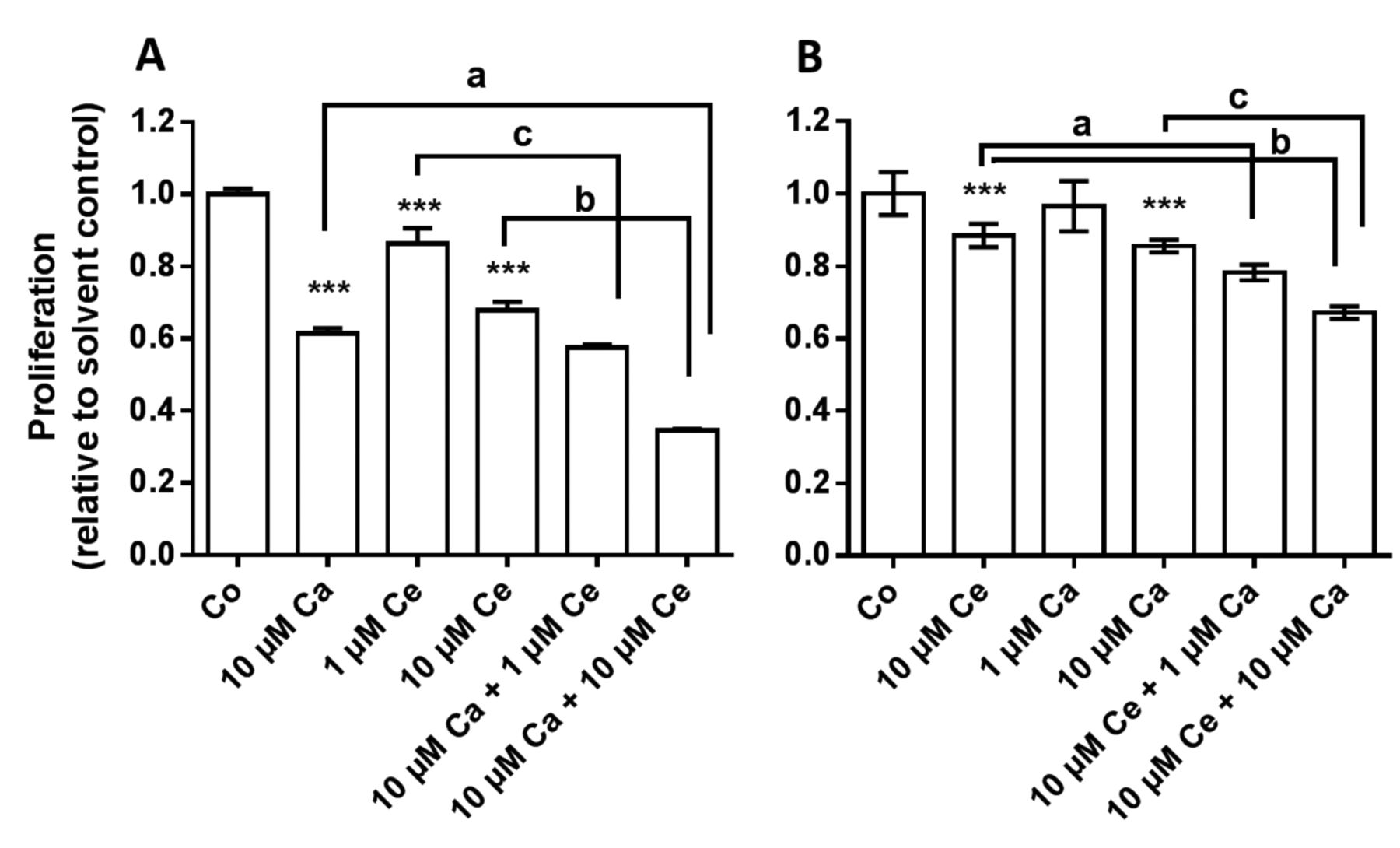
Combined treatment with calcitriol and celecoxib. The growth of breast cancer cell lines was inhibited by 10 μM calcitriol as already seen in the experiment above. Furthermore, growth was significantly inhibited by 10 μM celecoxib in MCF-7 and MDA-MB-231 cells to 67.8% and 88.4%, respectively. In MCF-7 cells, the effect of the combination of 10 μM celecoxib and 10 μM calcitriol was significantly stronger than that of calcitriol alone (Figure 2A) and of celecoxib alone (Figure 2A). Celecoxib at 1 μM significantly reduced the growth of MCF-7 cells and, furthermore, the addition of 10 μM calcitriol to 1 μM celecoxib inhibited cell growth more than 1 μM celecoxib alone (Figure 2A). In MDA-MB-231 cells, the combinations of 10 μM celecoxib with 1 μM calcitriol, as well as with 10 μM calcitriol, inhibited cell growth significantly more strongly than 10 μM celecoxib alone and 10 μM calcitriol alone (Figure 2B).

COX2 protein and mRNA expression under the influence of calcitriol and celecoxib. COX2 protein was detected in western blots of proteins from MDA-MB-231 (Figure 3) but not MCF-7 cells. After 6 h of treatment with 0.1 or 1 μM calcitriol, the density of the western blot signal for COX2 decreased at both concentrations to 62.7% compared to the solvent control. Celecoxib had no effect on COX2 protein expression and the combination of celecoxib and calcitriol reduced COX2 protein to 87%. The results were quantified using densitometry and normalized with the immunoreactive signals of β-actin. The COX2 mRNA expression in MDA-MB-231 and MCF-7 cells significantly decreased after 3-h treatment with celecoxib, as well as with calcitriol (Table I). It is remarkable that nearly the same decline in mRNA expression was found in both cell lines after treatment with celecoxib and calcitriol, because the expression of COX2 mRNA in MCF-7 cells seemed to be extremely low when compared with MDA-MB-231 cells. The latter statement is based on an estimation from the comparison of polymerase chain reaction cycle-time differences between the HPRT1 and COX2 of both cell lines. The combined treatment with celecoxib and calcitriol hardly affected COX2 mRNA expression.

Figure 1.
  • Download figure
  • Open in new tab
  • Download powerpoint
Figure 1.

The influence of calcitriol on the growth of breast cancer cell lines. Cell growth of MCF-7 (A) and MDA-MB-231 (B) cells was assessed by the MTT assay after 72 h of treatment with different concentrations of calcitriol. The results are shown as the mean±SEM; statistical significance: ***p<0.001. Co, Control.

Figure 2.
  • Download figure
  • Open in new tab
  • Download powerpoint
Figure 2.

Combined treatment with calcitriol and celecoxib on MCF-7 (A) and MDA-MB-231 (B) cells. The proliferation is shown as the mean±SEM of cultures compared to the solvent-treated control. Statistical significance: ***p<0.001. For the combined treatments, compared to single treatments: A: a, b and c = p<0.001; and B: a = p<0.01, b and c = p<0.001. Co, Control; Ca, calcitriol; Ce, celecoxib.

Figure 3.
  • Download figure
  • Open in new tab
  • Download powerpoint
Figure 3.

Cyclo-oxygenase 2 (COX2) protein expression in MDA-MB-231 cells after treatment with calcitriol and celecoxib. Western blot was carried out using COX2 antibody and β-actin as a loading control. Co, Control; Ca, calcitriol; Ce, celecoxib.

Discussion

In the present study, we observed an inhibition of proliferation in two breast cancer cell lines by both calcitriol and the selective COX2 inhibitor celecoxib. We also recorded an apparently additive inhibition under their combination. This additive inhibition in breast cancer cell lines was shown for the first time.

Colston and Hansen summarized several studies, clarifying that calcitriol can influence the cell cycle, cell differentiation, invasion and apoptosis of breast cancer cells in vitro (30). In a recently published study, we showed inhibition of breast cell proliferation by calcitriol in MDA-MB-231, MCF-7 and MCF-10F cells (27). This is in line with data by Yuan et al. (17), who showed that 1,25-(OH)2D3 significantly inhibited the proliferation of MCF-7 cells in a time- and dose-dependent manner using MTT assays. In contrast to the results of Yuan et al., we used higher concentrations of calcitriol to receive comparable inhibitory effects, which might be explained by different growth conditions.

The main focus of our study was to treat breast cancer cell lines with the combination of calcitriol and the COX2 inhibitor celecoxib. The growth inhibition by celecoxib of breast cancer cell lines that we observed has been shown previously (31,32); e.g. by Dai et al., who observed a time- and dose-dependent inhibition of proliferation in both MCF-7 and MDA-MB-231. In contrast to Dai et al., we used lower concentrations of celecoxib and only one treatment time of 72 h (32). At 10 μM celecoxib, we observed a reduction of proliferation comparable to that found by Dai et al. Furthermore, we combined the application of calcitriol with celecoxib, each at 10 μM and observed significant additive antiproliferative effects compared to each of the single applications. Therefore, we suggest that the combination of both substances might be a valuable tool for the targeted treatment of breast cancer cells.

View this table:
  • View inline
  • View popup
  • Download powerpoint
Table I.

Measurement of cyclo-oxygenase 2 (COX2) mRNA after treatment with calcitriol and celecoxib. Results are the mean±SEM of treated cells versus the untreated solvent control.

A further interesting question was to examine the connection, if any, between the vitamin D and PG pathways. Therefore, we measured COX2, the central PG-synthesizing enzyme, after treatment with calcitriol. A decrease of the COX2 protein content in MDA-MB-231 cells, as well as in the mRNA level in both tested breast cancer cell lines was found. Yuan et al. also addressed this issue (17) and showed a decrease of COX2 protein in MCF-7 cells; we did rot detect COX2 protein in MCF-7 cells. Why Yuan et al. were able to detect COX2 by western blot and we were not, might be due to a different version of the cell line or different culture conditions. For us, it did not seem to be unusual that the COX2 protein content in MCF-7 was under the level of detection, since we estimated the COX2 mRNA level relative to HPRT1 to be approximately 1,000 times lower compared to that in MDA-MB-231 cells. After treatment with celecoxib, the COX2 protein level decreased in MDA-MB-231 cells. Moreover, celecoxib seemed to counteract the inhibitory effect of calcitriol. Regarding COX2 mRNA, our results are in line with Dai et al. showing a decrease in COX2 mRNA after treatment with celecoxi. However, in our study, mRNA was analyzed after 6 h and in the study of Dai et al. after 48 h (32).

Down-regulation of COX2 expression by calcitriol is an important issue in breast cancer, because it limits the synthesis and biological actions of pro-inflammatory PGs (5).

Epidemiological studies support a protective effect of vitamin D. In a recently published meta-analysis, the authors concluded that a low blood level of calcitriol was associated with an increased risk of recurrence and death of patients with breast cancer (10). However, regarding the prevention of breast cancer by vitamin D supplementation, data are conflicting. While in the results of the meta-analysis by Sperati et al. vitamin D supplementation did reduce the breast cancer risk (13), Chen et al. stated an inverse relationship between vitamin D intake and breast cancer risk (33).

To date, calcitriol has been evaluated in a number of preclinical and some clinical studies as an antitumor agent in different carcinomas [reviewed in Trump et al. (34)]. The maximum tolerated dose of calcitriol is still unclear and calcitriol is recommended to be used restrictively due to its potentially hypercalcemic impact (35, 36). Only a sparse number of clinical trials regarding the use of calcitriol in combination with chemotherapy for cancer treatment exist with dissatisfactory results (34). The ASCENT-I-Trial (AIPC Study of Calcitriol Enhancing Taxotere) evaluated the combination of docetaxel and calcitriol in patients with pre-treated and advanced prostate cancer but the study was stopped because the treatment arm was associated with shorter survival than the control arm (37).

The importance of COX inhibitors is widely recognized, since they suppress breast cancer cell growth both in vivo and in vitro (16, 38). The inhibition of COX2 by the selective inhibitor celecoxib apparently inactivates the transcription of aromatase and thereby inhibits the proliferation of tumor cells in estrogen-responsive breast cancer (39). Furthermore, celecoxib is able to induce apoptosis in different types of cancer (40). Epidemiological studies support the hypothesis of breast cancer prevention by NSAID administration. Several studies, including one meta-analysis, reported a reduction of breast cancer risk after NSAID use of between 16% and 40% (23, 24, 41, 42). In different murine models for breast cancer, celecoxib reduced tumor growth, increased apoptosis and reduced neoangiogenesis (43, 44).

The correlation between COX2 and estrogen metabolism is an important issue. The inhibition of aromatase expression due to COX2 inhibition is an interesting therapeutic strategy. Several clinical trials have been conducted to investigate the use of COX2 inhibitors regarding their impact on breast cancer. The German Breast Group completed a multicenter clinical phase III study, the REACT trial, which analyzed the combination of endocrine treatment and celecoxib in primary breast cancer (www.gbg.de). Various other combination therapies with COX2 inhibitors regarding the metastatic setting were completed with inconsistent data (45-48). In a preoperative decision-making setting, two studies were recently published (49, 50): In the study by Brandao et al., patients with breast cancer were randomized to receive either pre-operative 400 mg celecoxib twice daily for 2 to 3 weeks or placebo. The impact on proliferation was reflected by a reduction of Ki-67-positive cells (49). However, in a similar setting, Martin et al. found no statistically significant changes in Ki-67 expression. (50). The first data suggest a possible treatment approach for combination of COX2 inhibitors and calcitriol in breast cancer (25) as both PG and calcitriol metabolism influence carcinogenesis and tumor growth. The metabolism of calcitriol and prostaglandin is linked by various factors and thus a synergistic effect might be supposed. The group of Moreno et al. demonstrated growth inhibition in prostate cancer cells by COX2 inhibitors and calcitriol. They used benign and malignant prostate cell lines and illustrated that calcitriol inhibits the PG-dependent proliferation of prostate cancer cells. Moreover, the authors showed that a combination of calcitriol with a COX2 inhibitor had a synergistic effect on the growth inhibition of prostate cancer cells (51).

We conclude that the combination of the COX2 inhibitor celecoxib and calcitriol cooperatively inhibits the growth of breast cancer cell lines. Calcitriol reduces aromatase expression by direct repression, as well as via an indirect effect due to reduction in the levels of PGs (5), and celecoxib supports this suppressive effect on estrogen synthesis. Therefore, we suggest a therapeutic role of the combination of celecoxib and calcitriol in hormone receptor-positive breast cancer, probably with the addition of an aromatase inhibitor. Based on our findings, we believe that it is worth considering prospective clinical trials showing the beneficial actions of celecoxib and calcitriol in endocrine-responsive breast cancer.

Footnotes

  • This article is freely accessible online.

  • Received October 31, 2017.
  • Revision received December 18, 2017.
  • Accepted December 29, 2017.
  • Copyright© 2018, International Institute of Anticancer Research (Dr. George J. Delinasios), All rights reserved

References

  1. ↵
    Cancer Facts & Figures 2014. American Cancer Society, Atlanta, 2014.
  2. ↵
    Krebs in Deutschland 2009/2010., Vol. 9 (Robert Koch-Institut (Hrsg) und die Gesellschaft der epidemiologischen Krebsregister in Deutschland e.V. (Hrsg)., Berlin, 2013.
  3. ↵
    1. Thill M,
    2. Terjung A,
    3. Friedrich M
    : Breast cancer–new aspects of tumor biology: Are calcitriol and cyclooxygenase-2 possible targets for breast cancer? Eur J Gynaecol Oncol 35: 341-358, 2014.
    OpenUrlPubMed
  4. ↵
    1. Honma Y,
    2. Hozumi M,
    3. Abe E,
    4. Konno K,
    5. Fukushima M,
    6. Hata S,
    7. Nishii Y,
    8. DeLuca HF,
    9. Suda T
    : 1 α,25-Dihydroxyvitamin D3 and 1 α-hydroxyvitamin D3 prolong survival time of mice inoculated with myeloid leukemia cells. Proc Natl Acad Sci USA 80: 201-204, 1983.
    OpenUrlAbstract/FREE Full Text
  5. ↵
    1. Krishnan AV,
    2. Swami S,
    3. Feldman D
    : The potential therapeutic benefits of vitamin D in the treatment of estrogen receptor-positive breast cancer. Steroids 77: 1107-1112, 2012.
    OpenUrlCrossRefPubMed
  6. ↵
    1. Welsh J,
    2. Wietzke JA,
    3. Zinser GM,
    4. Smyczek S,
    5. Romu S,
    6. Tribble E,
    7. Welsh JC,
    8. Byrne B,
    9. Narvaez CJ
    : Impact of the vitamin D3 receptor on growth-regulatory pathways in mammary gland and breast cancer. J Steroid Biochem Mol Biol 83: 85-92, 2002.
    OpenUrlCrossRefPubMed
  7. ↵
    1. Goodwin PJ,
    2. Ennis M,
    3. Pritchard KI,
    4. Koo J,
    5. Hood N
    : Prognostic effects of 25-hydroxyvitamin D levels in early breast cancer. J Clin Oncol 27: 3757-3763, 2009.
    OpenUrlAbstract/FREE Full Text
    1. Janowsky EC,
    2. Lester GE,
    3. Weinberg CR,
    4. Millikan RC,
    5. Schildkraut JM,
    6. Garrett PA,
    7. Hulka BS
    : Association between low levels of 1,25-dihydroxyvitamin D and breast cancer risk. Public Health Nutr 2: 283-291, 1999.
    OpenUrlPubMed
  8. ↵
    1. Kim Y,
    2. Je Y
    : Vitamin D intake, blood 25(OH)D levels, and breast cancer risk or mortality: a meta-analysis. Br J Cancer 110: 2772-2784, 2014.
    OpenUrlCrossRefPubMed
  9. ↵
    1. Rose AA,
    2. Elser C,
    3. Ennis M,
    4. Goodwin PJ
    : Blood levels of vitamin D and early-stage breast cancer prognosis: a systematic review and meta-analysis. Breast Cancer Res Treat 141: 331-339, 2013.
    OpenUrlCrossRefPubMed
    1. McCullough ML,
    2. Rodriguez C,
    3. Diver WR,
    4. Feigelson HS,
    5. Stevens VL,
    6. Thun MJ,
    7. Calle EE
    : Dairy, calcium, and vitamin D intake and postmenopausal breast cancer risk in the Cancer Prevention Study II Nutrition Cohort. Cancer Epidemiol Biomarkers Prev 14: 2898-2904, 2005.
    OpenUrlAbstract/FREE Full Text
    1. Rossi M,
    2. McLaughlin JK,
    3. Lagiou P,
    4. Bosetti C,
    5. Talamini R,
    6. Lipworth L,
    7. Giacosa A,
    8. Montella M,
    9. Franceschi S,
    10. Negri E,
    11. La Vecchia C
    : Vitamin D intake and breast cancer risk: a case–control study in Italy. Ann Oncol 20: 374-378, 2009.
    OpenUrlCrossRefPubMed
  10. ↵
    1. Sperati F,
    2. Vici P,
    3. Maugeri-Sacca M,
    4. Stranges S,
    5. Santesso N,
    6. Mariani L,
    7. Giordano A,
    8. Sergi D,
    9. Pizzuti L,
    10. Di Lauro L,
    11. Montella M,
    12. Crispo A,
    13. Mottolese M,
    14. Barba M
    : Vitamin D supplementation and breast cancer prevention: a systematic review and meta-analysis of randomized clinical trials. PLoS One 8: e69269, 2013.
    OpenUrlCrossRefPubMed
  11. ↵
    1. Krishnan AV,
    2. Feldman D
    : Mechanisms of the anticancer and anti-inflammatory actions of vitamin D. Annu Rev Pharmacol Toxicol 51: 311-336, 2011.
    OpenUrlCrossRefPubMed
  12. ↵
    1. Krishnan AV,
    2. Trump DL,
    3. Johnson CS,
    4. Feldman D
    : The role of vitamin D in cancer prevention and treatment. Endocrinol Metab Clin North Am 39: 401-418, 2010.
    OpenUrlCrossRefPubMed
  13. ↵
    1. Hoellen F,
    2. Kelling K,
    3. Dittmer C,
    4. Diedrich K,
    5. Friedrich M,
    6. Thill M
    : Impact of cyclooxygenase-2 in breast cancer. Anticancer Res 31: 4359-4367, 2011.
    OpenUrlAbstract/FREE Full Text
  14. ↵
    1. Yuan L,
    2. Jiang R,
    3. Yang Y,
    4. Ding S,
    5. Deng H
    : 1,25-Dihydroxyvitamin D3 inhibits growth of the breast cancer cell line MCF-7 and down-regulates cytochrome P4501B1 through the COX2/PGE2 pathway. Oncol Rep 28: 2131-2137, 2012.
    OpenUrlPubMed
  15. ↵
    1. Chang SH,
    2. Liu CH,
    3. Conway R,
    4. Han DK,
    5. Nithipatikom K,
    6. Trifan OC,
    7. Lane TF,
    8. Hla T
    : Role of prostaglandin E2-dependent angiogenic switch in cyclooxygenase 2-induced breast cancer progression. Proc Natl Acad Sci USA 101: 591-596, 2004.
    OpenUrlAbstract/FREE Full Text
  16. ↵
    1. Zha S,
    2. Yegnasubramanian V,
    3. Nelson WG,
    4. Isaacs WB,
    5. De Marzo AM
    : Cyclo-oxygenases in cancer: progress and perspective. Cancer Lett 215: 1-20, 2004.
    OpenUrlCrossRefPubMed
  17. ↵
    1. Ristimaki A,
    2. Sivula A,
    3. Lundin J,
    4. Lundin M,
    5. Salminen T,
    6. Haglund C,
    7. Joensuu H,
    8. Isola J
    : Prognostic significance of elevated cyclo-oxygenase-2 expression in breast cancer. Cancer Res 62: 632-635, 2002.
    OpenUrlAbstract/FREE Full Text
  18. ↵
    1. Allott EH,
    2. Tse CK,
    3. Olshan AF,
    4. Carey LA,
    5. Moorman PG,
    6. Troester MA
    : Non-steroidal anti-inflammatory drug use, hormone receptor status, and breast cancer-specific mortality in the Carolina Breast Cancer Study. Breast Cancer Res Treat 147: 415-421, 2014.
    OpenUrlCrossRefPubMed
    1. Harris RE,
    2. Chlebowski RT,
    3. Jackson RD,
    4. Frid DJ,
    5. Ascenseo JL,
    6. Anderson G,
    7. Loar A,
    8. Rodabough RJ,
    9. White E,
    10. McTiernan A
    : Breast cancer and nonsteroidal anti-inflammatory drugs: prospective results from the Women's Health Initiative. Cancer Res 63: 6096-6101, 2003.
    OpenUrlAbstract/FREE Full Text
  19. ↵
    1. Harris RE,
    2. Namboodiri KK,
    3. Farrar WB
    : Nonsteroidal antiinflammatory drugs and breast cancer. Epidemiology 7: 203-205, 1996.
    OpenUrlCrossRefPubMed
  20. ↵
    1. Sharpe CR,
    2. Collet JP,
    3. McNutt M,
    4. Belzile E,
    5. Boivin JF,
    6. Hanley JA
    : Nested case–control study of the effects of non-steroidal anti-inflammatory drugs on breast cancer risk and stage. Br J Cancer 83: 112-120, 2000.
    OpenUrlCrossRefPubMed
  21. ↵
    1. Thill M,
    2. Hoellen F,
    3. Becker S,
    4. Dittmer C,
    5. Fischer D,
    6. Kummel S,
    7. Salehin D,
    8. Friedrich M,
    9. Koster F,
    10. Diedrich K,
    11. Cordes T
    : Expression of prostaglandin- and vitamin D-metabolising enzymes in benign and malignant breast cells. Anticancer Res 32: 367-372, 2012.
    OpenUrlAbstract/FREE Full Text
    1. Fischer D,
    2. Thome M,
    3. Becker S,
    4. Cordes T,
    5. Diedrich K,
    6. Friedrich M,
    7. Thill M
    : 25-Hydroxyvitamin D3 1alpha-hydroxylase splice variants in benign and malignant ovarian cell lines and tissue. Anticancer Res 29: 3627-3633, 2009.
    OpenUrlAbstract/FREE Full Text
  22. ↵
    1. Thill M,
    2. Cordes T,
    3. Hoellen F,
    4. Becker S,
    5. Dittmer C,
    6. Kummel S,
    7. Salehin D,
    8. Friedrich M,
    9. Diedrich K,
    10. Koster F
    : Influence of calcitriol on prostaglandin- and vitamin D-metabolising enzymes in benign and malignant breast cell lines. Anticancer Res 32: 359-365, 2012.
    OpenUrlAbstract/FREE Full Text
  23. ↵
    1. Cordes T,
    2. Hoellen F,
    3. Dittmer C,
    4. Salehin D,
    5. Kummel S,
    6. Friedrich M,
    7. Koster F,
    8. Becker S,
    9. Diedrich K,
    10. Thill M
    : Correlation of prostaglandin metabolizing enzymes and serum PGE2 levels with vitamin D receptor and serum 25(OH)2D3 levels in breast and ovarian cancer. Anticancer Res 32: 351-357, 2012.
    OpenUrlAbstract/FREE Full Text
  24. ↵
    1. Thill M,
    2. Fischer D,
    3. Kelling K,
    4. Hoellen F,
    5. Dittmer C,
    6. Hornemann A,
    7. Salehin D,
    8. Diedrich K,
    9. Friedrich M,
    10. Becker S
    : Expression of vitamin D receptor (VDR), cyclooxygenase-2 (COX2) and 15-hydroxyprostaglandin dehydrogenase (15-PGDH) in benign and malignant ovarian tissue and 25-hydroxycholecalciferol (25(OH2)D3) and prostaglandin E2 (PGE2) serum level in ovarian cancer patients. J Steroid Biochem Mol Biol 121: 387-390, 2010.
    OpenUrlCrossRefPubMed
  25. ↵
    1. Colston KW,
    2. Hansen CM
    : Mechanisms implicated in the growth regulatory effects of vitamin D in breast cancer. Endocr Relat Cancer 9: 45-59, 2002.
    OpenUrlAbstract
  26. ↵
    1. Bocca C,
    2. Bozzo F,
    3. Bassignana A,
    4. Miglietta A
    : Antiproliferative effects of COX2 inhibitor celecoxib on human breast cancer cell lines. Mol Cell Biochem 350: 59-70, 2011.
    OpenUrlCrossRefPubMed
  27. ↵
    1. Dai ZJ,
    2. Ma XB,
    3. Kang HF,
    4. Gao J,
    5. Min WL,
    6. Guan HT,
    7. Diao Y,
    8. Lu WF,
    9. Wang XJ
    : Antitumor activity of the selective cyclooxygenase-2 inhibitor, celecoxib, on breast cancer in vitro and in vivo. Cancer Cell Int 12: 53, 2012.
    OpenUrlPubMed
  28. ↵
    1. Chen P,
    2. Hu P,
    3. Xie D,
    4. Qin Y,
    5. Wang F,
    6. Wang H
    : Meta-analysis of vitamin D, calcium and the prevention of breast cancer. Breast Cancer Res Treat 121: 469-477, 2010.
    OpenUrlCrossRefPubMed
  29. ↵
    1. Trump DL,
    2. Deeb KK,
    3. Johnson CS
    : Vitamin D: considerations in the continued development as an agent for cancer prevention and therapy. Cancer J 16: 1-9, 2010.
    OpenUrlCrossRefPubMed
  30. ↵
    1. Aparna R,
    2. Subhashini J,
    3. Roy KR,
    4. Reddy GS,
    5. Robinson M,
    6. Uskokovic MR,
    7. Venkateswara Reddy G,
    8. Reddanna P
    : Selective inhibition of cyclooxygenase-2 (COX2) by 1alpha,25-dihydroxy-16-ene-23-yne-vitamin D3, a less calcemic vitamin D analog. J Cell Biochem 104: 1832-1842, 2008.
    OpenUrlCrossRefPubMed
  31. ↵
    1. Masuda S,
    2. Jones G
    : Promise of vitamin D analogues in the treatment of hyperproliferative conditions. Mol Cancer Ther 5: 797-808, 2006.
    OpenUrlAbstract/FREE Full Text
  32. ↵
    1. Scher HI,
    2. Jia X,
    3. Chi K,
    4. de Wit R,
    5. Berry WR,
    6. Albers P,
    7. Henick B,
    8. Waterhouse D,
    9. Ruether DJ,
    10. Rosen PJ,
    11. Meluch AA,
    12. Nordquist LT,
    13. Venner PM,
    14. Heidenreich A,
    15. Chu L,
    16. Heller G
    : Randomized, open-label phase III trial of docetaxel plus high-dose calcitriol versus docetaxel plus prednisone for patients with castration-resistant prostate cancer. J Clin Oncol 29: 2191-2198, 2011.
    OpenUrlAbstract/FREE Full Text
  33. ↵
    1. Rozic JG,
    2. Chakraborty C,
    3. Lala PK
    : Cyclooxygenase inhibitors retard murine mammary tumor progression by reducing tumor cell migration, invasiveness and angiogenesis. Int J Cancer 93: 497-506, 2001.
    OpenUrlCrossRefPubMed
  34. ↵
    1. Diaz-Cruz ES,
    2. Shapiro CL,
    3. Brueggemeier RW
    : Cyclooxygenase inhibitors suppress aromatase expression and activity in breast cancer cells. J Clin Endocrinol Metab 90: 2563-2570, 2005.
    OpenUrlCrossRefPubMed
  35. ↵
    1. Jendrossek V
    : Targeting apoptosis pathways by Celecoxib in cancer. Cancer Lett 332: 313-324, 2013.
    OpenUrlCrossRefPubMed
  36. ↵
    1. Ashok V,
    2. Dash C,
    3. Rohan TE,
    4. Sprafka JM,
    5. Terry PD
    : Selective cyclooxygenase-2 (COX2) inhibitors and breast cancer risk. Breast 20: 66-70, 2011.
    OpenUrlCrossRefPubMed
  37. ↵
    1. Khuder SA,
    2. Mutgi AB
    : Breast cancer and NSAID use: a meta-analysis. Br J Cancer 84: 1188-1192, 2001.
    OpenUrlCrossRefPubMed
  38. ↵
    1. Barnes NL,
    2. Warnberg F,
    3. Farnie G,
    4. White D,
    5. Jiang W,
    6. Anderson E,
    7. Bundred NJ
    : Cyclooxygenase-2 inhibition: effects on tumour growth, cell cycling and lymphangiogenesis in a xenograft model of breast cancer. Br J Cancer 96: 575-582, 2007.
    OpenUrlCrossRefPubMed
  39. ↵
    1. Yoshinaka R,
    2. Shibata MA,
    3. Morimoto J,
    4. Tanigawa N,
    5. Otsuki Y
    : COX2 inhibitor celecoxib suppresses tumor growth and lung metastasis of a murine mammary cancer. Anticancer Res 26: 4245-4254, 2006.
    OpenUrlAbstract/FREE Full Text
  40. ↵
    1. Canney PA,
    2. Machin MA,
    3. Curto J
    : A feasibility study of the efficacy and tolerability of the combination of Exemestane with the COX2 inhibitor Celecoxib in post-menopausal patients with advanced breast cancer. Eur J Cancer 42: 2751-2756, 2006.
    OpenUrlCrossRefPubMed
    1. Chow LW,
    2. Yip AY,
    3. Loo WT,
    4. Lam CK,
    5. Toi M
    : Celecoxib anti-aromatase neoadjuvant (CAAN) trial for locally advanced breast cancer. J Steroid Biochem Mol Biol 111: 13-17, 2008.
    OpenUrlCrossRefPubMed
    1. Dirix LY,
    2. Ignacio J,
    3. Nag S,
    4. Bapsy P,
    5. Gomez H,
    6. Raghunadharao D,
    7. Paridaens R,
    8. Jones S,
    9. Falcon S,
    10. Carpentieri M,
    11. Abbattista A,
    12. Lobelle JP
    : Treatment of advanced hormone-sensitive breast cancer in postmenopausal women with exemestane alone or in combination with celecoxib. J Clin Oncol 26: 1253-1259, 2008.
    OpenUrlAbstract/FREE Full Text
  41. ↵
    1. Falandry C,
    2. Debled M,
    3. Bachelot T,
    4. Delozier T,
    5. Cretin J,
    6. Romestaing P,
    7. Mille D,
    8. You B,
    9. Mauriac L,
    10. Pujade-Lauraine E,
    11. Freyer G
    : Celecoxib and exemestane versus placebo and exemestane in postmenopausal metastatic breast cancer patients: a double-blind phase III GINECO study. Breast Cancer Res Treat 116: 501-508, 2009.
    OpenUrlCrossRefPubMed
  42. ↵
    1. Brandao RD,
    2. Veeck J,
    3. Van de Vijver KK,
    4. Lindsey P,
    5. de Vries B,
    6. van Elssen CH,
    7. Blok MJ,
    8. Keymeulen K,
    9. Ayoubi T,
    10. Smeets HJ,
    11. Tjan-Heijnen VC,
    12. Hupperets PS
    : A randomised controlled phase II trial of pre-operative celecoxib treatment reveals anti-tumour transcriptional response in primary breast cancer. Breast Cancer Res 15: R29, 2013.
    OpenUrlCrossRefPubMed
  43. ↵
    1. Martin LA,
    2. Davies GL,
    3. Weigel MT,
    4. Betambeau N,
    5. Hills MJ,
    6. Salter J,
    7. Walsh G,
    8. A'Hern R,
    9. Dowsett M
    : Pre-surgical study of the biological effects of the selective cyclo-oxygenase-2 inhibitor celecoxib in patients with primary breast cancer. Breast Cancer Res Treat 123: 829-836, 2010.
    OpenUrlCrossRefPubMed
  44. ↵
    1. Moreno J,
    2. Krishnan AV,
    3. Swami S,
    4. Nonn L,
    5. Peehl DM,
    6. Feldman D
    : Regulation of prostaglandin metabolism by calcitriol attenuates growth stimulation in prostate cancer cells. Cancer Res 65: 7917-7925, 2005.
    OpenUrlAbstract/FREE Full Text
PreviousNext
Back to top

In this issue

Anticancer Research
Vol. 38, Issue 2
February 2018
  • Table of Contents
  • Table of Contents (PDF)
  • Index by author
  • Back Matter (PDF)
  • Ed Board (PDF)
  • Front Matter (PDF)
Print
Download PDF
Article Alerts
Sign In to Email Alerts with your Email Address
Email Article

Thank you for your interest in spreading the word on Anticancer Research.

NOTE: We only request your email address so that the person you are recommending the page to knows that you wanted them to see it, and that it is not junk mail. We do not capture any email address.

Enter multiple addresses on separate lines or separate them with commas.
Effects of Combined Treatment with Vitamin D and COX2 Inhibitors on Breast Cancer Cell Lines
(Your Name) has sent you a message from Anticancer Research
(Your Name) thought you would like to see the Anticancer Research web site.
CAPTCHA
This question is for testing whether or not you are a human visitor and to prevent automated spam submissions.
7 + 5 =
Solve this simple math problem and enter the result. E.g. for 1+3, enter 4.
Citation Tools
Effects of Combined Treatment with Vitamin D and COX2 Inhibitors on Breast Cancer Cell Lines
MICHAEL FRIEDRICH, KATHRIN REICHERT, ALENA WOESTE, STEPHAN POLACK, DOROTHEA FISCHER, FRIEDERIKE HOELLEN, ACHIM RODY, FRANK KÖSTER, MARC THILL
Anticancer Research Feb 2018, 38 (2) 1201-1207;

Citation Manager Formats

  • BibTeX
  • Bookends
  • EasyBib
  • EndNote (tagged)
  • EndNote 8 (xml)
  • Medlars
  • Mendeley
  • Papers
  • RefWorks Tagged
  • Ref Manager
  • RIS
  • Zotero
Reprints and Permissions
Share
Effects of Combined Treatment with Vitamin D and COX2 Inhibitors on Breast Cancer Cell Lines
MICHAEL FRIEDRICH, KATHRIN REICHERT, ALENA WOESTE, STEPHAN POLACK, DOROTHEA FISCHER, FRIEDERIKE HOELLEN, ACHIM RODY, FRANK KÖSTER, MARC THILL
Anticancer Research Feb 2018, 38 (2) 1201-1207;
Twitter logo Facebook logo Mendeley logo
  • Tweet Widget
  • Facebook Like
  • Google Plus One

Jump to section

  • Article
    • Abstract
    • Materials and Methods
    • Results
    • Discussion
    • Footnotes
    • References
  • Figures & Data
  • Info & Metrics
  • PDF

Related Articles

Cited By...

  • No citing articles found.
  • Google Scholar

More in this TOC Section

  • The Winding Path Towards an Inverse Relationship Between Sun Exposure and All-cause Mortality
  • The Impact of UV-dose, Body Surface Area Exposed and Other Factors on Cutaneous Vitamin D Synthesis Measured as Serum 25(OH)D Concentration: Systematic Review and Meta-analysis
  • Tandem Affinity Purification and Nano HPLC-ESI-MS/MS Reveal Binding of Vitamin D Receptor to p53 and other New Interaction Partners in HEK 293T Cells
Show more Proceedings of the Joint International Symposium “Vitamin D in Prevention and Therapy” and “Biologic Effects of Light”, June 21-23, 2017 (Homburg/Saar, Germany)

Keywords

  • vitamin D
  • celecoxib
  • cyclooxygenase-2
  • breast cancer MDA-MB-231 cells
Anticancer Research

© 2026 Anticancer Research

Powered by HighWire