


Abstract
The purpose of this study was to identify conditions that would increase the sensitivity of drug-resistant cancer cells. Previously, two anti-malarial drugs, chloroquine (CHL) and primaquine (PRI), showed different sensitization effects for vinblastine (VIB)-resistant cancer cells. Herein, we tested co-treatment of cells with CHL or PRI and other microtubule-targeting cancer drugs, namely, vinorelbine (VIO), paclitaxel (PAC), docetaxel (DOC), vincristine (VIC), or halaven (HAL). We found that PRI sensitized P-glycoprotein (P-gp)-overexpressing drug-resistant KBV20C cells to all six anti-mitotic drugs to a similar extent. CHL had a similar sensitization effect only for co-treatment with PAC, DOC, VIC, and HAL, while the sensitization effect was less marked for co-treatment with VIB or VIO. FACS analysis and western blot analysis revealed that G2 arrest and apoptosis showed only a slight increase on co-treatment with VIB or VIO and CHL. We also found that phospho-histone H3 and pRb were markedly increased only by PRI–VIB co-treatment, but not by CHL–VIB co-treatment. This suggests that reduction in the expression of these proteins correlates with decreased G2 arrest in CHL–VIB co-treatment. We further compared the effect of another anti-malarial drug, mefloquine (MEF), in combination with the six anti-mitotic drugs. We found that MEF and PRI had similar sensitization effects in co-treatment with these anti-mitotic drugs. PRI and MEF had generally similar sensitization effects in co-treatment with anti-mitotic drugs, suggesting that they do not have any preferred anti-mitotic drug partner in co-treatment. This indicates that only CHL shows specificity in co-treatment with anti-mitotic drugs in resistant cancer cells. Our results may contribute to the choice of anti-mitotic drugs to be used in co-treatment of resistant cancer cells with the anti-malarial drugs, CHL, PRI, and MEF.
Abbreviations: Vinblasitne, VIB; chloroquine, CHL; primaquine, PRI; mefloquine, MEF; verapamil, VER; vinoerlbine, VIO; paclitaxcel, PAC; docetaxcel, DOC; vincristine, VIC; halaven, HAL; p-glycoprotein, P-gp; dimethylsulfoxide, DMSO; cleaved poly ADP ribose polymerase, C-PARP; fluorescence-activated cell sorting, FACS.
Anti-mitotic drugs are widely used for treating different types of cancers (1, 2). These compounds inhibit mitosis by targeting microtubules and preventing their polymerization or depolymerization (1). Vinblastine (VIB), vinorelbine (VIO), paclitaxel (PAC), docetaxel (DOC), vincristine (VIC), and halaven (HAL) are currently the most commonly used anti-mitotic drugs, that target different binding sites on tubulin (1-4). Since patients develop resistance to these drugs (5), studies have aimed to provide more effective treatments by researching ways to increase anti-mitotic-drug-associated apoptosis. Identifying the mechanism(s) that underlie cell sensitization to anti-mitotic drugs would be an important step in the development of new pharmacological cancer treatments.
Anti-malarial drugs have also been shown to be potentially useful in the treatment of cancer (6-8). Atovaquone, chloroquine (CHL), primaquine (PRI), mefloquine (MEF), artesunate, and doxycycline are the most commonly used anti-malarial drugs (7-17), and the use of CHL, PRI, and MEF, in particular, has been investigated in the treatment of numerous types of cancers, sometimes in combination with chemotherapy (9, 18, 19). Since the toxicity of these drugs is already known, the use of these drugs can be implemented clinically once their anti-cancer activities are better understood.
Previously, we reported that co-treatment with PRI or MEF and VIB increased the sensitization of drug-resistant cancer cells, whereas CHL did not (9). In the present study, we tested whether co-treatment with PRI, CHL, or MEF and five different anti-mitotic drugs yielded results similar to those of VIB co-treatment, using drug-resistant KBV20C cells (9). We also investigated which anti-mitotic drugs provided better sensitization when combined with PRI, CHL, or MEF in the treatment of KBV20C cells. Furthermore, we studied the mechanisms underlying the specificity of PRI, CHL, or MEF for anti-mitotic drugs in the treatment of drug-resistant KBV20C cancer cells. Our results may contribute to the development of CHL-, PRI-, and MEF-based therapy for the treatment of cancer in patients resistant to anti-mitotic drugs.
Materials and Methods
Reagents. Aqueous solutions of DOC (Aventis, Bridgewater, NJ, USA), HAL (Eisai Korea, Seoul, South Korea) were obtained from the National Cancer Center in South Korea. PAC, VER CHL, PRI, and MEF were purchased from Sigma-Aldrich (St. Louis, MO, USA). VIB, VIC, and VIO were purchased from Enzo Life Sciences (Farmingdale, NY, USA).
Antibodies. Antibodies against pGSK3β, pp70S6K, pCdc2, Cdc2, pChck1, pChck2, pHistone H3, p21, PCNA, and cleaved poly ADP ribose polymerase (C-PARP) were from Cell Signaling Technology (Danvers, MA, USA). Antibodies against glyceraldehyde 3-phosphate dehydrogenase (GAPDH), survivin, and pRb were from Santa Cruz Biotechnology (Santa Cruz, CA, USA). Antibody against pH2AX was from Abcam (Cambridge, UK).
Cell culture. Human oral squamous carcinoma multidrug-resistant subline, KBV20C, were obtained from Dr. Yong Kee Kim, and they were previously described (20, 21). Cell lines were cultured in RPMI 1640 containing 10% fetal bovine serum, 100 U/mL penicillin, and 100 μg/mL streptomycin (WelGENE, Daegu, South Korea).
Fluorescence-activated cell sorting (FACS) analysis. FACS analysis was performed as previously described (9, 22, 23). Cells were grown in 60-mm diameter dishes and treated with the indicated drugs for the prescribed times. The cells were then dislodged by trypsin and pelleted by centrifugation. The pelleted cells were washed thoroughly with PBS, suspended in 75% ethanol for at least 1 h at 4°C, washed with PBS, and resuspended in a cold propidium iodide (PI) staining solution (100 μg/ml RNase A and 50 μg/ml PI in PBS) for 30 min at 37°C. The stained cells were analyzed for relative DNA content using a FACSCalibur flow cytometry system (BD Bioscience, Franklin Lakes, NJ, USA). We performed two independent experiments.
Western blot analysis. Total cell proteins were extracted using a previously described trichloroacetic acid (TCA) method (9, 22, 23). Briefly, cells grown in 60-mm dishes were washed three times with 5 mL PBS. Next, 500 μL of 20% trichloroacetic acid (TCA) were added to each plate. The cells were then dislodged by scraping and transferred to Eppendorf tubes. Proteins were pelleted by centrifugation for 5 min at 3000 rpm and resuspended in 1M Tris-HCl (pH 8.0) buffer. The total protein concentrations were estimated. The proteins were resolved by sodium dodecyl sulfate-polyacrylamide gel electrophoresis (SDS-PAGE) and subjected to Western blot analysis as previously described (9, 22, 23).
Microscopic observation. Cells grown in 6-well plates were treated with the indicated drugs for the indicated times. The medium was removed, and PBS was added in each dish. Cells were examined immediately using an Axio observer.Z1 fluorescence inverted microscope (Carl Zeiss, Oberkochen, Germany) with a 5× objective lens (Carl Zeiss EC Plan-Neofluar). We performed two independent experiments.
Results
Co-treatment of KBV20C drug-resistant cancer cells with VIB or VIO and PRI, but not CHL, reduces cellular proliferation. We tested whether co-treatment of KBV20C cancer cells with PRI or CHL and an anti-mitotic drug could reduce the drug resistance of these cells. In order to observe the sensitization specificity of PRI and CHL for particular anti-mitotic drugs, we selected six different anti-mitotic drugs (VIB, VIO, OAC, DOC, VIC, and HAL) that are routinely used in clinical treatment. The KBV20C cells showed resistance to all of these anti-mitotic drugs, that was based on efflux due to P-gp overexpression (20, 21). We treated KBV20C drug-resistant cells with relatively high concentrations of anti-malarial drugs for 1 day and then observed the cells under the microscope. The concentrations and duration of treatment were based on our previous study. As seen in Figure 1A-F, all single drug treatments resulted in growth similar to those seen in the control. With PRI co-treatments, we found that all six anti-mitotic drugs reduced cellular growth (9). However, CHL did not markedly reduce cell proliferation when used in combination with VIB or VIO (9). Considering our previous results (9), we expected that CHL would not increase the sensitivity of the cells to VIB. In this study, we found that the sensitivity of cells to VIO was also not enhanced by CHL. Nevertheless, we found that CHL could sensitize cells to the other anti-mitotic drugs tested (PAC, DOC, VIC, and HAL), to the same extent as PRI (Figure 1C-F). These findings suggest that CHL has a selective sensitization specificity for anti-mitotic drugs when used in the co-treatment of drug-resistant KBV20C cells.
Co-treatment with PRI increases G2 arrest in VIB- and VIO-treated KBV20C drug-resistant cancer cells. Next, we examined the mechanisms underlying the VIB- or VIO-specific sensitization of KBV20C cells co-treated with CHL or PRI. FACS analysis was performed to compare the cell-cycle arrest between co-treatment with CHL and PRI. As shown in Figure 2A, G2 phase cell-cycle arrest highly increased in KBV20C cells upon co-treatment with PRI and either VIB or PAC. CHL markedly increased G2 arrest only with PAC co-treatment, but not with VIB (Figure 2B). This indicated that PRI and CHL sensitized the cells for anti-mitotic drugs in KBV20C-resistant cells via an increase in G2 phase arrest. Conversely, this suggests that reduced G2 arrest results in reduced sensitization for CHL–VIB co-treatment. When we analyzed co-treatment with VIO and PRI or CHL, we also found that only PRI–VIO co-treatment markedly increased G2 arrest (Figure 2C), again indicating that reduced sensitization specificity for CHL–VIO co-treatment results from reduced G2 arrest and that CHL co-treatment requires increased G2 arrest for sensitization. Furthermore, the results suggested that reduced G2 arrest causes differences between PRI and CHL sensitization in VIB or VIO co-treatment.
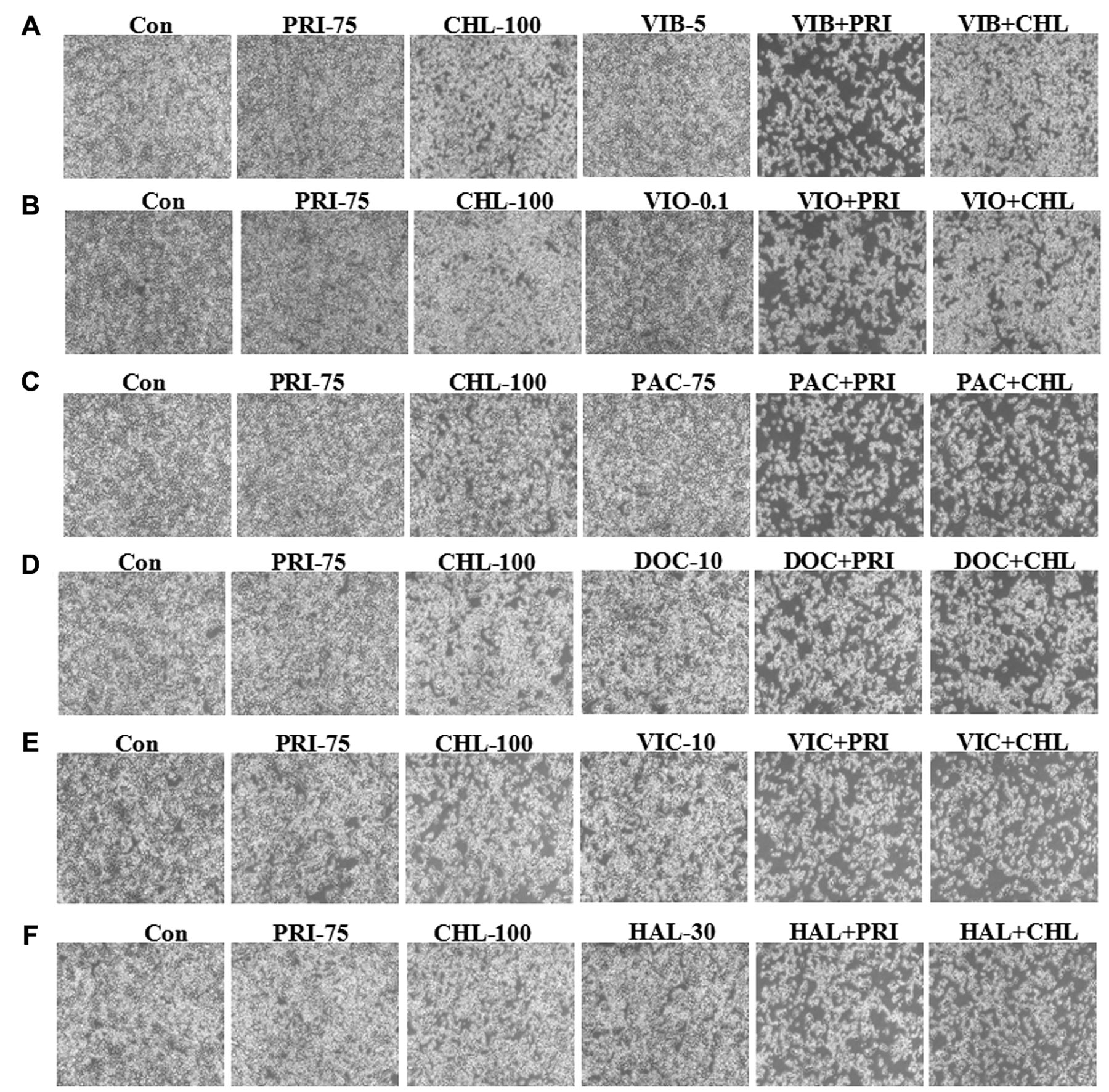
Co-treatment of KBV20C drug-resistant cancer cells with VIB or VIO and PRI, but not CHL, reduces cellular proliferation. (A-F) KBV20C cells were grown on 6-well plates and treated with 75 μM PRI (PRI-75), 100 μM CHL (CHL-100), 5 nM VIB (VIB-5), 0.1 μg/ml VIO (VIO-0.1), 75 nM PAC (PAC-75), 10 ng/ml DOC (DOC-10), 10 nM VIC (VIC-10), 30 ng/ml HAL (HAL-30), 5 nM VIB with 75 μM PRI (VIB+PRI-75), 5 nM VIB with 100 μM CHL (VIB+CHL), 0.1 μg/ml VIO with 75 μM PRI (VIO+PRI), 0.1 μg/ml VIO with 100 μM CHL (VIO+CHL), 75 nM PAC with 75 μM PRI (PAC+PRI), 75 nM PAC with 100 μM CHL (PAC+CHL), 10 ng/ml DOC with 75 μM PRI (DOC+PRI), 10 ng/ml DOC with 100 μM CHL (DOC+CHL), 10 nM VIC with 75 μM PRI (VIC+PRI), 10 nM VIC with 100 μM CHL (VIC+CHL), 30 ng/ml HAL with 75 μM PRI (HAL+PRI), 30 ng/ml HAL with 100 μM CHL (HAL+CHL), or 0.1% DMSO (Con). After 1 day, all cells were observed using an inverted microscope with a x50 magnification.
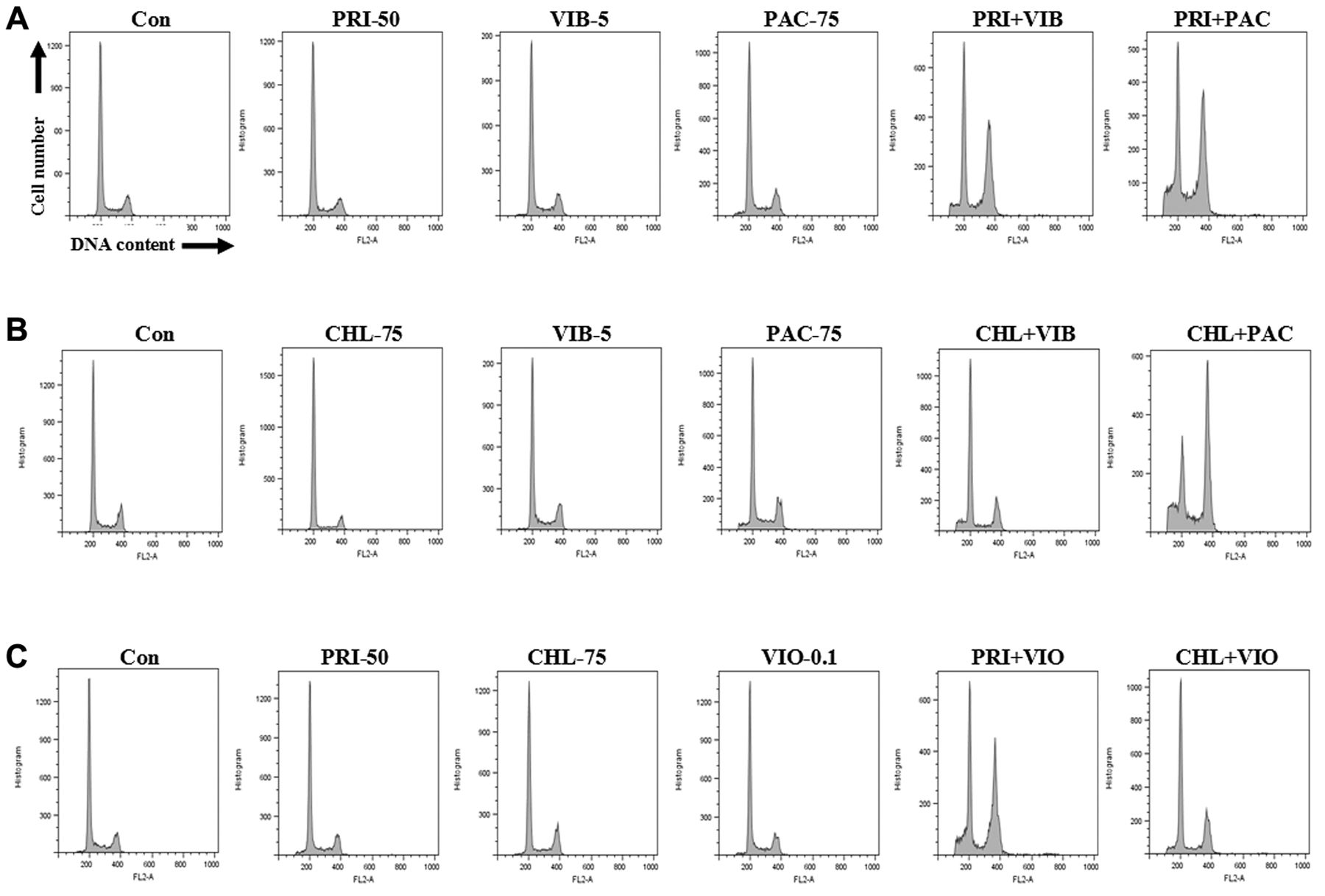
Co-treatment with PRI increases G2 arrest in VIB- and VIO-treated KBV20C drug-resistant cancer cells. A-C: KBV20C cells were plated on 60 mm-diameter dishes and treated with 50 μM PRI (PRI-50), 75 μM CHL (CHL-75), 5 nM VIB (VIB-5), 75 nM PAC (PAC-75), 0.1 μg/ml VIO (VIO-0.1), 50 μM PRI with 5 nM VIB (PRI+VIB), 50 μM PRI with 75 nM PAC (PRI+PAC), 75 μM CHL with 5 nM VIB (CHL+VIB), 75 μM CHL with 75 nM PAC (CHL+PAC), 0.1 μg/ml VIO with 50 μM PRI (VIO+PRI), 0.1 μg/ml VIO with 75 μM CHL (VIO+CHL), or 0.1% DMSO (Con). After 24 h, FACS analysis was performed as described in the Materials and Methods section.
Sensitization of cells for VIB in PRI co-treatment involves an increase in apoptosis, pRb, and pHistone H3 levels. We then tested whether the sensitization of cells for VIB in co-treatments with PRI or CHL also affects apoptosis of KBV20C cells. As seen in Figure 3, C-PARP levels were highly increased only in PRI co-treatments, suggesting that reduced G2 arrest upon CHL–VIB co-treatment results in reduced apoptosis. We then tested whether co-treatment with PRI or CHL and VIB influenced the activation or levels of the signaling proteins that function upstream and downstream of growth pathways, such as damage response-, cell cycle-, and proliferation-related activated proteins (22-25). We analyzed the phosphorylated forms of the major proteins in these pathways, namely, Gsk3β, P70S6K, mTOR, Cdc2, Rb, Chk1, H2AX, histone H3, and Chk2. We also looked for changes in pathway-related protein levels (PCNA, p21, Cdc2, and survivin). As seen in Figure 3, pRb and pHistone H3 levels were markedly reduced by CHL–VIB co-treatment, suggesting that activation of these proteins plays a role in the differences between PRI–VIB and CHL–VIB sensitization. The p21 and survivin levels also differed between PRI and CHL co-treatments. Considering that single-treatment of PRI–VIB or CHL–VIB already led to differences in p21 and survivin expression (Figure 3), we conclude that pRb and pHistone H3 are key factors causing a difference between PRI–VIB and CHL–VIB co-treatments. Furthermore, the results indicated that the reduced sensitization specificity of CHL results from both reduced pRb and pHistone H3 levels. It also suggests that the reduction in pRb and pHistone H3 levels by CHL–VIB co-treatment results in reduced G2 arrest.
Co-treatment with the anti-malarial drug MEF has similar sensitization effects as PRI. Previously, we have shown that PRI and MEF have similar sensitization effects for VIB upon co-treatment of KBV20C cells (9); herein, we tested whether PRI and MEF have similar sensitization effects for the other five anti-mitotic drugs used in co-treatments. First, as seen in Figure 4A-B, VIB co-treatment with PRI or MEF showed similar G2 arrest levels and growth reduction, suggesting that these two drugs have similar effects, which are different from those of CHL. When we tested other anti-mitotic drugs, we found that all five drugs caused similar growth reduction when used in co-treatment with PRI and with MEF (Figure 4C-G). These results suggested that PRI and MEF have similar sensitization effects for most anti-mitotic drugs and can be considered as a co-treatment partner group in clinical applications. In addition, the sensitization effects of PRI and MEF were relatively lower than those seen for verapamil in co-treatment with anti-mitotic drugs (Figure 4B-G). This suggests that a P-gp inhibitor, such as verapamil, more markedly sensitized P-gp-overexpressing KBV20C drug-resistant cancer cells than did the anti-malarial drugs.
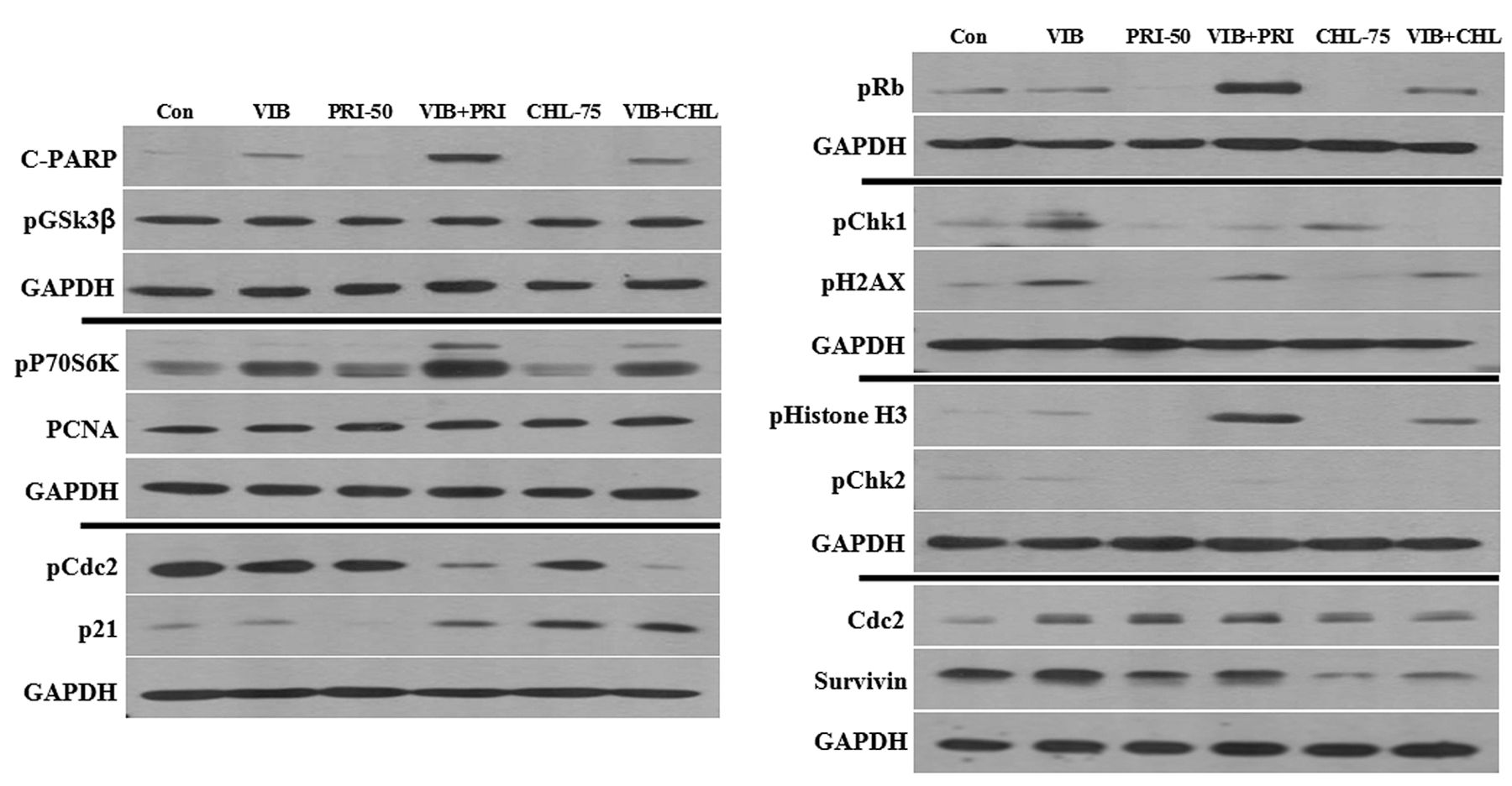
Sensitization of PRI–VIB co-treatment involves an increase in apoptosis, pRb, and pHistone H3 levels. KBV20C cells were plated on 60 mm-diameter dishes and treated with treated with 5 nM VIB (VIB), 50 μM PRI (PRI-50), 75 μM CHL (CHL-75), 5 nM VIB with 50 μM PRI (VIB+PRI), 5 nM VIB with 75 μM CHL (VIB+CHL), or 0.1% DMSO (Con). After 24 h, western blot analysis was performed using antibodies against C-PARP, pGSK3β, pp70S6K, PCNA, pCdc2, p21, pRb, pChk1, pH2AX, pHistone H3, pChk2, Cdc2, Survivin, and GAPDH.
Collectively, our co-treatment experiments allowed us to identify two anti-malarial drugs, namely, PRI and MEF, which sensitize KBV20C drug-resistant cancer cells to a similar extent when used in conjunction with six different anti-mitotic drugs. On the other hand, CHL, another anti-malarial drug, only sensitized the cells to four anti-mitotic drugs, namely, PAC, VIC, DOC, and HAL.
Discussion
Recently, the cancer-sensitization ability of anti-malarial drugs has been demonstrated in various cancer models (7-17), suggesting that anti-malarial drugs could be used as anticancer drugs. We found that PRI and MEF had similar sensitization effects for VIB when used in co-treatment of KBV20C cells (9). Moreover, PRI and MEF had similar sensitization effects for other five anti-mitotic drugs in co-treatment models. Our results suggested that both PRI and MEF could be used as co-treatment partners for any type of anti-mitotic drugs in order to sensitize drug-resistant cancer cells. They further suggested that cells resistant to various anti-mitotic drugs can be sensitized by using a combination of the anti-mitotic drug and PRI or MEF. Only a few previous studies have investigated the cancer sensitization potential of MEF and PRI (11, 14, 15); thus, our study contributes to the clinical application of this approach in anti-mitotic drug-resistant patients. In addition, on comparison with verapamil and anti-mitotic drug co-treatment, co-treatment of PRI or MEF and anti-mitotic drugs was found to have lesser sensitization effects than did verapamil co-treatment. This suggests that PRI and MEF have lesser P-gp inhibitory activity than verapamil does; however, the marked P-gp inhibition by verapamil is toxic to normal cells (26). Given that both PRI and MEF have relatively lower P-gp inhibitory activity, they can be used to avoid this toxicity in a clinical setting. Future studies using in vivo mouse models are warranted to assess the sensitization effect and toxicity of these drug combinations. We also found that CHL did not sensitize drug-resistant KBV20C cancer cells in co-treatment with VIB (9). Since PRI, MEF, and CHL have P-gp inhibitory activity (9), we assumed that CHL can have sensitization specificity with other anti-mitotic drugs in the resistant cells. Herein, we demonstrated that CHL had sensitization-specific activity for the anti-mitotic drugs, PAC, DOC, VIC, and HAL, but not for VIB and VIO. It is interesting that CHL had specific sensitization effects, although KBV20C drug-resistant cancer cells had similar resistance to all six tested anti-mitotic drugs, due to P-gp efflux activity. Considering that CHL can inhibit P-gp activity in KBV20C-resistant cells, we assume that the CHL-mediated sensitization can be prevented by some factors induced by VIB or VIO treatments. It also suggests that CHL has specificity for certain anti-mitotic drug partners and that the underlying sensitization mechanisms are different from those of PRI and MEF. CHL has been extensively investigated as an autophagy inhibitor for application in cancer cell sensitization (6, 12, 17). Our findings seem to be important for further clinical use of CHL, in terms of categorizing drug-resistant cancer populations for the use of particular anti-mitotic drugs and for the use of CHL in co-treatment with anti-mitotic drugs.

Co-treatment with the anti-malarial drug, MEF, has sensitization effects similar to those of PRI. A: KBV20C cells were plated on 60-mm diameter dishes and treated with 5 nM VIB (VIB-5), 50 μM PRI (PRI-50), 5 μM MEF (MEF-5), 5 nM VIB with 50 μM PRI (VIB+PRI), 5 nM VIB with 5 μM MEF (VIB+MEF), or 0.1% DMSO (Con). After 24 h, FACS analysis was performed as described in the Materials and Methods section. B-G: KBV20C cells were grown on 6-well plates and treated with 5 nM VIB (VIB-5), 0.1 μg/ml VIO (VIO-0.1), 50 μM PRI (PRI-50), 10 μM VER (VER-10), 5 μM MEF (MEF-5), 7.5 μM MEF (MEF-7.5), 30 nM PAC (PAC-30), 10 ng/ml DOC (DOC-10), 10 nM VIC (VIC-10), 50 ng/ml HAL (HAL-50), 5 nM VIB with10 μM VER (VIB+VER), 5 nM VIB with 50 μM PRI (VIB+PRI), 5 nM VIB with 5 μM MEF (VIB+MEF), 0.1 μg/ml VIO with 10 μM VER (VIO+VER), 0.1 μg/ml VIO with 50 μM PRI (VIB+PRI), 0.1 μg/ml VIO with 7.5 μM MEF (VIB+MEF) 30 nM PAC with 10 μM VER (VIB+VER), 30 nM PAC with 5 μM MEF (VIB+MEF), 30 nM PAC with 50 μM PRI (PAC+PRI), 10 ng/ml DOC with 10 μM VER (DOC+VER), 10 ng/ml DOC with 7.5 μM MEF (DOC+MEF), 10 ng/ml DOC with 50 μM PRI (DOC+PRI), 10 nM VIC with 10 μM VER (VIC+VER), 10 nM VIC with 5 μM MEF (VIC+MEF), 10 nM VIC with 50 μM PRI (VIC+PRI), 50 ng/ml HAL with 10 μM VER (HAL+VER), 50 ng/ml HAL with 5 μM MEF (HAL+MEF), 50 ng/ml HAL with 50 μM PRI (HAL+PRI), or 0.1% DMSO (Con). After 1 day, all cells were observed using an inverted microscope at x50 magnification.
We further studied why CHL–VIB co-treated drug-resistant cells have different sensitization effects from those of PRI–VIB or MEF–VIB. We found that G2 arrest was markedly reduced only with CHL–VIB and CHL–VIO co-treatments, compared to PRI–VIB, PRI–VIO, or MEF–VIB co-treatments. This indicates that sensitization of KBV20C drug-resistant cells requires G2 arrest. Considering that there is a similar increase in G2 arrest for CHL–PAC and PRI–PAC co-treatments, it is likely that CHL-specific reduction in the presence of VIB or VIO results from prevention of G2 arrest and that VIB or VIO treatment can prevent the CHL-sensitization effect via G2 arrest in co-treatment with anti-mitotic drugs. The results indicate that the reduced sensitization specificity of CHL is due to reduced G2 arrest. We also demonstrated that the sensitization involves apoptosis, through increased C-PARP production; therefore, increased G2 arrest in co-treated cells leads to increased apoptosis in KBV20C drug-resistant cells. We also found that pRb and pHistone H3 levels are important for distinguishing CHL and PRI sensitization for VIB. Considering that increased pRb and pHistone H3 levels positively correlate with arrest of growth and prevention of proliferation (27, 28), we assume that reduction of both activated Rb and histone H3 results in failure of sensitization in CHL–VIB co-treatment. Further studies are required to establish why activation of these proteins or signaling pathways did not increase in CHL–VIB co-treatment, and only increased in PRI–VIB co-treatment.
In summary, our study demonstrated that CHL has sensitization effects specific to particular anti-mitotic drugs, whereas PRI and MEF can sensitize resistant cancer cells to all anti-mitotic drugs, without preference. Since these drugs are already used in the clinical settings (29), and given the urgent need for pharmacological treatment of resistant cancer, they can be more readily applied to human patients. However, some questions do remain, such as whether other drugs have a similar sensitization effect as CHL and whether resistant cancer cells can be categorized by CHL sensitization to different anti-mitotic drugs. Our study may help improve the combinations of chemotherapeutic treatments involving anti-malarial drugs in patients with drug-resistant cancer.
Acknowledgements
This research was supported by Basic Science Research Program through the National Research Foundation of Korea (NRF) funded by the Ministry of Education (NRF-2014R1A1A2056690).
Footnotes
↵* These authors contributed equally to this work.
Conflicts of Interest
The Authors declare no conflicts of interest.
- Received February 3, 2016.
- Revision received March 21, 2016.
- Accepted March 22, 2016.
- Copyright© 2016 International Institute of Anticancer Research (Dr. John G. Delinassios), All rights reserved
References
In this issue


Jump to section
Related Articles
Cited By...
- Co-treatment With Aripiprazole and Vincristine Sensitizes P-Glycoprotein-Overexpressing Drug-resistant MCF-7/ADR Breast Cancer Cells
- Co-treatment of Low Dose Pacritinib, a Phase III Jak2 Inhibitor, Greatly Increases Apoptosis of P-gp Over-expressing Cancer Cells With Multidrug Resistance
- Sensitization Effects of Repurposed Blood Pressure-regulating Drugs on Drug-resistant Cancer Cells
- Drug Repositioning With an Anticancer Effect: Contributions to Reduced Cancer Incidence in Susceptible Individuals
- A Low Dose of Aripiprazole Has the Strongest Sensitization Effect Among 19 Repositioned Bipolar Drugs in P-gp-overexpressing Drug-resistant Cancer Cells
- Co-treatment With HIV Protease Inhibitor Nelfinavir Greatly Increases Late-phase Apoptosis of Drug-resistant KBV20C Cancer Cells Independently of P-Glycoprotein Inhibition
- Histamine Receptor Antagonists, Loratadine and Azelastine, Sensitize P-gp-overexpressing Antimitotic Drug-resistant KBV20C Cells Through Different Molecular Mechanisms
- Mesothelioma Interactome with 367 Novel Protein-Protein Interactions
- P-gp Inhibition by the Anti-psychotic Drug Pimozide Increases Apoptosis, as well as Expression of pRb and pH2AX in Highly Drug-resistant KBV20C Cells
- Aging-related Repositioned Drugs, Donepezil and Sildenafil Citrate, Increase Apoptosis of Anti-mitotic Drug-resistant KBV20C Cells Through Different Molecular Mechanisms
- Low Doses of the Anti-psychotic Drug Aripiprazole Have Strong P-gp-inhibitory Activity and Sensitize Anti-mitotic Drug-resistant Cancer Cells
- P-gp Inhibition by XL019, a JAK2 Inhibitor, Increases Apoptosis of Vincristine-treated Resistant KBV20C Cells with Increased p21 and pH2AX Expression
- Highly Eribulin-resistant KBV20C Oral Cancer Cells Can Be Sensitized by Co-treatment with the Third-generation P-Glycoprotein Inhibitor, Elacridar, at a Low Dose
- Highly Halaven-resistant KBV20C Cancer Cells Can Be Sensitized by Co-treatment with Fluphenazine
- Attenuation of Colchicine Toxicity in Drug-resistant Cancer Cells by Co-treatment with Anti-malarial Drugs
- Co-treatment with Celecoxib or NS398 Strongly Sensitizes Resistant Cancer Cells to Antimitotic Drugs Independent of P-gp Inhibition