Main menu

  • Home
  • Current Issue
  • Archive
  • Info for
    • Authors
    • Editorial Policies
    • Subscribers
    • Advertisers
    • Editorial Board
    • Special Issues
  • Journal Metrics
  • Other Publications
    • In Vivo
    • Cancer Genomics & Proteomics
    • Cancer Diagnosis & Prognosis
  • More
    • IIAR
    • Conferences
    • 2008 Nobel Laureates
  • About Us
    • General Policy
    • Contact
  • Other Publications
    • Anticancer Research
    • In Vivo
    • Cancer Genomics & Proteomics

User menu

  • Register
  • Subscribe
  • My alerts
  • Log in
  • My Cart

Search

  • Advanced search
Anticancer Research
  • Other Publications
    • Anticancer Research
    • In Vivo
    • Cancer Genomics & Proteomics
  • Register
  • Subscribe
  • My alerts
  • Log in
  • My Cart
Anticancer Research

Advanced Search

  • Home
  • Current Issue
  • Archive
  • Info for
    • Authors
    • Editorial Policies
    • Subscribers
    • Advertisers
    • Editorial Board
    • Special Issues
  • Journal Metrics
  • Other Publications
    • In Vivo
    • Cancer Genomics & Proteomics
    • Cancer Diagnosis & Prognosis
  • More
    • IIAR
    • Conferences
    • 2008 Nobel Laureates
  • About Us
    • General Policy
    • Contact
  • Visit us on Facebook
  • Follow us on Linkedin
Research ArticleClinical Studies

Clinicopathological Features of Surgically-resected Biliary Tract Cancer Following Chemo-radiation Therapy

SHOGO KOBAYASHI, KUNIHITO GOTOH, HIDENORI TAKAHASHI, HIROFUMI AKITA, SHIGERU MARUBASHI, TERUMASA YAMADA, TERUKI TESHIMA, KINJI NISHIYAMA, MASAHIKO YANO, HIROAKI OHIGASHI, OSAMU ISHIKAWA and MASATO SAKON
Anticancer Research January 2016, 36 (1) 335-342;
SHOGO KOBAYASHI
1Department of Surgery, Osaka Medical Center for Cancer and Cardiovascular Diseases, Osaka City, Osaka, Japan
  • Find this author on Google Scholar
  • Find this author on PubMed
  • Search for this author on this site
  • For correspondence: s-kobayashi{at}umin.ac.jp kobayasi-si{at}mc.pref.osaka.jp
KUNIHITO GOTOH
1Department of Surgery, Osaka Medical Center for Cancer and Cardiovascular Diseases, Osaka City, Osaka, Japan
  • Find this author on Google Scholar
  • Find this author on PubMed
  • Search for this author on this site
HIDENORI TAKAHASHI
1Department of Surgery, Osaka Medical Center for Cancer and Cardiovascular Diseases, Osaka City, Osaka, Japan
  • Find this author on Google Scholar
  • Find this author on PubMed
  • Search for this author on this site
HIROFUMI AKITA
1Department of Surgery, Osaka Medical Center for Cancer and Cardiovascular Diseases, Osaka City, Osaka, Japan
  • Find this author on Google Scholar
  • Find this author on PubMed
  • Search for this author on this site
SHIGERU MARUBASHI
1Department of Surgery, Osaka Medical Center for Cancer and Cardiovascular Diseases, Osaka City, Osaka, Japan
  • Find this author on Google Scholar
  • Find this author on PubMed
  • Search for this author on this site
TERUMASA YAMADA
1Department of Surgery, Osaka Medical Center for Cancer and Cardiovascular Diseases, Osaka City, Osaka, Japan
  • Find this author on Google Scholar
  • Find this author on PubMed
  • Search for this author on this site
TERUKI TESHIMA
2Department of Radiation Oncology, Osaka Medical Center for Cancer and Cardiovascular Diseases, Osaka City, Osaka, Japan
  • Find this author on Google Scholar
  • Find this author on PubMed
  • Search for this author on this site
KINJI NISHIYAMA
2Department of Radiation Oncology, Osaka Medical Center for Cancer and Cardiovascular Diseases, Osaka City, Osaka, Japan
  • Find this author on Google Scholar
  • Find this author on PubMed
  • Search for this author on this site
MASAHIKO YANO
1Department of Surgery, Osaka Medical Center for Cancer and Cardiovascular Diseases, Osaka City, Osaka, Japan
  • Find this author on Google Scholar
  • Find this author on PubMed
  • Search for this author on this site
HIROAKI OHIGASHI
1Department of Surgery, Osaka Medical Center for Cancer and Cardiovascular Diseases, Osaka City, Osaka, Japan
  • Find this author on Google Scholar
  • Find this author on PubMed
  • Search for this author on this site
OSAMU ISHIKAWA
1Department of Surgery, Osaka Medical Center for Cancer and Cardiovascular Diseases, Osaka City, Osaka, Japan
  • Find this author on Google Scholar
  • Find this author on PubMed
  • Search for this author on this site
MASATO SAKON
1Department of Surgery, Osaka Medical Center for Cancer and Cardiovascular Diseases, Osaka City, Osaka, Japan
  • Find this author on Google Scholar
  • Find this author on PubMed
  • Search for this author on this site
  • Article
  • Figures & Data
  • Info & Metrics
  • PDF
Loading

Abstract

Aim: We retrospectively investigated surgery following chemo-radiation in patients with biliary tract cancer (BTC) treated at our Institution. Patients and Methods: Among 339 patients, 44 patients underwent chemo-radiation prior to surgery. Chemo-radiation entailed 2-3 months of standardized chemotherapy and 50-60 Gy radiation at the main tumor and regional and para-aortic lymph nodes. Results: Thirty-one BTC cases were classified as initially resectable (IR) and 13 as initially un-resectable (UR). Eighty percent of the BTCs were diagnosed as extrahepatic bile duct cancers. Gemcitabine (1,000 mg/m2) and radiation was used to treat 59% of patients. Thirty percent of patients underwent hemi-hepatectomy, and 50% underwent pancreatoduodenectomy. The R0 resection rate was 90% among IR and 54% among UR, and 3-year survival rates were 82% for IR and 17% for UR, respectively. Conclusion: This retrospective analysis suggests that surgery after chemoradiation may contribute to R0 resection rate and survival for initially resectable BTC.

  • Biliary tract cancer
  • chemo-radiation
  • conversion
  • neoadjuvant treatment

Abbreviations: 5FU, 5-Fluorouracil; BTC, biliary tract cancer; CA19-9, carbohydrate antigen 19-9; CEA, carcinoembryonic antigen; CTCAE, common toxicity criteria adverse events; i.a., intraarterial infusion; PVE, portal vein embolization; S-1 TS1 tegafur, gimeracil, oteracil potassium; UFT, tegafur and uracil; UICC, International Union Against Cancer.

Neoadjuvant and adjuvant therapies for biliary tract cancer (BTC) are being explored due to the unsatisfactory outcomes after radial resection (1-9); R0 resection rates were approximately 70% (2, 3), and the 5-year survival rate after R0/R1 resection was less than 50% (1-4). In adjuvant therapy, there exist several problems, including lack of a standard protocol. Severe morbidity frequently occurs after extended surgery (e.g., hemi-hepatectomy and/or pancreatoduodenectomy with or without vascular resection and reconstruction), and a 30% dose reduction would be necessitated due to impairment of organs, especially liver (1, 10, 11). Thus, appropriate neoadjuvant therapy would be a desired alternative approach.

Chemotherapy and/or radiation therapy followed by surgery for BTC has not been well-investigated. Several studies (including case reports) concern initially un-resectable cases with ‘down-sizing’ or ‘adjuvant surgery’ (12-16); little information is available on initially resectable cases or neoadjuvant therapy (17-20). Additionally, the treatments followed by surgery in almost all cases were systemic chemotherapy. Chemo-radiation therapy for BTC has been mainly investigated in liver transplants (21, 22). Based on our Institutional experience with chemo-radiation followed by surgery for pancreatic cancer (23-25), we applied a similar protocol to BTC; briefly, two to three months of chemotherapy with radiation treatment of the main tumor and regional and para-aortic lymph nodes. This addresses local control of the invasive front with radiation and addresses control of micro-metastasis with chemotherapy.

The present study aimed to investigate the use of surgery following chemo-radiation therapy for treatment of BTC by retrospective review of patients' records, to evaluate whether a prospective study is warranted. We have now conducted over 300 BTC surgeries, including over 40 BTC surgeries following chemo-radiation, and herein summarize their results. Several approaches to surgery following chemo-radiation have been taken: chemo-radiation has been applied to the initially resectable cases (neoadjuvant therapy) as well as to the initially un-resectable cases (so-called ‘down-size,’ ‘conversion,’ or ‘adjuvant surgery’). We compared patient characteristics and different approaches, with special focus on survival after first treatment.

Patients and Methods

Patients and criteria for classification of biliary tract cancer. We retrospectively reviewed records of 339 patients who underwent BTC surgery through 2013 at our Institution. This study was approved by the Institutional review board (No. 1408271143).

We used the JSBS (Japanese Society of Biliary Surgery) general rules for classification of biliary cancer, Surgical and Pathological Studies on Cancer of the Biliary Tract (5th edition) (26), and TNM classification of malignant tumors of the International Union Against Cancer (UICC) version 7 (27). Histological evaluation used the criteria proposed by Drs. Oboshi and Shimosato (28)

Pre-treatment evaluation. Pre-treatment evaluation included the patient's medical history and physical examination, blood tests, imaging tests using contrast-enhanced computed tomography or magnetic resonance imaging, endoscopic retrograde cholangiography and/or percutaneous transhepatic cholangiography, electrocardiogram, spirogram, and chest X-rays. Pathological proof was obtained before the start of treatment as follows: biopsy for papilla Vater cancer, brushing cytology and/or bile juice cytology for bile duct cancer, and bile juice cytology for gall bladder cancer. Preoperative staging were performed using image-based diagnosis (29, 30).

Criteria for surgical treatment. A decision regarding operability was made based on liver oncological and functional status (2). The criteria used to recommend surgery were based on the cut margin and size of the remnant liver. Briefly, the cutting line of the biliary duct should be 5 mm away from the biliary duct stricture, and the estimated remnant liver volume (with normal liver function) should be more than 30% of the total liver volume, before or after PVE (31, 32).

The criteria used to exclude surgery were clear distant metastasis, cancer extension beyond the 2nd branch of the remnant biliary duct, major invasion of the major vessels of the remnant liver, and/or small estimated remnant liver volume.

Categories of chemo-radiation therapy followed by surgery and treatment protocol. Patients who underwent chemo-radiation therapy were categorized with either ‘initially resectable’ or ‘initially un-resectable’ BTC. Distinct treatment protocols were applied.

Patients who met criteria for surgical treatment in pre-treatment evaluation were defined as initially resectable BTC. In contrast, when the pre-treatment evaluation did not support the criteria for surgical treatment, cases were defined as initially un-resectable BTC, similarly to a previous report (12), and these patients underwent chemo-radiation therapy with a longer chemotherapy phase than the initially resectable BTC patients. The decision regarding operability used the same criteria for surgical treatment.

Chemo-radiation was performed with the standardized chemotherapy in use at the time (through 2005: 5-fluorouracil (5-FU) or UFT (tegafur and uracil), and in 2006 or later: Gemcitabine) in combination with 50-60 Gy of radiation. The procedures are categorized in Table I. Radiation therapy targeted the main tumor and regional and para-aortic lymph nodes (Figure 1). At least one month of drug withdrawal is necessary before surgery. If necessary, PVE was performed between the end of the chemo-radiation and surgery, during the one-month withdrawal time.

Follow-up evaluation. Blood tests (including carcinoembryonic antigen [CEA] and carbohydrate antigen 19-9 [CA19-9]) and/or imaging tests were planned every 3 months (at least) after start of treatment; additional blood tests and imaging were performed to confirm recurrence if clinically suspected. Overall survival was calculated from the start of treatment and the time of surgery.

Definition of adverse events during chemo-radiation therapy and surgical complications. We retrospectively collected information concerning adverse events during chemo-radiation and surgical complications from the patients' records. We evaluated adverse events according to the common toxicity criteria adverse events (CTCAE) version 4.0, and evaluated surgical complications according to Clavien-Dindo Classification (33).

Statistical analysis. Overall and recurrence-free survival rates were calculated by the Kaplan-Meier method and differences between groups were tested by the log-rank test. Differences between groups were tested using the Student's t-test and Chi-squared test. Differences were considered statistically significant at p<0.05. All statistical analyses were performed using the StatView J-5.0 software (SAS, Cary, NC, USA).

Results

Patients' characteristics. Among 339 BTC patients, 44 patients (13%) underwent surgery following chemotherapy and/or radiation therapy. Thirty-one patients (70%) were treated for initially resectable BTC, whereas 13 (30%) were treated for initially un-resectable BTC (Figure 2). Patients' characteristics are summarized in Table I. Seventy-five percent of patients were treated after 2001, with 61% treated between 2005 and 2011. Bile duct cancer was diagnosed in 80% and hilar cholangiocarcinoma was diagnosed in 34% of the patients.

Treatment course. We summarize treatments in Table I and adverse events/complications in Table II. Most chemo-radiation treatment protocols called for 1,000 mg/m2 of gemcitabine (on day 1, 8, 15; every 4 weeks) with 50 Gy of radiation. The number of gemcitabine treatments administered was 7 to 9 (2 to 3 cycles), and the average length between first treatment and surgery was 117 days (3.9 months). Other chemotherapy regimens were as follows: 3 patients were treated with 5-FU plus radiation, 2 with UFT, 2 with UFT plus radiation, 1 with intraarterial infusion (i.a.) of 5-FU plus radiation, 1 with i.a. of 5-FU plus cisplatin, 1 with systemic cisplatin plus methotrexate, and 1 with systemic 5-FU. During this period, the main severe events observed were neutropenia and elevation of transaminase. Two patients were noted as severe hyperbilirubinemia, but these patients were treated with radiation therapy during sustained obstructive jaundice; during treatment, serum bilirubin was gradually decreased without any other complications in these patients. Nine patients (20%) underwent plastic stent exchange during chemo-radiation.

Thirty percent of surgical procedures performed were hemi-hepatectomies, and 50% were pancreatoduodenectomies. In four cases only extrahepatic bile duct resection was performed; otherwise, extrahepatic bile duct resection was performed in 91% of patients in addition to other procedures, even if extended cholecystectomy (66% extended cholecystectomy with bile duct resection and 34% without bile duct resection. The average operative time was 549 min (about 9 h) and estimated blood loss was 1,993 g; 26 patients (59%) underwent transfusion. No mortality was observed for the 30 days following surgery. The major severe complication observed after surgery was biliary leakage, which especially affected patients with initially un-resectable BTC; overall, 75% experienced biliary leakage, 66% severe leakage, and two patients succumbed to sepsis following biliary leakage at 63 and 68 days after surgery. Other severe complications, hemorrhage and liver abscess, were seen in the initially un-resectable cases.

Figure 1.
  • Download figure
  • Open in new tab
  • Download powerpoint
Figure 1.

Typical dose distribution of radiation for right hepatectomy. (A) Dose distribution around the bile duct. (B) Dose distribution around the hepatic artery in the hepatico-duodenal ligament.

View this table:
  • View inline
  • View popup
  • Download powerpoint
Table I.

Patients' characteristics and pathological status of resected specimens.

View this table:
  • View inline
  • View popup
  • Download powerpoint
Table II.

Adverse events and complications.

After surgery, 59% of the patients underwent adjuvant therapies: 13 patients underwent hepatic infusion therapy (intra-portal or intra-arterial chemotherapy), 9 systemic gemcitabine, 4 UFT, 2 systemic 5-FU plus cisplatin, 1 systemic 5-FU, 1 S-1 (TS-1; tegafur, gimeracil, oteracil potassium), and 1 radiation therapy.

Pathological evaluation. As seen by pathological diagnosis, 80% of patients achieved R0 resection. Among patients with initially resectable BTC, 90% achieved R0 resection (Figure 2). Pathological lymph node metastasis was noted in 20% of the patients (Table I). In patients treated as initially resectable, absence of pathological lymph node metastasis (pN0) was noted in 84% and negative surgical cut end in 94%. In contrast, among patients treated as initially un-resectable, R0 resection was achieved in 54% of cases, negative lymph node metastasis was noted in 69%, and negative cut end in 69%.

Figure 2.
  • Download figure
  • Open in new tab
  • Download powerpoint
Figure 2.

Surgical and pathological results after chemo-radiation followed by surgery depended on whether the BTC was defined as initially resectable or un-resectable. The upper panel shows the category and number of patients. The lower panel shows the rate of R0 resection, negative lymph node metastasis, and negative surgical cut end among the two categories, initially resectable and initially un-resectable.

Histological type, cancer-stroma relationship, and growth pattern are summarized in Table I. Micro-invasion was visualized in 11-27% of patients. Vascular invasion of major vessels was noted in 5% of the patients. Moderate and marked histological change was noted in 25% of patients according to the criteria proposed by Drs. Oboshi and Shimosato (28).

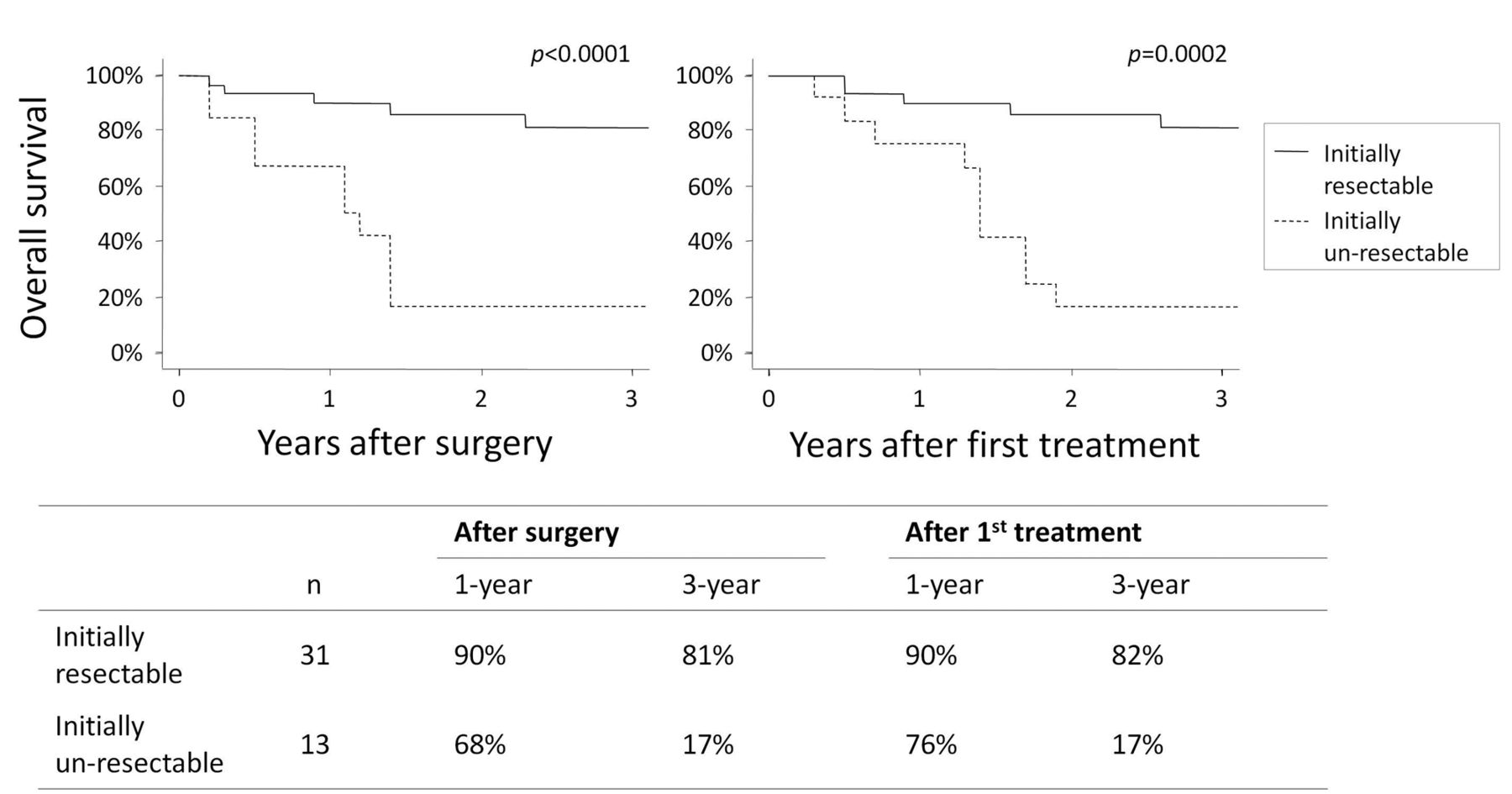
Survival. We summarize survival in Figure 3. The average observation period was 3.1 years. In patients treated as initially resectable, 3-year survival was 82%; however, in patients treated as initially un-resectable, 3-year survival was 17% (p<0.05). In 35 patients with R0 resection, 5 patients (14%) suffered from local recurrence. Nine patients (20%) survived more than 5 years in this observation period; 7 patients with initially resectable BTC (23%) and 2 with initially un-resectable BTC (15%) (note: the number of patients who survived more than 5 years would be larger with a longer observation period).

Discussion

Herein, we retrospectively reviewed the records of the 13% of BTC patients who were treated with surgery following chemo-radiation therapy at our Institution. Among the patients with initially resectable BTC, 90% achieved R0 resection and the 3-year survival rate was 82%.

The overall 5-year survival of BTC after surgery (mainly surgery-only treatment) was 30-50%, with 70% R0 resection (3). The 3-year survival rate, limited to patients with R0 resection, was 60% (2). Although statistical analysis and consideration of possible selection bias would be necessary to confirm our results, our 3-year survival rate of 82% seems not to be inferior to the surgery-only approach reported previously. The R0 resection rate, that is 90% in our study also compares favorably to already published rates (appproximately 70%) (2, 3). Our data indicate that it would be worthwhile to continue this therapeutic approach (chemo-radiation therapy in the neoadjuvant setting) and necessary to evaluate the outcome prospectively with intention-to-treat analysis and resection rate (registration: UMIN000015450), as the retrospective study might exclude patients with progressive disease during chemo-radiation. Previous reports regarding neoadjuvant therapy were supportive to our speculation (17-19). Although it is difficult to compare previous studies, one report presented the feasibility of neoadjuvant chemo-radiation with a protocol similar to that used in this study (18), and one report presented the value of achieving the negative surgical cut end (19). Another study showed that neoadjuvant chemotherapy, but not chemo-radiation therapy, did not improve patients' survival (17), suggesting that chemo-radiation, rather than chemotherapy alone, followed by surgery would be necessary for effective neoadjuvant therapy.

Figure 3.
  • Download figure
  • Open in new tab
  • Download powerpoint
Figure 3.

Survival curves after chemo-radiation followed by surgery, calculated from the time of surgery and the time of first treatment, shown for initially resectable and un-resectable cases. The left-upper panel shows a graph of overall survival from the surgery for the two categories, initially resectable and un-resectable. The right upper panel shows a graph of overall survival from the first treatment. The lower panel lists the actual percentage of 1- or 3-year survival after the surgery or the first treatment.

On the other hand, treatment of initially un-resectable cases (locally advanced BTC) for down-size should be carefully considered. Our study found 3-year survival of 17%, with 54% R0 resection. The surgical cut end was pathologically positive in 31% of cases, and severe complications had occurred. According to previous reports, chemotherapy with GEM provided 18% 3-year survival and R2 resection provided 19% (2). We consider the survival data among these treatments (chemo-radiation and surgery for initially un-resectable BTC, chemotherapy, and R2 resection) to be similar, although we consider the possibility that patients' backgrounds could be quite different. In the other aspect, only ‘chemoradiation and surgical treatment’ might provide 5-year survival of initially un-resectable BTC (2). In the present study, two of these patients survived more than 5 years. The previous report showed at least one case of 5-year survival among 8 patients who were treated with surgery following chemotherapy (note: a longer observation period would result in a larger number of 5-year survivors) (12). Although chemo-radiation therapy followed by surgery for initially un-resectable BTC provided similar 3-year survival rates compared to chemotherapy-only or with R2 resection, it may provide the best chance of long-term survival. With more severe risks yet a chance of long-term survival, careful consideration must be given to the decision whether or not to provide this treatment in cases of initially un-resectable BTC.

Pathological evidence supported our findings regarding benefit for survival and R0 resection in initially resectable BTC. Pathological evaluation after chemo-radiation showed negative lymph node metastasis in 84% (positive lymph node metastasis 16%), with an average number of 17 resected lymph nodes. Positive lymph node metastasis was noted in 39-41% in the national BTC survey (3) and in 45-51% of patients who were treated by surgery-only in previous reports (34, 35). Observations regarding other factors were similar to those from a previous report (34); scirrhous cancer-stroma relationship was 34% (in our data 34%), infiltrating growth pattern was 14% (herein 25%), micro-invasion to venous system was 29% (herein 11%) and to nervous system was 35% (herein 27%). However, micro-invasion to the lymphatic system was seen in 65% of the cases treated with surgery-only in the previous report, compared with 23% invasion seen in this study. These data indicate the possibility that chemo-radiation therapy may regulate lymphatic spread in BTC. Molecular biological evidence would be necessary for confirmation. For example, we previously showed that cells at the invasive front and metastatic sites in BTC expressed ‘chemotherapy’ resistance-related genes and showed epithelial-mesenchymal transition (EMT) and an excess of inflammatory cytokines (36). To further investigate our findings, we would need to evaluate the effect of chemo-‘radiation’ at the invasion front and/or regional lymph node metastatic site after treatment and compare with the effect of chemotherapy-only treatment.

By the way, similarities and differences of chemoradiation therapy followed by surgery between pancreatic cancer (23, 24) and BTC were as follows; the similarity was adverse effects during the chemo-radiation. In contrast, the difference was difficulty of surgery around the hepaticoduodenal ligament. In BTC, extensive bile duct resection and lymph nodes resection around the hepaticoduodenal ligament should be necessary, compared to pancreatic cancer. Cholangitis during the preoperative treatments and/or chemo-radiation effects would induce thickness of the ligament and cause difficulty of the surgery and necessity of a more careful technique.

In conclusion, our retrospective study indicated 90% R0 resection with 84% negative lymph-node metastasis after chemoradiation of initially resectable BTC before surgery. Chemo-radiation therapy followed by surgery in initially resectable BTC may contribute to patients' survival via improvement of R0 resection rates and regulation of lymph node metastasis by loco-regional control. Prospective studies of this treatment are necessary to further elucidate these observations. In contrast, in cases with initially un-resectable BTC, we found a limited R0 resection rate of 54% with chemoradiation therapy prior to surgery. We recommend the careful weighing of risks and potential benefits in cases of initially un-resectable BTC.

Acknowledgements

The Authors acknowledge our grant sponsor, Grant-in-Aid for Scientific Research (C).

  • Received October 6, 2015.
  • Revision received November 25, 2015.
  • Accepted November 27, 2015.
  • Copyright© 2016 International Institute of Anticancer Research (Dr. John G. Delinassios), All rights reserved

References

  1. ↵
    1. Yamanaka K,
    2. Hatano E,
    3. Kanai M,
    4. Tanaka S,
    5. Yamamoto K,
    6. Narita M,
    7. Nagata H,
    8. Ishii T,
    9. Machimoto T,
    10. Taura K,
    11. Uemoto S
    : A single-center analysis of the survival benefits of adjuvant gemcitabine chemotherapy for biliary tract cancer. Int J Clin Oncol 19: 485-489, 2014.
    OpenUrlPubMed
  2. ↵
    1. Kobayashi S,
    2. Nagano H,
    3. Marubashi S,
    4. Wada H,
    5. Eguchi H,
    6. Takeda Y,
    7. Tanemura M,
    8. Umeshita K,
    9. Doki Y,
    10. Mori M
    : Treatment of borderline cases for curative resection of biliary tract cancer. J Surg Oncol 104: 499-503, 2011.
    OpenUrlCrossRefPubMed
  3. ↵
    1. Miyakawa S,
    2. Ishihara S,
    3. Horiguchi A,
    4. Takada T,
    5. Miyazaki M,
    6. Nagakawa T
    : Biliary tract cancer treatment: 5,584 results from the Biliary Tract Cancer Statistics Registry from 1998 to 2004 in Japan. J Hepatobiliary Pancreat Surg 16: 1-7, 2009.
    OpenUrlCrossRefPubMed
  4. ↵
    1. Hasegawa S,
    2. Ikai I,
    3. Fujii H,
    4. Hatano E,
    5. Shimahara Y
    : Surgical resection of hilar cholangiocarcinoma. Analysis of survival and postoperative complications. World J Surgery 31: 1256-1263, 2007.
    OpenUrl
    1. Kainuma O,
    2. Miura F,
    3. Furukawa D,
    4. Yamamoto H,
    5. Cho A,
    6. Sano K,
    7. Nakagohri T,
    8. Asano T
    : Feasibility and efficacy of gemcitabine plus cisplatin combination therapy after curative resection for biliary tract cancer. J Hepatobiliary Pancreat Sci 22: 789-794, 2015.
    OpenUrlCrossRefPubMed
    1. Kobayashi S,
    2. Nagano H,
    3. Marubashi S,
    4. Takeda Y,
    5. Tanemura M,
    6. Konishi K,
    7. Yoshioka Y,
    8. Inoue T,
    9. Doki Y,
    10. Mori M
    : Impact of postoperative irradiation after non-curative resection of hilar biliary cancer. J Surg Oncol 100: 657-662, 2009.
    OpenUrlPubMed
    1. Hayashi K,
    2. Isohashi F,
    3. Ogawa K,
    4. Oikawa H,
    5. Onishi H,
    6. Ito Y,
    7. Takemoto M,
    8. Karasawa K,
    9. Imai M,
    10. Kosaka Y,
    11. Yamazaki H,
    12. Yoshioka Y,
    13. Nemoto K,
    14. Nishimura Y,
    15. JAPANESE RADIATION ONCOLOGY STUDY GROUP (JROSG)
    : Postoperative External Irradiation of Patients with Primary Biliary Tract Cancer: A Multicenter Retrospective Study. Anticancer Res 35: 6231-6237, 2015.
    OpenUrlAbstract/FREE Full Text
    1. Jeong Y,
    2. Park JH,
    3. Lee YJ,
    4. Park KM,
    5. Hwang S,
    6. Chang HM,
    7. Kim KP,
    8. Yoon SM,
    9. Jung NH,
    10. Kim JH
    : Postoperative radiotherapy for gallbladder cancer. Anticancer Res 34: 5621-5629, 2014.
    OpenUrlAbstract/FREE Full Text
  5. ↵
    1. Nakamura M,
    2. Nakashima H,
    3. Abe T,
    4. Ensako T,
    5. Yoshida K,
    6. Hino K
    : Gemcitabine-based adjuvant chemotherapy for patients with advanced gallbladder cancer. Anticancer Res 34: 3125-3129, 2014.
    OpenUrlAbstract/FREE Full Text
  6. ↵
    1. Kobayashi S,
    2. Miyamoto A,
    3. Shimizu J,
    4. Kashiwazaki M,
    5. Takeda Y,
    6. Ueshima S,
    7. Kim Y,
    8. Kitagawa T,
    9. Dono K,
    10. Mori M,
    11. Doki Y,
    12. Nagano H
    : Comparison of 4-Weekly vs. 3-Weekly Gemcitabine as Adjuvant Chemotherapy Following Curative Resection for Biliary Tract Cancer: A Prospective Randomized Controlled Trial J Cancer Ther 2: 703-709, 2011.
    OpenUrl
  7. ↵
    1. Kobayashi S,
    2. Nagano H,
    3. Sakai D,
    4. Eguchi H,
    5. Hatano E,
    6. Kanai M,
    7. Seo S,
    8. Taura K,
    9. Fujiwara Y,
    10. Ajiki T,
    11. Takemura S,
    12. Kubo S,
    13. Yanagimoto H,
    14. Toyokawa H,
    15. Tsuji A,
    16. Terajima H,
    17. Morita S,
    18. Ioka T
    : Phase I study of adjuvant gemcitabine or S-1 in patients with biliary tract cancers undergoing major hepatectomy: KHBO1003 study. Cancer Chemother Pharmacol 74: 699-709, 2014.
    OpenUrlPubMed
  8. ↵
    1. Kato A,
    2. Shimizu H,
    3. Ohtsuka M,
    4. Yoshidome H,
    5. Yoshitomi H,
    6. Furukawa K,
    7. Takeuchi D,
    8. Takayashiki T,
    9. Kimura F,
    10. Miyazaki M
    ; Surgical resection after downsizing chemotherapy for initially unresectable locally advanced biliary tract cancer: a retrospective single-center study. Ann Surg Oncol 20: 318-324, 2013.
    OpenUrlPubMed
    1. Oshiro Y,
    2. Takahashi K,
    3. Sasaki R,
    4. Kondo T,
    5. Sakashita S,
    6. Ohkohchi N
    : Adjuvant surgery for advanced extrahepatic cholangiocarcinoma. World J Gastroenterol 19: 6934-6938, 2013.
    OpenUrlPubMed
    1. Furukawa K,
    2. Uwagawa T,
    3. Sakamoto T,
    4. Shiba H,
    5. Tsutsumi J,
    6. Yanaga K
    : Curative Resection After Gemcitabine, Cisplatin and S-1 Chemotherapy for Initially Unresectable Biliary Duct Cancer: A Case Report. Anticancer Res 35: 4203-4206, 2015.
    OpenUrlAbstract/FREE Full Text
    1. Gotoh K,
    2. Marubashi S,
    3. Kobayashi S,
    4. Takahashi H,
    5. Akita H,
    6. Sugimura K,
    7. Miyoshi N,
    8. Motoori M,
    9. Kishi K,
    10. Noura S,
    11. Fujiwara Y,
    12. Ohue M,
    13. Tomita Y,
    14. Yano M,
    15. Ishikawa O,
    16. Sakon M
    : Successful treatment of advanced gallbladder cancer involving the extrahepatic bile duct with neoadjuvant chemoradiation therapy – a case report. Gan To Kagaku Ryoho 41: 1515-1517, 2014.
    OpenUrlPubMed
  9. ↵
    1. Okumura T,
    2. Nakamura J,
    3. Kai K,
    4. Ide Y,
    5. Nakamura H,
    6. Koga H,
    7. Ide T,
    8. Miyoshi A,
    9. Kitahara K,
    10. Noshiro H
    : Curative resection of gallbladder cancer with liver invasion and hepatic metastasis after chemotherapy with gemcitabine plus S-1: report of a case. World J Surg Oncol 12: 326, 2014.
    OpenUrlPubMed
  10. ↵
    1. Glazer ES,
    2. Liu P,
    3. Abdalla EK,
    4. Vauthey JN,
    5. Curley SA
    : Neither neoadjuvant nor adjuvant therapy increases survival after biliary tract cancer resection with wide negative margins. J Gastrointest Surg 16: 1666-1671, 2012.
    OpenUrlPubMed
  11. ↵
    1. Katayose Y,
    2. Rikiyama T,
    3. Motoi F,
    4. Yamamoto K,
    5. Yoshida H,
    6. Morikawa T,
    7. Hayashi H,
    8. Kanno A,
    9. Hirota M,
    10. Satoh K,
    11. Ariga H,
    12. Suzuki M,
    13. Ohyauchi M,
    14. Kondo Y,
    15. Ikeya S,
    16. Ogawa Y,
    17. Shimosegawa T,
    18. Egawa S,
    19. Unno M
    : Phase I trial of neoadjuvant chemoradiation with gemcitabine and surgical resection for cholangiocarcinoma patients (NACRAC study). Hepatogastroenterology 58: 1866-1872, 2011.
    OpenUrlPubMed
  12. ↵
    1. McMasters KM,
    2. Tuttle TM,
    3. Leach SD,
    4. Rich T,
    5. Cleary KR,
    6. Evans DB,
    7. Curley SA
    : Neoadjuvant chemoradiation for extrahepatic cholangiocarcinoma. Am J Surg 174: 605-608, 1997.
    OpenUrlCrossRefPubMed
  13. ↵
    1. Walker EJ,
    2. Simko JP,
    3. Nakakura EK,
    4. Ko AH
    : A patient with cholangiocarcinoma demonstrating pathologic complete response to chemotherapy: exploring the role of neoadjuvant therapy in biliary tract cancer. J Gastrointest Oncol 5: E88-95, 2014.
    OpenUrlPubMed
  14. ↵
    1. Darwish MS,
    2. Kim WR,
    3. Harnois DM,
    4. Douglas DD,
    5. Burton J,
    6. Kulik LM,
    7. Botha JF,
    8. Mezrich JD,
    9. Chapman WC,
    10. Schwartz JJ,
    11. Hong JC,
    12. Emond JC,
    13. Jeon H,
    14. Rosen CB,
    15. Gores GJ,
    16. Heimbach JK
    : Efficacy of neoadjuvant chemoradiation, followed by liver transplantation, for perihilar cholangiocarcinoma at 12 US centers. Gastroenterology 143: 88-98, 2012.
    OpenUrlCrossRefPubMed
  15. ↵
    1. Duignan S,
    2. Maguire D,
    3. Ravichand CS,
    4. Geoghegan J,
    5. Hoti E,
    6. Fennelly D,
    7. Armstrong J,
    8. Rock K,
    9. Mohan H,
    10. Traynor O
    : Neoadjuvant chemoradiotherapy followed by liver transplantation for unresectable cholangiocarcinoma: a single-centre national experience. HPB (Oxford) 16: 91-98, 2014.
    OpenUrlPubMed
  16. ↵
    1. Takahashi H,
    2. Ohigashi H,
    3. Gotoh K,
    4. Marubashi S,
    5. Yamada T,
    6. Murata M,
    7. Ioka T,
    8. Uehara H,
    9. Yano M,
    10. Ishikawa O
    : Preoperative gemcitabine-based chemoradiation therapy for resectable and borderline resectable pancreatic cancer. Ann Surg 258: 1040-1050, 2013.
    OpenUrlCrossRefPubMed
  17. ↵
    1. Ohigashi H,
    2. Ishikawa O,
    3. Eguchi H,
    4. Takahashi H,
    5. Gotoh K,
    6. Yamada T,
    7. Yano M,
    8. Nakaizumi A,
    9. Uehara H,
    10. Tomita Y,
    11. Nishiyama K
    : Feasibility and efficacy of combination therapy with preoperative full-dose gemcitabine, concurrent three-dimensional conformal radiation, surgery, and postoperative liver perfusion chemotherapy for T3-pancreatic cancer. Ann Surg 250: 88-95, 2009.
    OpenUrlCrossRefPubMed
  18. ↵
    1. Takahashi H,
    2. Akita H,
    3. Gotoh K,
    4. Kobayashi S,
    5. Marubashi S,
    6. Miyoshi N,
    7. Sugimura K,
    8. Motoori M,
    9. Kishi K,
    10. Noura S,
    11. Fujiwara Y,
    12. Ohue M,
    13. Ohigashi H,
    14. Yano M,
    15. Sakon M,
    16. Ishikawa O
    : Preoperative gemcitabine-based chemoradiation therapy for pancreatic ductal adenocarcinoma of the body and tail: impact of splenic vessels involvement on operative outcome and pattern of recurrence. Surgery 157: 484-495, 2015.
    OpenUrlPubMed
  19. ↵
    1. Japanese Society of Biliary Surgery
    : Classification of Biliary Tract Carcinoma, fifth edition. Tokyo, Kanehara, 2003.
  20. ↵
    1. Sobin LH,
    2. Gospodarowicz M,
    3. Wittekind C,
    4. International Union Against Cancer
    , TNM classification of malignant tumors. seventh edition. New York, Wiley-Blackwell, 2010.
  21. ↵
    1. Shimosato Y,
    2. Oboshi S,
    3. Baba K
    : Histological evaluation of effects of radiotherapy and chemotherapy for carcinomas. Jpn J Clin Oncol 1: 19-35, 1971.
    OpenUrlCrossRef
  22. ↵
    1. Kobayashi S,
    2. Nagano H,
    3. Marubashi S,
    4. Wada H,
    5. Eguchi H,
    6. Takeda Y,
    7. Tanemura M,
    8. Doki Y,
    9. Mori M
    : Multi-detector computed tomography for preoperative prediction of postsurgical prognosis of patients with extrahepatic biliary cancer. J Surg Oncol 101: 376-83, 2010.
    OpenUrlPubMed
  23. ↵
    1. Kobayashi S,
    2. Nagano H,
    3. Hoshino H,
    4. Wada H,
    5. Marubashi S,
    6. Eguchi H,
    7. Takeda Y,
    8. Tanemura M,
    9. Kim T,
    10. Shimosegawa E,
    11. Hatazawa J,
    12. Doki Y,
    13. Mori M
    : Diagnostic value of FDG-PET for lymph node metastasis and outcome of surgery for biliary cancer. J Surg Oncol 103: 223-229, 2011.
    OpenUrlPubMed
  24. ↵
    1. Makuuchi M,
    2. Thai BL,
    3. Takayasu K,
    4. Takayama T,
    5. Kosuge T,
    6. Gunvén P,
    7. Yamazaki S,
    8. Hasegawa H,
    9. Ozaki H
    : Preoperative portal embolization to increase safety of major hepatectomy for hilar bile duct carcinoma: a preliminary report. Surgery 107: 521-527, 1990.
    OpenUrlPubMed
  25. ↵
    1. Nagino M,
    2. Nimura Y,
    3. Kamiya J,
    4. Kondo S,
    5. Uesaka K,
    6. Kin Y,
    7. Hayakawa N,
    8. Yamamoto H
    : Changes in hepatic lobe volume in biliary tract cancer patients after right portal vein embolization. Hepatology 21: 434-439, 1995.
    OpenUrlCrossRefPubMed
  26. ↵
    1. Dindo D,
    2. Demartines N,
    3. Clavien PA
    : Classification of surgical complications: a new proposal with evaluation in a cohort of 6336 patients and results of a survey. Ann Surg 240: 205-13, 2004.
    OpenUrlCrossRefPubMed
  27. ↵
    1. Nakashima S,
    2. Kobayashi S,
    3. Sakai D,
    4. Tomokuni A,
    5. Tomimaru Y,
    6. Hama N,
    7. Wada H,
    8. Kawamoto K,
    9. Marubashi S,
    10. Eguchi H,
    11. Matsuura N,
    12. Doki Y,
    13. Mori M,
    14. Nagano H
    : Prognostic impact of tumoral and/or peri-tumoral stromal SPARC expressions after surgery in patients with biliary tract cancer. J Surg Oncol 110: 1016-1022, 2014.
    OpenUrlPubMed
  28. ↵
    1. Aoba T,
    2. Ebata T,
    3. Yokoyama Y,
    4. Igami T,
    5. Sugawara G,
    6. Takahashi Y,
    7. Nimura Y,
    8. Nagino M
    : Assessment of nodal status for perihilar cholangiocarcinoma: location, number, or ratio of involved nodes. Ann Surg 257: 718-725, 2013.
    OpenUrlCrossRefPubMed
  29. ↵
    1. Yamada D,
    2. Kobayashi S,
    3. Wada H,
    4. Kawamoto K,
    5. Marubashi S,
    6. Eguchi H,
    7. Ishii H,
    8. Nagano H,
    9. Doki Y,
    10. Mori M
    : Role of crosstalk between interleukin-6 and transforming growth factor-beta 1 in epithelial-mesenchymal transition and chemoresistance in biliary tract cancer. Eur J Cancer 49: 1725-1740, 2013.
    OpenUrlCrossRefPubMed
PreviousNext
Back to top

In this issue

Anticancer Research
Vol. 36, Issue 1
January 2016
  • Table of Contents
  • Table of Contents (PDF)
  • Index by author
  • Back Matter (PDF)
  • Ed Board (PDF)
  • Front Matter (PDF)
Print
Download PDF
Article Alerts
Sign In to Email Alerts with your Email Address
Email Article

Thank you for your interest in spreading the word on Anticancer Research.

NOTE: We only request your email address so that the person you are recommending the page to knows that you wanted them to see it, and that it is not junk mail. We do not capture any email address.

Enter multiple addresses on separate lines or separate them with commas.
Clinicopathological Features of Surgically-resected Biliary Tract Cancer Following Chemo-radiation Therapy
(Your Name) has sent you a message from Anticancer Research
(Your Name) thought you would like to see the Anticancer Research web site.
CAPTCHA
This question is for testing whether or not you are a human visitor and to prevent automated spam submissions.
4 + 8 =
Solve this simple math problem and enter the result. E.g. for 1+3, enter 4.
Citation Tools
Clinicopathological Features of Surgically-resected Biliary Tract Cancer Following Chemo-radiation Therapy
SHOGO KOBAYASHI, KUNIHITO GOTOH, HIDENORI TAKAHASHI, HIROFUMI AKITA, SHIGERU MARUBASHI, TERUMASA YAMADA, TERUKI TESHIMA, KINJI NISHIYAMA, MASAHIKO YANO, HIROAKI OHIGASHI, OSAMU ISHIKAWA, MASATO SAKON
Anticancer Research Jan 2016, 36 (1) 335-342;

Citation Manager Formats

  • BibTeX
  • Bookends
  • EasyBib
  • EndNote (tagged)
  • EndNote 8 (xml)
  • Medlars
  • Mendeley
  • Papers
  • RefWorks Tagged
  • Ref Manager
  • RIS
  • Zotero
Reprints and Permissions
Share
Clinicopathological Features of Surgically-resected Biliary Tract Cancer Following Chemo-radiation Therapy
SHOGO KOBAYASHI, KUNIHITO GOTOH, HIDENORI TAKAHASHI, HIROFUMI AKITA, SHIGERU MARUBASHI, TERUMASA YAMADA, TERUKI TESHIMA, KINJI NISHIYAMA, MASAHIKO YANO, HIROAKI OHIGASHI, OSAMU ISHIKAWA, MASATO SAKON
Anticancer Research Jan 2016, 36 (1) 335-342;
Twitter logo Facebook logo Mendeley logo
  • Tweet Widget
  • Facebook Like
  • Google Plus One

Jump to section

  • Article
    • Abstract
    • Patients and Methods
    • Results
    • Discussion
    • Acknowledgements
    • References
  • Figures & Data
  • Info & Metrics
  • PDF

Related Articles

Cited By...

  • Karnofsky Performance Score Is Predictive of Survival After Palliative Irradiation of Metastatic Bile Duct Cancer
  • Outcomes After Radio(chemo)therapy for Non-Metastatic Bile Duct Cancer
  • Google Scholar

More in this TOC Section

  • Laparotomy After Total Pelvic Exenteration: Current Status and Techniques for Ileal Conduit Preservation
  • Pregabalin for Opioid-resistant Neuropathic Pain in Bone Metastases
  • Life-threatening Pneumonitis Induced by Osimertinib Monotherapy as a First-line Treatment for Epidermal Growth Factor Receptor Mutation-positive Non-small-cell Lung Cancer: A Retrospective Case-series Study
Show more Clinical Studies

Keywords

  • Biliary tract cancer
  • chemo-radiation
  • conversion
  • neoadjuvant treatment
Anticancer Research

© 2026 Anticancer Research

Powered by HighWire