Main menu

  • Home
  • Current Issue
  • Archive
  • Info for
    • Authors
    • Editorial Policies
    • Subscribers
    • Advertisers
    • Editorial Board
    • Special Issues
  • Journal Metrics
  • Other Publications
    • In Vivo
    • Cancer Genomics & Proteomics
    • Cancer Diagnosis & Prognosis
  • More
    • IIAR
    • Conferences
    • 2008 Nobel Laureates
  • About Us
    • General Policy
    • Contact
  • Other Publications
    • Anticancer Research
    • In Vivo
    • Cancer Genomics & Proteomics

User menu

  • Register
  • Subscribe
  • My alerts
  • Log in
  • My Cart

Search

  • Advanced search
Anticancer Research
  • Other Publications
    • Anticancer Research
    • In Vivo
    • Cancer Genomics & Proteomics
  • Register
  • Subscribe
  • My alerts
  • Log in
  • My Cart
Anticancer Research

Advanced Search

  • Home
  • Current Issue
  • Archive
  • Info for
    • Authors
    • Editorial Policies
    • Subscribers
    • Advertisers
    • Editorial Board
    • Special Issues
  • Journal Metrics
  • Other Publications
    • In Vivo
    • Cancer Genomics & Proteomics
    • Cancer Diagnosis & Prognosis
  • More
    • IIAR
    • Conferences
    • 2008 Nobel Laureates
  • About Us
    • General Policy
    • Contact
  • Visit us on Facebook
  • Follow us on Linkedin
Research ArticleExperimental Studies

Cucurbitacin-D-induced CDK1 mRNA Up-regulation Causes Proliferation Arrest of a Non-small Cell Lung Carcinoma Cell Line (NSCLC-N6)

CATHERINE JACQUOT, BENEDICTE ROUSSEAU, DELPHINE CARBONNELLE, IOANNA CHINOU, MARINE MALLETER, CHRISTOPHE TOMASONI and CHRISTOS ROUSSAKIS
Anticancer Research September 2014, 34 (9) 4797-4806;
CATHERINE JACQUOT
1Equipe IICIMed EA 1155, Laboratoire CPCM, Faculté de Pharmacie, Université de Nantes, Nantes, France
  • Find this author on Google Scholar
  • Find this author on PubMed
  • Search for this author on this site
  • For correspondence: Catherine.jacquot{at}univ-nantes.fr
BENEDICTE ROUSSEAU
1Equipe IICIMed EA 1155, Laboratoire CPCM, Faculté de Pharmacie, Université de Nantes, Nantes, France
  • Find this author on Google Scholar
  • Find this author on PubMed
  • Search for this author on this site
DELPHINE CARBONNELLE
1Equipe IICIMed EA 1155, Laboratoire CPCM, Faculté de Pharmacie, Université de Nantes, Nantes, France
  • Find this author on Google Scholar
  • Find this author on PubMed
  • Search for this author on this site
IOANNA CHINOU
2Division of Pharmacognosy and Chemistry of Natural Products, University of Athens, Athens, Greece
  • Find this author on Google Scholar
  • Find this author on PubMed
  • Search for this author on this site
MARINE MALLETER
1Equipe IICIMed EA 1155, Laboratoire CPCM, Faculté de Pharmacie, Université de Nantes, Nantes, France
  • Find this author on Google Scholar
  • Find this author on PubMed
  • Search for this author on this site
CHRISTOPHE TOMASONI
1Equipe IICIMed EA 1155, Laboratoire CPCM, Faculté de Pharmacie, Université de Nantes, Nantes, France
  • Find this author on Google Scholar
  • Find this author on PubMed
  • Search for this author on this site
CHRISTOS ROUSSAKIS
1Equipe IICIMed EA 1155, Laboratoire CPCM, Faculté de Pharmacie, Université de Nantes, Nantes, France
  • Find this author on Google Scholar
  • Find this author on PubMed
  • Search for this author on this site
  • Article
  • Figures & Data
  • Info & Metrics
  • PDF
Loading

Article Figures & Data

Figures

  • Figure 1.
    • Download figure
    • Open in new tab
    • Download powerpoint
    Figure 1.

    Chemical structure of Cucurbitacin D.

  • Figure 2.
    • Download figure
    • Open in new tab
    • Download powerpoint
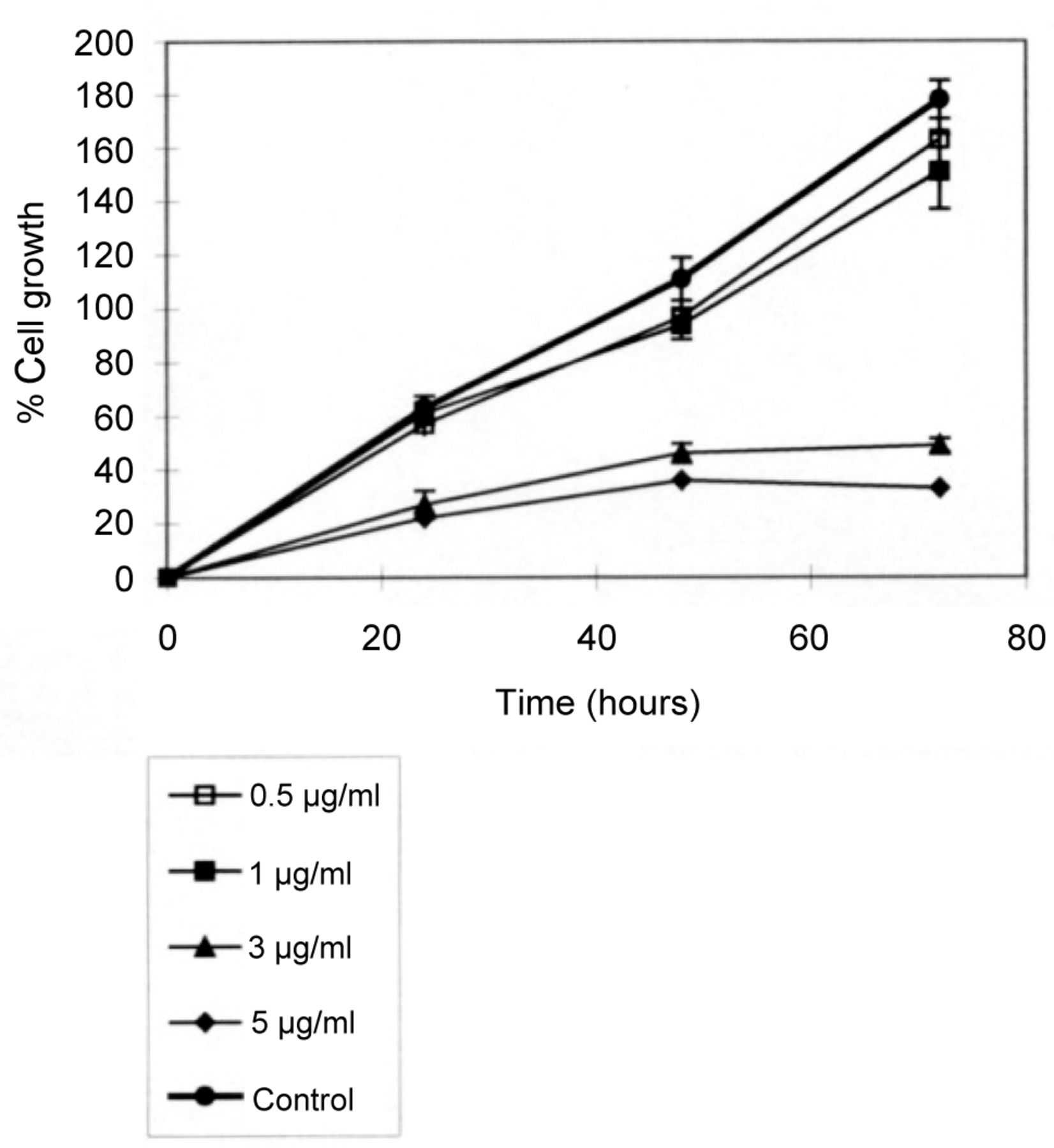
    Figure 2.

    Growth kinetics of NSCLC-N6 cells after CucD treatment with continuous drug exposure. Data are means±SD of three separate experiments.

  • Figure 3.
    • Download figure
    • Open in new tab
    • Download powerpoint
    Figure 3.

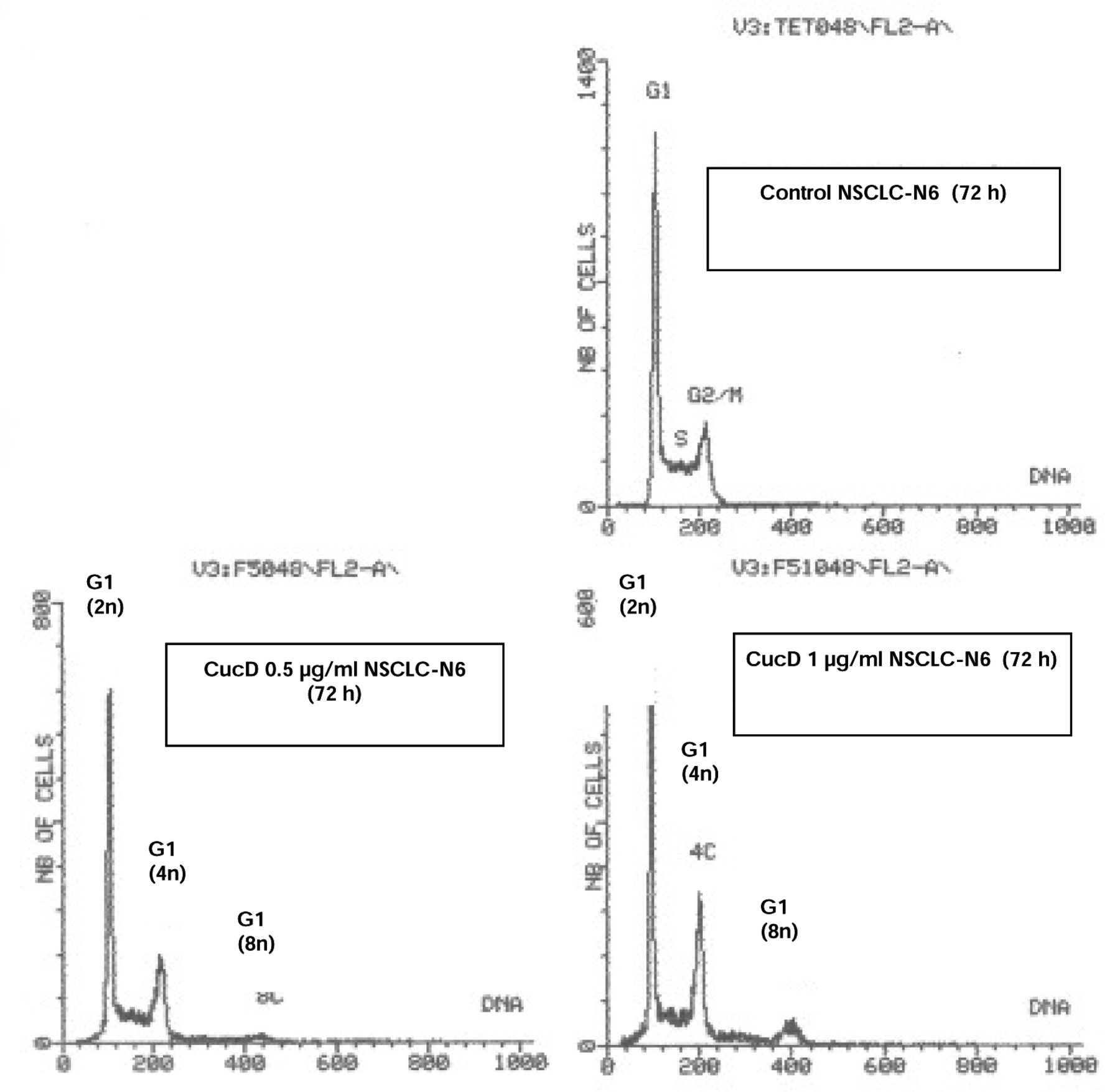
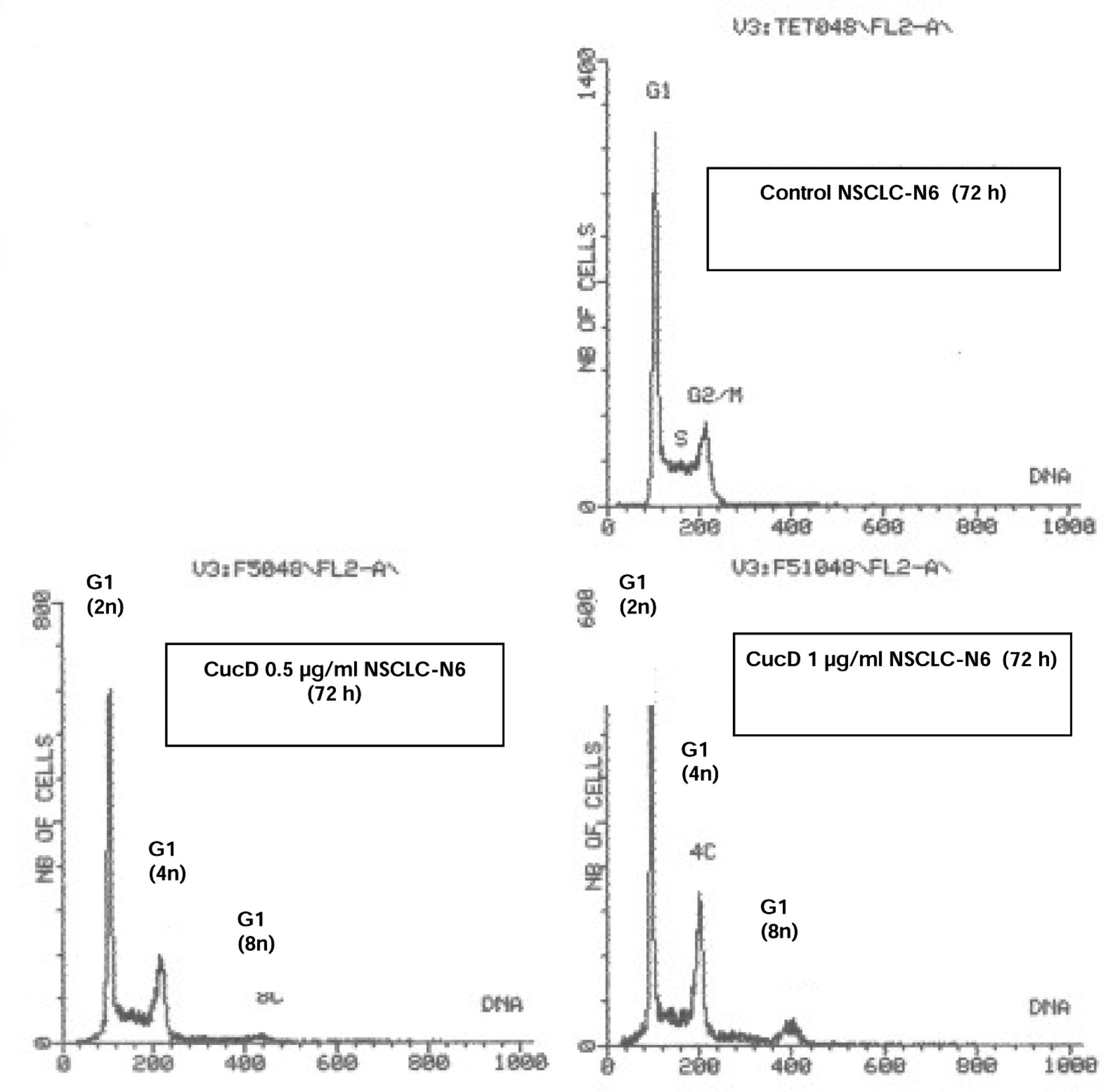
    Flow cytometric analysis of the DNA content of NSCLC-N6 cells cultured for 72 h in the absence (control) or presence of various concentrations of CucD. Cells were stained with propidum iodide as described in Materials and Methods.

  • Figure 4.
    • Download figure
    • Open in new tab
    • Download powerpoint
    Figure 4.

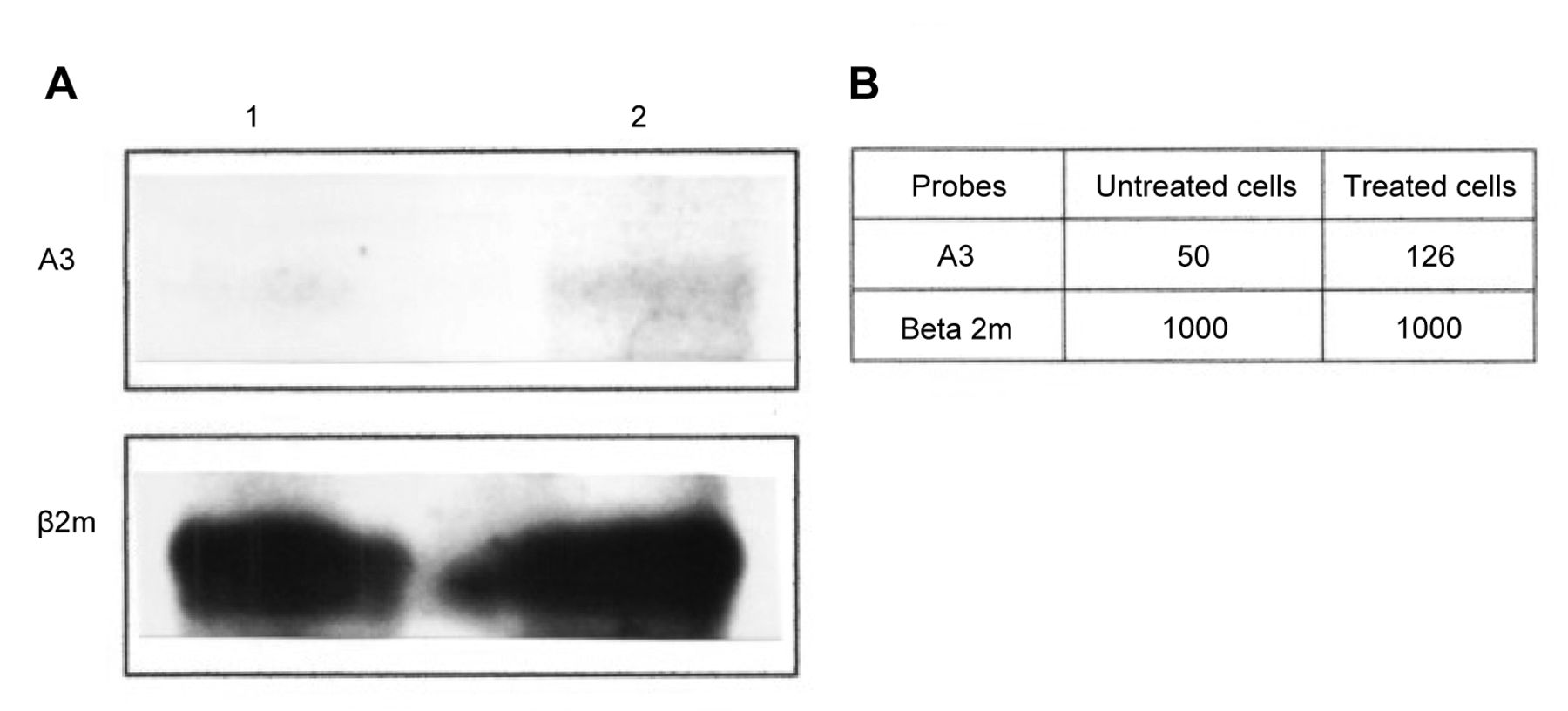
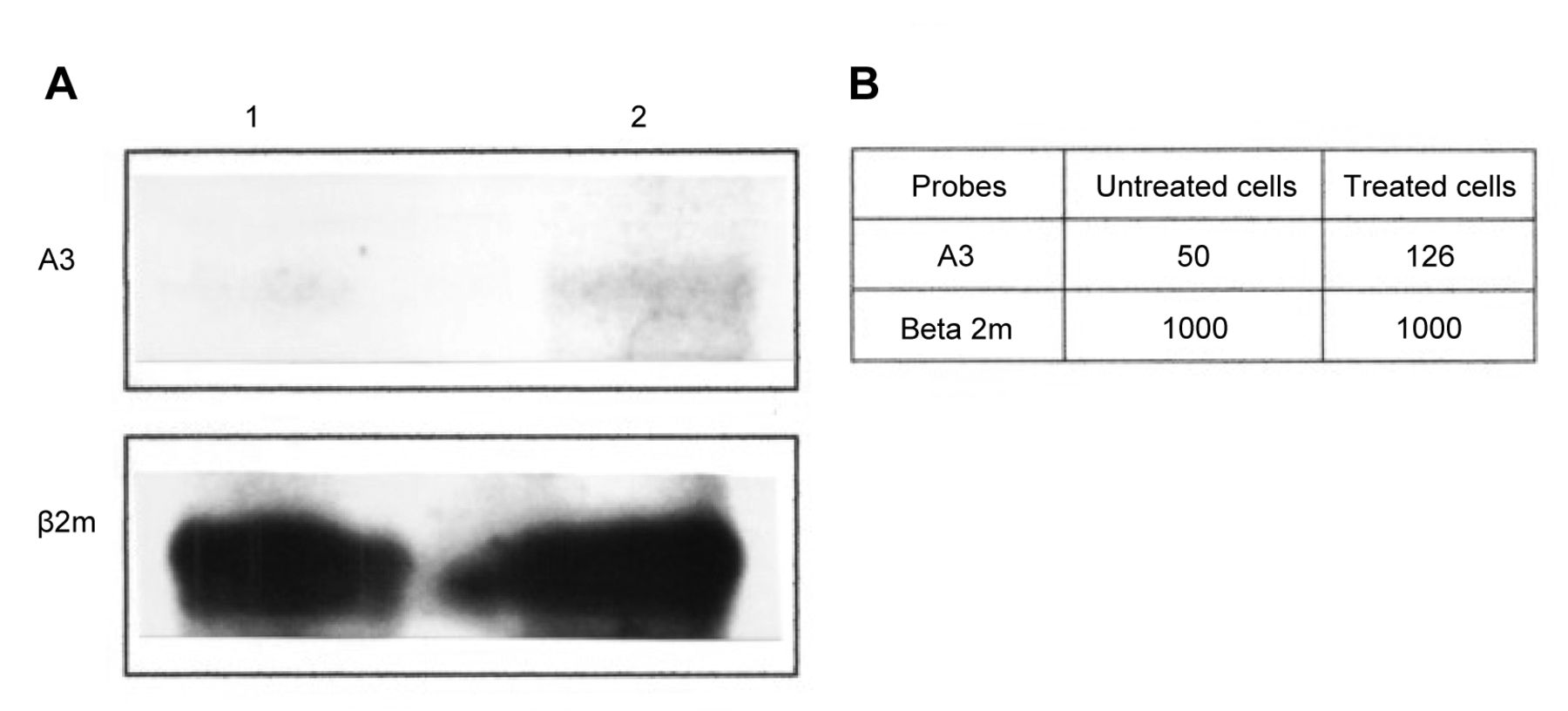
    RPA analysis of the A3 probe in NSCLC-N6 cells. A: NSCLC-N6 cells were cultured for 3 days under the following conditions: untreated cells (1) and 2.5±0.6 μg/ml CucD (2). Total RNA was extracted and RNase protection performed using one probe for A3 and another for beta 2 microglobulin mRNA. B: Quantification of results was performed with Easy Win 32 (HRL).

  • Figure 5.
    • Download figure
    • Open in new tab
    • Download powerpoint
    Figure 5.

    Results of RACE PCR electrophoresed in 2% agarose gel and stained with ethidium bromide. A: First round of RACE PCR. RACE PCR products were generated, as described in the Materials and Methods with P3 and oligo d(G)12 primer by a nested PCR on the P2-oligo d(G)12 amplification (lane 1). B: Second round of RACE PCR: first PCR with R2 and oligod(G) primer has generated non-specific bands (lane 1). Nested PCR (with R3 - oligo d(G)12 primers) generated a specific band of 1100pb (lane2) on this sample. MW lane shows the lambda phage DNA Eco RI-Hind III digest as molecular weight marker. The control lane shows amplification without the DNA sample.

  • Figure 6.
    • Download figure
    • Open in new tab
    • Download powerpoint
    Figure 6.

    Flow cytometric analysis of the DNA content of NSCLC-N6 cells cultured for 48 h in the absence (control) (A) or presence of CucD (3 μg/ml) and /or Cdk1 antisense oligonucleotide (10 μM) (C and D). Cells were stained with propidium iodide as described in Materials and Methods.

PreviousNext
Back to top

In this issue

Anticancer Research
Vol. 34, Issue 9
September 2014
  • Table of Contents
  • Table of Contents (PDF)
  • Index by author
  • Back Matter (PDF)
  • Ed Board (PDF)
  • Front Matter (PDF)
Print
Download PDF
Article Alerts
Sign In to Email Alerts with your Email Address
Email Article

Thank you for your interest in spreading the word on Anticancer Research.

NOTE: We only request your email address so that the person you are recommending the page to knows that you wanted them to see it, and that it is not junk mail. We do not capture any email address.

Enter multiple addresses on separate lines or separate them with commas.
Cucurbitacin-D-induced CDK1 mRNA Up-regulation Causes Proliferation Arrest of a Non-small Cell Lung Carcinoma Cell Line (NSCLC-N6)
(Your Name) has sent you a message from Anticancer Research
(Your Name) thought you would like to see the Anticancer Research web site.
CAPTCHA
This question is for testing whether or not you are a human visitor and to prevent automated spam submissions.
1 + 2 =
Solve this simple math problem and enter the result. E.g. for 1+3, enter 4.
Citation Tools
Cucurbitacin-D-induced CDK1 mRNA Up-regulation Causes Proliferation Arrest of a Non-small Cell Lung Carcinoma Cell Line (NSCLC-N6)
CATHERINE JACQUOT, BENEDICTE ROUSSEAU, DELPHINE CARBONNELLE, IOANNA CHINOU, MARINE MALLETER, CHRISTOPHE TOMASONI, CHRISTOS ROUSSAKIS
Anticancer Research Sep 2014, 34 (9) 4797-4806;

Citation Manager Formats

  • BibTeX
  • Bookends
  • EasyBib
  • EndNote (tagged)
  • EndNote 8 (xml)
  • Medlars
  • Mendeley
  • Papers
  • RefWorks Tagged
  • Ref Manager
  • RIS
  • Zotero
Reprints and Permissions
Share
Cucurbitacin-D-induced CDK1 mRNA Up-regulation Causes Proliferation Arrest of a Non-small Cell Lung Carcinoma Cell Line (NSCLC-N6)
CATHERINE JACQUOT, BENEDICTE ROUSSEAU, DELPHINE CARBONNELLE, IOANNA CHINOU, MARINE MALLETER, CHRISTOPHE TOMASONI, CHRISTOS ROUSSAKIS
Anticancer Research Sep 2014, 34 (9) 4797-4806;
Twitter logo Facebook logo Mendeley logo
  • Tweet Widget
  • Facebook Like
  • Google Plus One

Jump to section

  • Article
    • Abstract
    • Materials and Methods
    • Results
    • Discussion
    • Acknowledgements
    • References
  • Figures & Data
  • Info & Metrics
  • PDF

Related Articles

Cited By...

  • Pan-Cancer Landscape of CDK1 Uncovers Its Potential Prognostic Significance and Therapeutic Targeting in Adrenocortical Carcinoma
  • CDK1 and HSP90AA1 appears as novel regulatory gene in Non-Small Cell Lung Cancer: A Bioinformatics Approach
  • Google Scholar

More in this TOC Section

  • Exploring the Contribution of Interleukin-17 Genetic Polymorphisms to Pterygium Risk
  • Immunohistochemical Expression and Clinicopathological Assessment of PD-1, PD-L1, NY-ESO-1, and MAGE-A4 Expression in Desmoid Tumor
  • Dual Role of PSMB9 Linking Immune Activation and Tumor Adaptation in Hepatocellular Carcinoma With Therapeutic and Prognostic Implications
Show more Experimental Studies

Keywords

  • Cucurbitacin D
  • Ecbalium elaterium
  • lung cancer
  • NSCLC-N6
  • G1 cell cycle arrest
  • gene expression
  • CDK1
  • apoptosis
Anticancer Research

© 2026 Anticancer Research

Powered by HighWire