Main menu

  • Home
  • Current Issue
  • Archive
  • Info for
    • Authors
    • Editorial Policies
    • Subscribers
    • Advertisers
    • Editorial Board
    • Special Issues
  • Journal Metrics
  • Other Publications
    • In Vivo
    • Cancer Genomics & Proteomics
    • Cancer Diagnosis & Prognosis
  • More
    • IIAR
    • Conferences
    • 2008 Nobel Laureates
  • About Us
    • General Policy
    • Contact
  • Other Publications
    • Anticancer Research
    • In Vivo
    • Cancer Genomics & Proteomics

User menu

  • Register
  • Subscribe
  • My alerts
  • Log in
  • My Cart

Search

  • Advanced search
Anticancer Research
  • Other Publications
    • Anticancer Research
    • In Vivo
    • Cancer Genomics & Proteomics
  • Register
  • Subscribe
  • My alerts
  • Log in
  • My Cart
Anticancer Research

Advanced Search

  • Home
  • Current Issue
  • Archive
  • Info for
    • Authors
    • Editorial Policies
    • Subscribers
    • Advertisers
    • Editorial Board
    • Special Issues
  • Journal Metrics
  • Other Publications
    • In Vivo
    • Cancer Genomics & Proteomics
    • Cancer Diagnosis & Prognosis
  • More
    • IIAR
    • Conferences
    • 2008 Nobel Laureates
  • About Us
    • General Policy
    • Contact
  • Visit us on Facebook
  • Follow us on Linkedin
Research ArticleClinical Studies

Osseous Changes in Meningioma En Plaque

JAKOB MATSCHKE, JASMINE ADDO, CHRISTIAN BERNREUTHER and JOZEF ZUSTIN
Anticancer Research February 2011, 31 (2) 591-596;
JAKOB MATSCHKE
  • Find this author on Google Scholar
  • Find this author on PubMed
  • Search for this author on this site
JASMINE ADDO
  • Find this author on Google Scholar
  • Find this author on PubMed
  • Search for this author on this site
CHRISTIAN BERNREUTHER
  • Find this author on Google Scholar
  • Find this author on PubMed
  • Search for this author on this site
JOZEF ZUSTIN
  • Find this author on Google Scholar
  • Find this author on PubMed
  • Search for this author on this site
  • For correspondence: j.zustin{at}uke.uni-hamburg.de
  • Article
  • Figures & Data
  • Info & Metrics
  • PDF
Loading

Abstract

Hyperostosis is the most common skull change associated with meningioma. Five hyperostosis cases of meningioma en plaque infiltrating the skull processed without previous decalcification of the bone tissue were investigated histologically and immunohistochemically with antibodies against somatostatin receptor 2A (SSR2A). Undecalcified bone biopsies embedded in methylmethacrylate and paraffin-embedded extraosseous tumor tissues were analyzed. All five cases were well-differentiated meningotheliomatous meningiomas en plaque according to the WHO classification of tumors and revealed areas of hyperosteoidosis. Furthermore, all five meningiomas en plaque presented strong positive reactions to antibodies against SSR2A in both the intraosseous and extraosseous tumor proliferates. In summary, similar morphological changes characterized by hyperosteoidosis were observed in a small cohort of meningioma en plaque associated with expression of SSR2A and reports in the literature of the histogenesis of hyperostosis in meningioma en plaque are discussed.

  • Meningioma en plaque
  • somatostatin
  • hyperostosis
  • hyperosteoidosis

Meningiomas represent about 20% of all intracranial tumors, with a clear predominance in women (1). Meningioma en plaque is characterized by an indolent growth of sheets and whorls of neoplastic infiltrate associated with hyperostosis. This term was given by Cushing and Eisenhardt (2) to differentiate these meningiomas from the more common form called meningioma en masse. In meningioma, hyperostosis is a well-known sign of tumor, and is observed in 4.5% of all types, but is more frequently present in meningioma en plaque with an occurrence of 13% to 49% (3). Primary intraosseous meningioma induces hyperostosis in 60% of cases (4). The precise mechanisms of hyperostosis and intralesional morphological changes of the bone associated with meningioma remain unclear.

The neuropeptide somatostatin plays various biological roles in the brain (5), as well as in many other parts of the body. It is a powerful inhibitor of pituitary and gastroenteric hormone secretion (6-7), while it also plays a role as a neurotransmitter/neuromodulator in the central nervous system (8). These functions are mediated through the selective activation of high affinity somatostatin receptors, which are members of the seven helix membrane-spanning receptor superfamily coupled to GTP-binding proteins (9). While the expression of somatostatin receptors in meningiomas has already been reported (10), the effects of somatostatin on these tumors are still controversial (10). Among the somatostatin receptor subtypes, somatostatin receptor 2A (SSR2A) expression has frequently been observed in meningiomas in both immunohistochemical and RT-PCR analyses (10, 12-14).

The objective of the current study was primarily to investigate the morphological changes within the bone infiltrated by meningioma en plaque and secondly, to analyze the expression of SSR2A within the intraosseous proliferating en plaque meningioma.

Patients and Methods

Study cohort. The databases of both the Institute of Pathology and the Institute of Neuropathology of the University Medical Center Hamburg-Eppendorf were searched for cases of en plaque meningioma with both methylmethacrylate-embedded undecalcified bone tissues and paraffin-embedded soft tissues without decalcification obtained from en plaque meningioma. Five cases of meningioma en plaque (Table I) diagnosed in both institutions from 2006 to 2009 were identified.

Histology and immunohistochemistry. The tissues were fixed in formalin immediately after the surgical procedure. Surgical specimens from the diploe of the skull were sectioned by means of a water-cooled diamond band saw and contact radiographed. Multiple samples from each lesion, including both the central and lateral parts of the osseous lesion, were embedded in methylmethacrylate without decalcification and stained by Goldner's trichrome staining and periodic acid-Schiff reaction. Soft tissue samples removed from tumor masses within the adjacent intracranial tissue were embedded in paraffin and stained with hematoxylin-eosin stain and with periodic acid-Schiff reaction.

Immunohistochemical analyses were performed on both bone and soft tissue samples using EMA (clone E29, Dako M0613; Glostrup, Denmark; dilution 1:50) in order to confirm the conventional histopathological diagnosis, Ki-67 (clone Mib-1, Dako M7240, dilution 1:400) in order to assess the proliferative tumor fraction, and somatostatin receptor (clone SSR2A; Gramsch Laboratories, Schwabhausen, Germany, dilution 1:1,000) antibodies. Both the staining intensity (absent, weak, moderate, strong) and the staining patterns (focal, diffuse) were recorded. Staining each sample without adding anti-human primary antibody was performed as a negative control.

Results

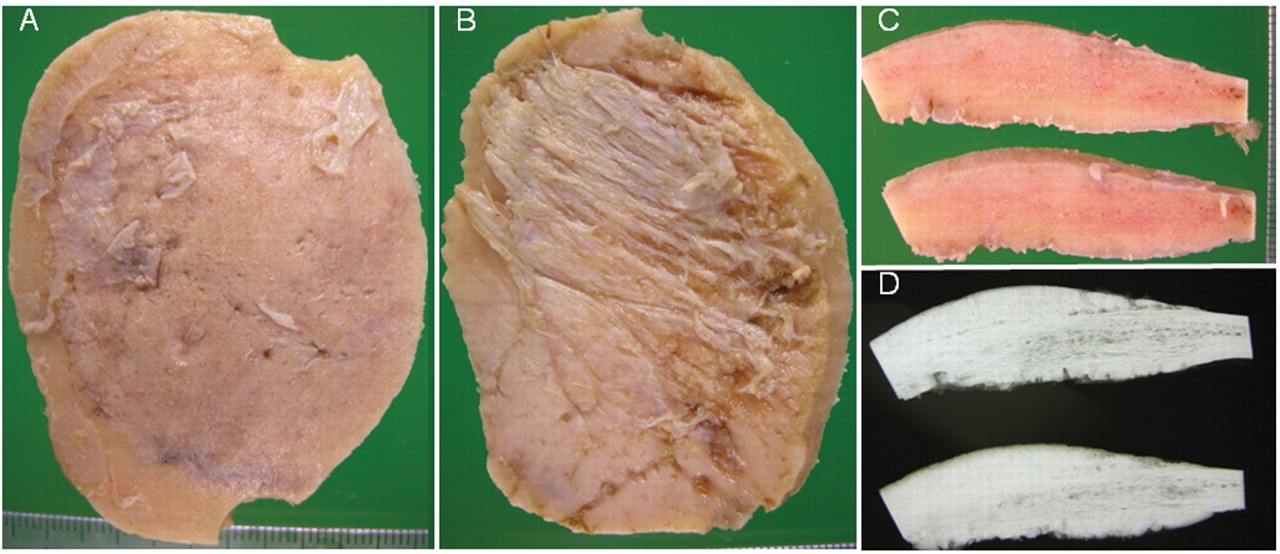
The surgically removed osseous specimens showed a circular swollen diploe with a discrete granular or folded outer surface (Figure 1A) and irregular ingrown fibrous tissues and fragmented adherent dura on the inner surface (Figure 1B). A flat thickening of the diploe was seen on the cutting plane (Figure 1C). In the contact radiography, dense mineralized periosteal new bone formation was apparent on both surfaces of the diploe, associated with discrete irregular remodeling of both the cortical and cancellous bone of the skull (Figure 1D). A focal radiolucent line between the cortex and the newly formed periosteal mineralized bone tissue was also apparent.

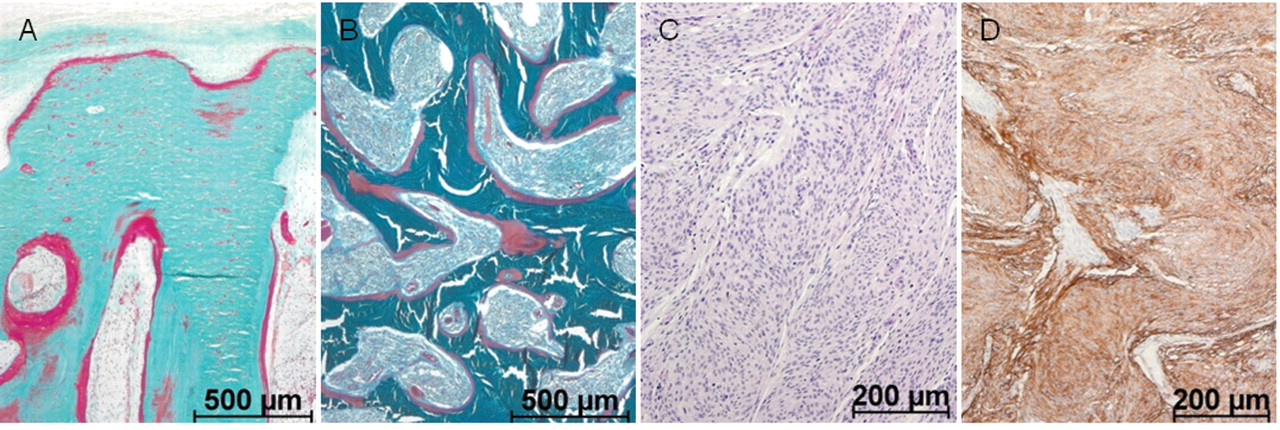
Histologically (Table II), multifocal intraosseous meningothelial neoplastic infiltration was apparent throughout the macroscopically thickened bone including the newly formed periosteal bone (Figure 2A), cortical and cancellous (Figure 2B) osseous tissue. A focal superficial spread of tumor proliferations arranged in sheets and whorls was found on the inner surface of the removed bone. Multifocal widening of osteoid and so-called buried osteoid (14) were found in each case (Table II). In three cases, deep resorption lacunae occupied by enlarged osteoclasts were recognized. Interestingly, none of the study cases presented psammoma bodies. All the cases were diagnosed as meningothelial meningioma according to the WHO classification (Figure 2C) associated with osseous infiltration and hyperostosis. The mitotic activity was less than four mitotic figures in ten high-power fields in all cases. Cellular atypia and tumor necrosis were not present.

Immunohistochemically, each tumor revealed moderate to strong positive reaction with antibodies against EMA and SSR2A (Table II, Figure 2D). The proliferative activity ranged from 4.2 to 9.1% as determined by the Ki-67 labeling index (Table II).

View this table:
  • View inline
  • View popup
  • Download powerpoint
Table I.

Meningioma en plaque. Study group demographics.

Discussion

Several common histopathological characteristics were observed in the study cohort. All the cases presented with infiltration of all three layers of the calvarium (16) and with new periosteal bone formation on both the inner and outer bone surfaces. In agreement with Kim and coauthors (17), focal patches of non-neoplastic dura were found on the inner surface of the corticalis which was discontinuously overgrown by the tumor and presented radiographically as a radiolucent line. While each case from the study cohort showed distinct areas of hyperosteoidosis consistent with oncogenic osteomalacia, psammomatous calcifications were not present. Interestingly, three cases also presented with pathological bone resorption similar to the morphological findings in secondary hyperparathyroidism.

One of the most surprising outcomes of the current study was the observation of focal hyperosteoidosis similar to oncogenic osteomalacia associated with a strong reaction of the intraosseous tumor infiltrate with antibodies against the SSR2A. While immunohistochemistry on methyl-methacrylate-embedded bone tissue is not performed routinely; for the purposes of the present study, both the osseous and extraosseous soft parts of the tumors were analyzed simultaneously. Clearly, the bone-infiltrating meningioma tissue exhibited the same strong SSR2A reactivity as found in the extraosseous tumor proliferation. Even though immunohistochemistry on paraffin-embedded tissues is preferable, reliable staining results were achieved in all the methylmethacrylate-embedded specimens. While SSR2A reactivity has frequently been observed in higher grade meningiomas, seven out of thirteen grade 1 tumors have also been reported to show positive results (18).

The osseous hyperostosis associated with meningioma en plaque has traditionally been characterized by indolent growth (19) and sclerotic changes of the adjacent bone (19). Although several distinct patterns of osseous changes in meningioma en plaque have been defined radiographically (16), histopathological analyses of bone-infiltrating meningioma are quite rare. According to the literature (3, 20-24), the tumors seem to be differentiated in a similar manner to the usual meningiomas of meningothelial type, but, morphological changes of the bone tissue infiltrated by the meningioma have not previously been analyzed. Earlier studies of the radiographical features (16, 21) of osseous characteristics of meningioma en plaque primarily focused on both the location and pattern of osseous changes. Histopathological analyses have clearly demonstrated intraosseous infiltration of the tumor in areas of characteristic hyperostosis (3, 20-23). Nonetheless, the histogenesis of osseous changes associated with this particular tumor remains uncertain. While Freedman and Forster believed that bone growth in cranial hyperostosis associated with meningioma was a function of the tumor cells (25), most other authors (17, 26-27) agreed with Cushing's conclusion that the tumor stimulates osteoblastic activity resulting in the hyperostosis (28). Kim and coauthors (16) suggested that the new bone growth probably resulted from periosteal stimulation via invasion by the tumor. More recently, Heick and coauthors (29) postulated that differences in neoplastic humoral mechanisms, particularly in the enzymatic activity of hyperostosing and non-hyperostosing types of meningioma were causative. Based on the present results, it can be speculated that local hormonal regulation of bone metabolism associated with intraosseous tumor infiltration might possibly contribute to formation of the characteristic hyperostosis related to meningioma en plaque. Interestingly, it has recently been shown that another neuropeptide serotonin importantly influences bone metabolism (30-34). Although serotonin is synthesized by two distinct genes centrally and peripherally (35) without crossing the blood–brain barrier, the pharmacological inhibition of gut-derived serotonin synthesis seems to be potentially useful in the therapy of osteoporosis (31).

Figure 1.
  • Download figure
  • Open in new tab
  • Download powerpoint
Figure 1.

Meningioma en plaque (gross findings and contact radiographs of the specimen). Macroscopically, (A) the outer bone surface, granular but smooth with pink coloration; (B) the inner surface, somewhat irregular with ingrown tumor and fragmented dura. (C) Cut surface, the bone tissue within the hyperostosis associated with meningioma en plaque more uniform (mid portions) compared with the lamellar structure of the diploe of the neighboring calvarium (lateral portions). (D) Contact radiographically, similarly dense mineralization within the newly formed periosteal bone proliferation and remodeled diploe with tumor infiltration (mid portions). When compared with the outer surface, the inner one appeared rough and more irregular. Focal radiolucent line between the periosteal new bone formation and original corticalis is apparent.
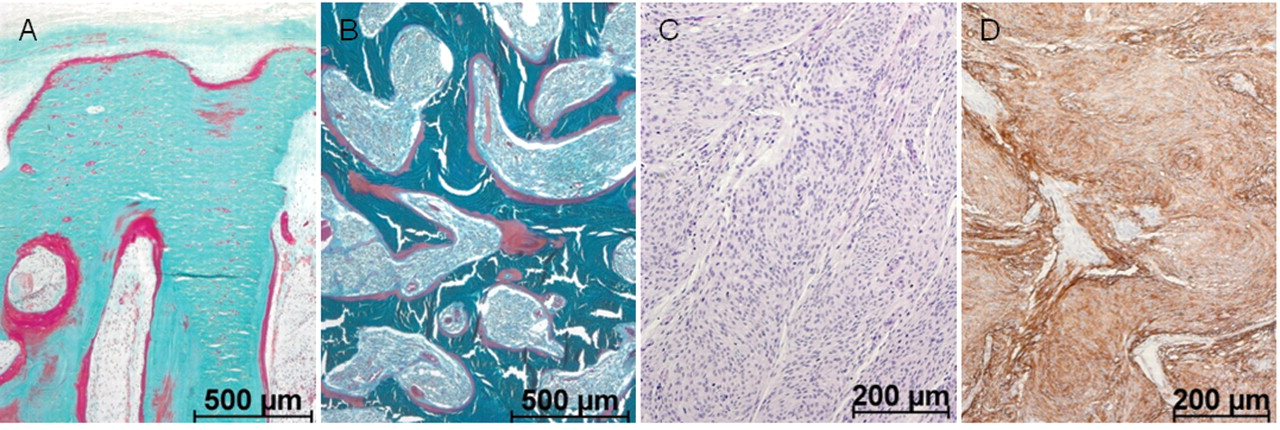
Figure 2.
  • Download figure
  • Open in new tab
  • Download powerpoint
Figure 2.

Meningioma en plaque (histopathology). (A) New periosteal bone formation (green trabeculae represent mineralized bone), formed by superficially fused mineralized spiculae with superficial osteoid seams (red parts of trabeculae represent non-mineralized osteoid tissue) next to meningothelial tumor infiltration of the intertrabecular tissue as well as within the Haversian canals. (B) Cancellous bone, irregularly remodeled and densely infiltrated by the tumor. Multifocal broad areas of non-mineralized osteoid on the trabecular surface (A/B: embedded in methylmethacrylate without decalcification, stain: Goldner trichrome, original magnification: ×50). (C) The paraffin-embedded tumor displayed typical meningothelial spindle cells without atypia (hematoxylin-eosin, original magnification: ×100). (D) Each paraffin-embedded tumor showed positive immunohistochemical reactions against the SSR2A antibody (original magnification: ×100).

View this table:
  • View inline
  • View popup
  • Download powerpoint
Table II.

Meningioma en plaque. Morphological characteristics.

The exact molecular and/or biochemical mechanisms of intralesional hyperosteoidosis in the meningioma en plaque remain to be explored. In the current study, SSR2A immunohistochemical results of the intraosseous infiltrating meningioma en plaque were positive, which has already been reported in both extraosseous meningiomas and in some other neoplasms associated with oncogenic osteomalacia (36-37). This morphological observation has several potential diagnostic and therapeutic implications. Firstly, the usefulness of somatostatin analogue (111In-DTPA-d-Phe1)-octreotide scintigraphy for the visualization of meningiomas (38-39) and meningioma en plaque in particular (40) has been demonstrated. Moreover, octreotide scintigraphy allows differentiation between meningiomas and neurinomas or neurofibromas and other tumors (41-42) as well as the identification of multiple intracranial lesions (38). Furthermore, scintigraphy seems to be valuable in both the identification of invasive tumors and postoperative differentiation between recurrent meningiomas and scar tissue (38). It is also interesting to note that octreotide scintigraphy has been successfully used in diagnosing the soft and bone tissue tumors associated with oncogenic osteomalacia (43-50). However, the therapeutic impact of octreotide on tumors associated with oncogenic osteomalacia remains questionable (37, 48, 51-53).

Several important limitations to the current study are recognized. First, as bone biopsies were only taken from tumor-infiltrated calvarial lesions, it cannot be concluded whether generalized oncogenic osteomalacia was also present. To investigate the possible presence of systemic oncogenic osteomalacia, more complex clinical (renal functions, nutrition), radiographical (bone marrow density) and laboratory tests (calcium, phosphate, vitamin D, parathormone) are necessary. Similarly, data on serum somatostatin was unavailable. None of these parameters could be addressed retrospectively. Moreover, pathological fractures were not reported in the clinical records. To the best of our knowledge, tumor recurrence was not observed at later follow-up. The other essential limitation was undoubtedly the small study cohort. In fact, the vast majority of bony material sent to neuropathological laboratories is traditionally processed after decalcification of the bony surgical specimens. The undecalcified processing methods of mineralized tissues are mostly accessible only in histopathological laboratories specializing in bone pathology. Thus, only five meningotheliomatous meningiomas en plaque diagnosed in both institutions within the last four years with adequately processed tissues were identified.

To summarize, five cases of meningioma en plaque associated with intralesional features similar to oncogenic osteomalacia and new periosteal reactive bone formation are presented and the potential biological and clinical implications possibly linked to the observed expression of SSR2A are discussed.

Footnotes

  • ↵* J. Matschke and J. Addo contributed equally to this work. This work is part of the promotion thesis of J. Addo.

  • Disclosure/Conflict of Interest

    We declare that we have no conflict of interests (either financial or personal). This work has not been published or presented (oral, print or online) elsewhere in whole or in part.

  • Received October 30, 2010.
  • Revision received January 4, 2011.
  • Accepted January 5, 2011.
  • Copyright© 2011 International Institute of Anticancer Research (Dr. John G. Delinassios), All rights reserved

References

  1. ↵
    1. Mirimanoff RO,
    2. Dosoretz DE,
    3. Linggood RM,
    4. Ojemann RG,
    5. Martuza RL
    : Meningioma: analysis of recurrence and progression following neurosurgical resection. J Neurosurg 62: 18-24, 1985.
    OpenUrlCrossRefPubMed
  2. ↵
    1. Cushing H,
    2. Eisenhardt L
    : Meningiomas. Their Classification, Regional Behavior, Life History, and Surgical End Results. Springfield, IL: Charles C. Thomas, 1938.
  3. ↵
    1. Akutsu H,
    2. Sugita K,
    3. Sonobe M,
    4. Matsumura A
    : Parasagittal meningioma en plaque with extracranial extension presenting diffuse massive hyperostosis of the skull. Surg Neurol 61: 165-169, 2004.
    OpenUrlCrossRefPubMed
  4. ↵
    1. Crawford TS,
    2. Kleinschmidt-DeMasters BK,
    3. Lillehei KO
    : Primary intraosseous meningioma. Case report. J Neurosurg 83: 912-915, 1995.
    OpenUrlPubMed
  5. ↵
    1. Epelbaum J
    : Somatostatin in the central nervous system: physiology and pathological modifications. Prog Neurobiol 27: 63-100, 1986.
    OpenUrlCrossRefPubMed
  6. ↵
    1. Reichlin S
    : Somatostatin. N Engl J Med 309: 1556-1563, 1983.
    OpenUrlCrossRefPubMed
  7. ↵
    1. Reichlin S
    : Somatostatin. N Engl J Med 309: 1495-1501, 1983.
    OpenUrlCrossRefPubMed
  8. ↵
    1. Florio T,
    2. Thellung S,
    3. Schettini G
    : Intracellular transducing mechanisms coupled to brain somatostatin receptors. Pharmacol Res 33: 297-305, 1996.
    OpenUrlCrossRefPubMed
  9. ↵
    1. Patel YC
    : Somatostatin and its receptor family. Front Neuro-endocrinol 20: 157-198, 1999.
    OpenUrlCrossRefPubMed
  10. ↵
    1. Dutour A,
    2. Kumar U,
    3. Panetta R,
    4. Ouafik L,
    5. Fina F,
    6. Sasi R,
    7. Patel YC
    : Expression of somatostatin receptor subtypes in human brain tumors. Int J Cancer 76: 620-627, 1998.
    OpenUrlCrossRefPubMed
    1. Reubi JC,
    2. Mengod G,
    3. Palacios JM,
    4. Horisberger U,
    5. Hackeng WH,
    6. Lamberts SW
    : Lack of evidence for autocrine feedback regulation by somatostatin in somatostatin receptor-containing meningiomas. Cell Growth Differ 1: 299-303, 1990.
    OpenUrlAbstract
  11. ↵
    1. Reubi JC,
    2. Kappeler A,
    3. Waser B,
    4. Laissue J,
    5. Hipkin RW,
    6. Schonbrunn A
    : Immunohistochemical localization of somatostatin receptors SST2A in human tumors. Am J Pathol 153: 233-245, 1998.
    OpenUrlPubMed
    1. Schulz S,
    2. Pauli SU,
    3. Handel M,
    4. Dietzmann K,
    5. Firsching R,
    6. Hollt V
    : Immunohistochemical determination of five somatostatin receptors in meningioma reveals frequent overexpression of somatostatin receptor subtype SST2A. Clin Cancer Res 6: 1865-1874, 2000.
    OpenUrlAbstract/FREE Full Text
  12. ↵
    1. Arena S,
    2. Barbieri F,
    3. Thellung S,
    4. Pirani P,
    5. Corsaro A,
    6. Villa V,
    7. Dadati P,
    8. Dorcaratto A,
    9. Lapertosa G,
    10. Ravetti JL,
    11. Spaziante R,
    12. Schettini G,
    13. Florio T
    : Expression of somatostatin receptor mRNA in human meningiomas and their implication in in vitro antiproliferative activity. J Neurooncol 66: 155-166, 2004.
    OpenUrlCrossRefPubMed
    1. Teitelbaum SL,
    2. Bone JM,
    3. Stein PM,
    4. Gilden JJ,
    5. Bates M,
    6. Boisseau VC,
    7. Avioli LV
    : Calcifediol in chronic renal insufficiency. Skeletal response. JAMA 235: 164-167, 1976.
    OpenUrlCrossRefPubMed
  13. ↵
    1. Kim KS,
    2. Rogers LF,
    3. Goldblatt D
    : CT features of hyperostosing meningioma en plaque. AJR Am J Roentgenol 149: 1017-1023, 1987.
    OpenUrlPubMed
  14. ↵
    1. Kim KS,
    2. Rogers LF,
    3. Lee C
    : The dural lucent line: characteristic sign of hyperostosing meningioma en plaque. AJR Am J Roentgenol 141: 1217-1221, 1983.
    OpenUrlCrossRefPubMed
  15. ↵
    1. Barresi V,
    2. Alafaci C,
    3. Salpietro F,
    4. Tuccari G
    : Sstr2A immunohistochemical expression in human meningiomas: is there a correlation with the histological grade, proliferation or microvessel density? Oncol Rep 20: 485-492, 2008.
    OpenUrlPubMed
  16. ↵
    1. Castellano F,
    2. Guidetti B,
    3. Olivecrona H
    : Pterional meningiomas en plaque. J Neurosurg 9: 188-196, 1952.
    OpenUrlCrossRefPubMed
  17. ↵
    1. Gupta SK,
    2. Mohindra S,
    3. Radotra BD,
    4. Khosla VK
    : Giant calvarial hyperostosis with biparasagittal en plaque meningioma. Neurol India 54: 210-21, 2006.
    OpenUrlPubMed
  18. ↵
    1. Kashimura H,
    2. Beppu T,
    3. Wada T,
    4. Yoshida Y,
    5. Suzuki M,
    6. Ogawa A
    : A case of meningioma en plaque: review of 73 cases. No Shinkei Geka 25: 1097-1100, 1997.
    OpenUrlPubMed
    1. De Jesus O,
    2. Toledo MM
    : Surgical management of meningioma en plaque of the sphenoid ridge. Surg Neurol 55: 265-269, 2001.
    OpenUrlCrossRefPubMed
  19. ↵
    1. Bonnal J,
    2. Thibaut A,
    3. Brotchi J,
    4. Born J
    : Invading meningiomas of the sphenoid ridge. J Neurosurg 53: 587-599, 1980.
    OpenUrlCrossRefPubMed
  20. ↵
    1. McGuire TP,
    2. Palme CE,
    3. Perez-Ordonez B,
    4. Gilbert RW,
    5. Sandor GK
    : Primary intraosseous meningioma of the calvaria: analysis of the literature and case report. Oral Surg Oral Med Oral Pathol Oral Radiol Endod 104: e34-41, 2007.
    OpenUrlPubMed
  21. ↵
    1. Freedman H,
    2. Forster FM
    : Bone formation and destruction in hyperostoses associated with meningiomas. J Neuropathol Exp Neurol 7: 69-80, 1948.
    OpenUrlPubMed
  22. ↵
    1. Doyle WF,
    2. Rosegay H
    : Meningioma en plaque with hyperostosis: case report. Mil Med 137: 196-198, 1972.
    OpenUrlPubMed
  23. ↵
    1. Pompili A,
    2. Derome PJ,
    3. Visot A,
    4. Guiot G
    : Hyperostosing meningiomas of the sphenoid ridge-clinical features, surgical therapy, and long-term observations: review of 49 cases. Surg Neurol 17: 411-416, 1982.
    OpenUrlCrossRefPubMed
  24. ↵
    1. Cushing H
    :The cranial hyperostoses produced by meningeal endotheliomas. Arch Neurol Psychiatry 8: 139-54, 1922.
    OpenUrlCrossRef
  25. ↵
    1. Heick A,
    2. Mosdal C,
    3. Jorgensen K,
    4. Klinken L
    : Localized cranial hyperostosis of meningiomas: a result of neoplastic enzymatic activity? Acta Neurol Scand 87: 243-247, 1993.
    OpenUrlPubMed
  26. ↵
    1. Frost M,
    2. Andersen TE,
    3. Yadav V,
    4. Brixen K,
    5. Karsenty G,
    6. Kassem M
    : Patients with high bone-mass phenotype owing to Lrp5-T253I mutation have low plasma levels of serotonin. J Bone Miner Res 25: 673-675, 2010.
    OpenUrlCrossRefPubMed
  27. ↵
    1. Yadav VK,
    2. Balaji S,
    3. Suresh PS,
    4. Liu XS,
    5. Lu X,
    6. Li Z,
    7. Guo XE,
    8. Mann JJ,
    9. Balapure AK,
    10. Gershon MD,
    11. Medhamurthy R,
    12. Vidal M,
    13. Karsenty G,
    14. Ducy P
    : Pharmacological inhibition of gut-derived serotonin synthesis is a potential bone anabolic treatment for osteoporosis. Nat Med 16: 308-312, 2010.
    OpenUrlCrossRefPubMed
    1. Yadav VK,
    2. Ducy P
    : Lrp5 and bone formation: A serotonin-dependent pathway. Ann NY Acad Sci 1192: 103-109, 2010.
    OpenUrlCrossRefPubMed
    1. Oury F,
    2. Karsenty G
    : Serotonin, two faces of a unique molecule in the regulation of bone mass. Med Sci (Paris) 26: 713-718, 2010.
    OpenUrlPubMed
  28. ↵
    1. Oury F,
    2. Yadav VK,
    3. Wang Y,
    4. Zhou B,
    5. Liu XS,
    6. Guo XE,
    7. Tecott LH,
    8. Schutz G,
    9. Means AR,
    10. Karsenty G
    : CREB mediates brain serotonin regulation of bone mass through its expression in ventromedial hypothalamic neurons. Genes Dev 24: 2330-2342, 2010.
    OpenUrlAbstract/FREE Full Text
  29. ↵
    1. Ducy P,
    2. Karsenty G
    : The two faces of serotonin in bone biology. J Cell Biol 191: 7-13, 2010.
    OpenUrlAbstract/FREE Full Text
  30. ↵
    1. Mussig K,
    2. Oksuz MO,
    3. Pfannenberg C,
    4. Adam P,
    5. Zustin J,
    6. Beckert S,
    7. Petersenn S
    : Somatostatin receptor expression in an epitheloid hemangioma causing oncogenic osteomalacia. J Clin Endocrinol Metab 94: 4123-4124, 2009.
    OpenUrlCrossRefPubMed
  31. ↵
    1. Ishii A,
    2. Imanishi Y,
    3. Kobayashi K,
    4. Hashimoto J,
    5. Ueda T,
    6. Miyauchi A,
    7. Koyano HM,
    8. Kaji H,
    9. Saito T,
    10. Oba K,
    11. Komatsu Y,
    12. Kurajoh M,
    13. Nagata Y,
    14. Goto H,
    15. Wakasa K,
    16. Sugimoto T,
    17. Miki T,
    18. Inaba M,
    19. Nishizawa Y
    : The levels of somatostatin receptors in causative tumors of oncogenic osteomalacia are insufficient for their agonist to normalize serum phosphate levels. Calcif Tissue Int 86: 455-462, 2010.
    OpenUrlCrossRefPubMed
  32. ↵
    1. Schmidt M,
    2. Scheidhauer K,
    3. Luyken C,
    4. Voth E,
    5. Hildebrandt G,
    6. Klug N,
    7. Schicha H
    : Somatostatin receptor imaging in intracranial tumours. Eur J Nucl Med 25: 675-686, 1998.
    OpenUrlCrossRefPubMed
  33. ↵
    1. Maini CL,
    2. Tofani A,
    3. Sciuto R,
    4. Carapella C,
    5. Cioffi R,
    6. Crecco M
    : Somatostatin receptors in meningiomas: a scintigraphic study using 111In-DTPA-D-Phe-1-octreotide. Nucl Med Commun 14: 550-558, 1993.
    OpenUrlCrossRefPubMed
  34. ↵
    1. Maini CL,
    2. Tofani A,
    3. Cioffi RP,
    4. Sciuto R,
    5. Morace E,
    6. Crecco M,
    7. Mottolese M
    : In-111 octreotide scintigraphy in the diagnostic evaluation of en plaque meningioma. A case report. Clin Nucl Med 20: 508-511, 1995.
    OpenUrlPubMed
  35. ↵
    1. Hildebrandt G,
    2. Scheidhauer K,
    3. Luyken C,
    4. Schicha H,
    5. Klug N,
    6. Dahms P,
    7. Krisch B
    : High sensitivity of the in vivo detection of somatostatin receptors by 111indium (DTPA-octreotide)-scintigraphy in meningioma patients. Acta Neurochir (Wien) 126: 63-71, 1994.
    OpenUrlCrossRefPubMed
  36. ↵
    1. Barth A,
    2. Haldemann AR,
    3. Reubi JC,
    4. Godoy N,
    5. Rosler H,
    6. Kinser JA,
    7. Seiler RW
    : Noninvasive differentiation of meningiomas from other brain tumours using combined 111indium-octreotide/99mtechnetium-DTPA brain scintigraphy. Acta Neurochir (Wien) 138: 1179-1185, 1996.
    OpenUrlCrossRefPubMed
  37. ↵
    1. Moran M,
    2. Paul A
    : Octreotide scanning in the detection of a mesenchymal tumour in the pubic symphysis causing hypophosphataemic osteomalacia. Int Orthop 26: 61-62, 2002.
    OpenUrlCrossRefPubMed
    1. Garcia CA,
    2. Spencer RP
    : Bone and In-111 octreotide imaging in oncogenic osteomalacia: a case report. Clin Nucl Med 27: 582-583, 2002.
    OpenUrlCrossRefPubMed
    1. Casari S,
    2. Rossi V,
    3. Varenna M,
    4. Gasparini M,
    5. Parafioriti A,
    6. Failoni S,
    7. Sinigaglia L
    : A case of oncogenic osteomalacia detected by 111In-pentetreotide total body scan. Clin Exp Rheumatol 21: 493-496, 2003.
    OpenUrlPubMed
    1. Auethavekiat P,
    2. Roberts JR,
    3. Biega TJ,
    4. Toney MO,
    5. Christensen RS,
    6. Belnap CM,
    7. Berenberg JL
    : Case 3. Oncogenic osteomalacia associated with hemangiopericytoma localized by octreotide scan. J Clin Oncol 23: 3626-3628, 2005.
    OpenUrlFREE Full Text
    1. Cheung FM,
    2. Ma L,
    3. Wu WC,
    4. Siu TH,
    5. Choi PT,
    6. Tai YP
    : Oncogenic osteomalacia associated with an occult phosphaturic mesenchymal tumour: clinico-radiologico-pathological correlation and ultrastructural studies. Hong Kong Med J 12: 319-321, 2006.
    OpenUrlPubMed
  38. ↵
    1. Elston MS,
    2. Stewart IJ,
    3. Clifton-Bligh R,
    4. Conaglen JV
    : A case of oncogenic osteomalacia with preoperative secondary hyperparathyroidism: description of the biochemical response of FGF23 to octreotide therapy and surgery. Bone 40: 236-241, 2007.
    OpenUrlCrossRefPubMed
    1. Nguyen BD
    : Coexisting hyperparathyroidism and oncogenic osteomalacia: Sestamibi and somatostatin receptor scintigraphy. Clin Nucl Med 31: 648-651, 2006.
    OpenUrlCrossRefPubMed
  39. ↵
    1. Hesse E,
    2. Moessinger E,
    3. Rosenthal H,
    4. Laenger F,
    5. Brabant G,
    6. Petrich T,
    7. Gratz KF,
    8. Bastian L
    : Oncogenic osteomalacia: exact tumor localization by co-registration of positron-emission and computed tomography. J Bone Miner Res 22: 158-162, 2007.
    OpenUrlCrossRefPubMed
  40. ↵
    1. Duet M,
    2. Kerkeni S,
    3. Sfar R,
    4. Bazille C,
    5. Liote F,
    6. Orcel P
    : Clinical impact of somatostatin receptor scintigraphy in the management of tumor-induced osteomalacia. Clin Nucl Med 33: 752-756, 2008.
    OpenUrlCrossRefPubMed
    1. Yoshioka K,
    2. Nagata R,
    3. Ueda M,
    4. Yamaguchi T,
    5. Konishi Y,
    6. Hosoi M,
    7. Inoue T,
    8. Yamanaka K,
    9. Iwai Y,
    10. Sato T
    : Phosphaturic mesenchymal tumor with symptoms related to osteomalacia that appeared one year after tumorectomy. Intern Med 45: 1157-1160, 2006.
    OpenUrlCrossRefPubMed
  41. ↵
    1. van Boekel G,
    2. Ruinemans-Koerts J,
    3. Joosten F,
    4. Dijkhuizen P,
    5. van Sorge A,
    6. de Boer H
    : Tumor producing fibroblast growth factor 23 localized by two-staged venous sampling. Eur J Endocrinol 158: 431-437, 2008.
    OpenUrlAbstract/FREE Full Text
PreviousNext
Back to top

In this issue

Anticancer Research
Vol. 31, Issue 2
February 2011
  • Table of Contents
  • Table of Contents (PDF)
  • Index by author
  • Back Matter (PDF)
  • Ed Board (PDF)
  • Front Matter (PDF)
Print
Download PDF
Article Alerts
Sign In to Email Alerts with your Email Address
Email Article

Thank you for your interest in spreading the word on Anticancer Research.

NOTE: We only request your email address so that the person you are recommending the page to knows that you wanted them to see it, and that it is not junk mail. We do not capture any email address.

Enter multiple addresses on separate lines or separate them with commas.
Osseous Changes in Meningioma En Plaque
(Your Name) has sent you a message from Anticancer Research
(Your Name) thought you would like to see the Anticancer Research web site.
CAPTCHA
This question is for testing whether or not you are a human visitor and to prevent automated spam submissions.
6 + 7 =
Solve this simple math problem and enter the result. E.g. for 1+3, enter 4.
Citation Tools
Osseous Changes in Meningioma En Plaque
JAKOB MATSCHKE, JASMINE ADDO, CHRISTIAN BERNREUTHER, JOZEF ZUSTIN
Anticancer Research Feb 2011, 31 (2) 591-596;

Citation Manager Formats

  • BibTeX
  • Bookends
  • EasyBib
  • EndNote (tagged)
  • EndNote 8 (xml)
  • Medlars
  • Mendeley
  • Papers
  • RefWorks Tagged
  • Ref Manager
  • RIS
  • Zotero
Reprints and Permissions
Share
Osseous Changes in Meningioma En Plaque
JAKOB MATSCHKE, JASMINE ADDO, CHRISTIAN BERNREUTHER, JOZEF ZUSTIN
Anticancer Research Feb 2011, 31 (2) 591-596;
Twitter logo Facebook logo Mendeley logo
  • Tweet Widget
  • Facebook Like
  • Google Plus One

Jump to section

  • Article
    • Abstract
    • Patients and Methods
    • Results
    • Discussion
    • Footnotes
    • References
  • Figures & Data
  • Info & Metrics
  • PDF

Related Articles

Cited By...

  • No citing articles found.
  • Google Scholar

More in this TOC Section

  • Cancer Cachexia Predicts Benefit of Immunotherapy Plus Chemotherapy in EGFR-mutant NSCLC After TKI Resistance
  • Prognostic Difference According to the Site of Origin (Major vs. Minor) of Salivary Gland Carcinoma
  • Prognostic Significance of the Lymph Node Ratio in Obstructive Colorectal Cancer: A Retrospective Multicenter Study
Show more Clinical Studies
Anticancer Research

© 2026 Anticancer Research

Powered by HighWire